
Space-tech and Amazing Uses for Upcoming Diamond Technology

Hi Folks, welcome to another Michael Gabriels Blog.
Today, we covered the spaceship Lucy, which has lab grown diamond equipment onboard.
But technology using diamonds isn't far-fetched, or as inaccessible as Lucy in the sky. With Diamonds, there are only modest limits.
While all diamonds have a carbon crystal structure with amazing capabilities, not all diamonds form in the same optimal manner for their use in technology. Lab grown diamonds present us with a leap forward in technological advancement because we have enough control in the lab to force diamonds to grow in a way that makes them readily adaptable to technology.
Diamond thermal conductivity is 20 times greater than silicon and they can carry 5000 times the current of silicon for the same given area, not to mention the well-known traits of light refraction and material strength. That makes diamonds a natural choice for technological uses ranging from space-tech to computer chips, to artificial teeth and cochlear implants.
It is far more economical to produce diamonds for technology now than even a few years ago, and far more economical than using mined diamonds. The two methods generally used for producing diamonds in laboratories, High Pressure High Temperature (HPHT) and CVD- Chemical Vapor Deposition, have themselves seen enormous improvement. Certain HPHT systems, where a giant press under extreme temperatures turns elementary carbon into diamonds, can now produce almost a kilogram of diamonds an hour for technological purposes. These diamonds are especially useful as conductors.
In CVD, a gaseous plasma in a sealed chamber under extremes of pressure and temperature deposits carbon atoms in a diamond crystal, millimeter by millimeter over many days. This precise form of production allows for more nuanced applications, such as diamond coating for other materials, widely becoming popular for certain industrial parts and for dental implants.
Lab grown diamonds for technology must meet a different set of standards than for gem quality. While inclusions are not generally favorable in either case, certain types have uses in technology. Moreover, certain other elements present that would distort or discolor a gem quality stone, such as boron and nitrogen, are advantageous to certain technological uses.
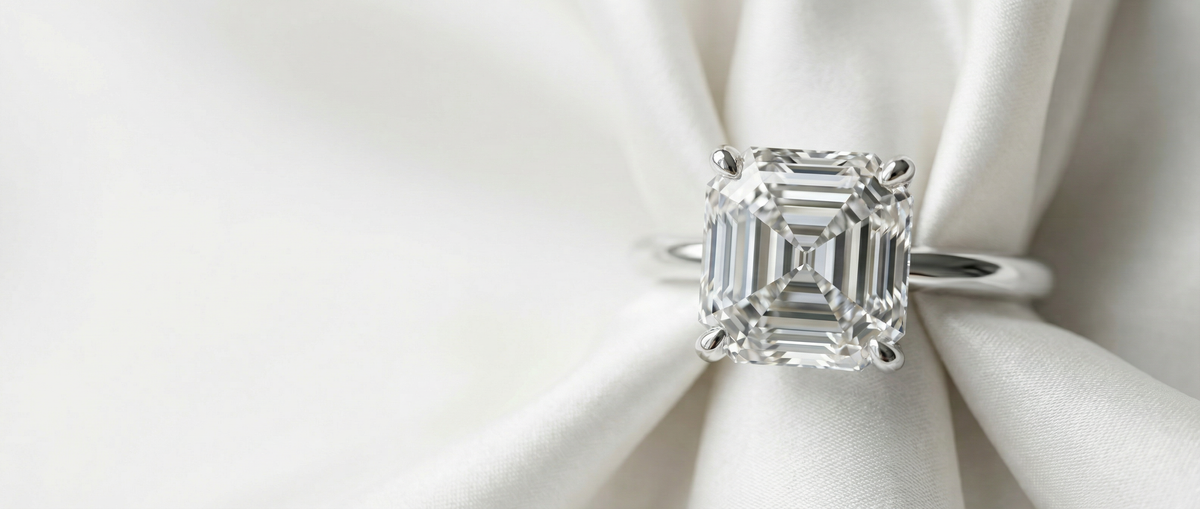
So don't think that your ring’s center stone will suddenly start conducting lighting. It won’t. Gem quality diamonds, whether lab grown or natural, possess many unique properties but do not have the same functional capabilities as the types of diamonds produced deliberately for those purposes.
However, you may see something else: a diamond clasp. Diamonds can be magnetized when designed and fashioned to be so. In the future, you may see a diamond necklace where there is no metal clasp, but magnetized diamonds fitting together.
More likely you will not see the diamonds that prove the future of technology. They are poised to become instrumental in the next great leap, embedded into the systems you use and giving life a little more of an electric sparkle.