

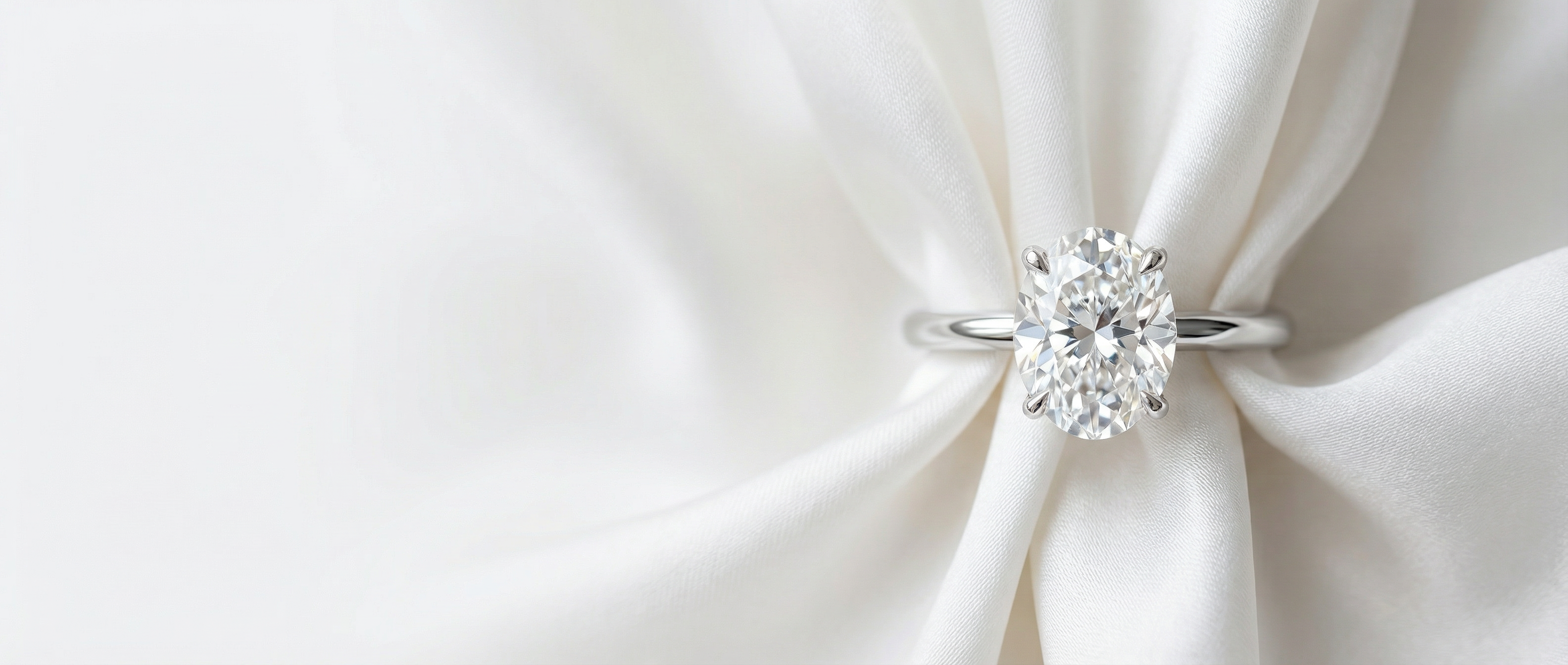
Shape No. 02 · Oval Diamond
Oval Cut
Brilliant Elegance, Elongated
The Oval Diamond is the round brilliant's most sophisticated counterpart — sharing the same 58 facet brilliant cut structure, but stretched into an elliptical outline that elongates the finger, maximizes the perceived size of the stone, and delivers a distinctly individual silhouette. It is among the most rapidly growing diamond shapes of the contemporary era, celebrated for the way it balances classical brilliance with a genuinely distinctive presence.
'The oval takes everything the round brilliant does well and adds something the round can never offer: a silhouette that moves, that flatters, that draws the eye along its length.'
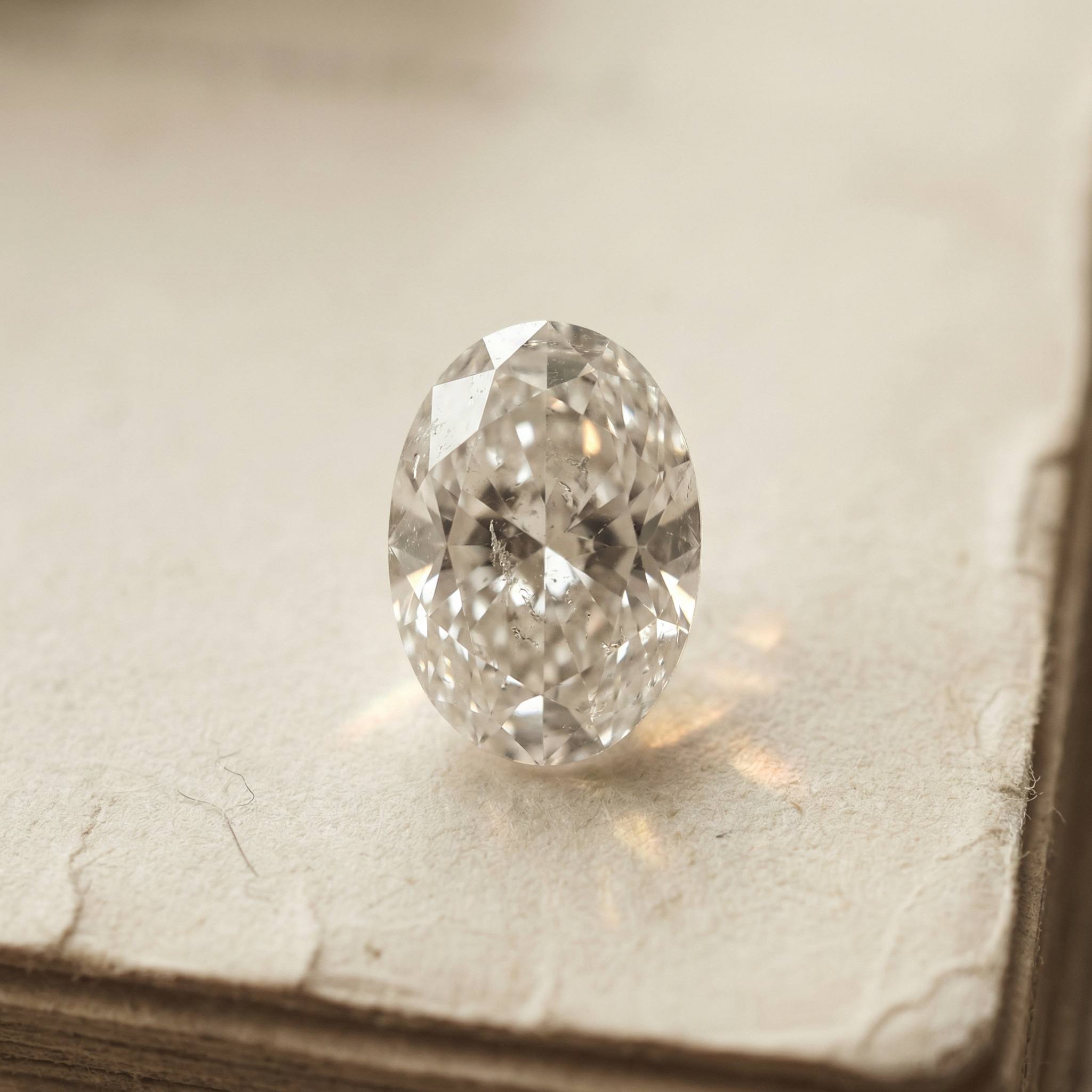
History
Origin & History of the Oval Diamond
Unlike the round brilliant — whose history spans centuries of gradual evolution — the oval diamond as a standardized cut has a precise and relatively recent origin. In 1957, Lazare Kaplan, a Russian-born diamond cutter who had emigrated to the United States and trained under the legendary Abraham Tolkowsky (cousin of Marcel Tolkowsky), developed and patented the modern oval brilliant cut. Kaplan's innovation was deceptively simple: take the proven 58 facet brilliant cut architecture of the round diamond and apply it to an elliptical outline. The result was a shape that delivered brilliant-level light performance — fire, brilliance, and scintillation — in a silhouette that had never before been achieved at this quality level.
Kaplan's timing was fortuitous. The postwar era was a period of growing prosperity and a renewed appetite for distinctive luxury. The oval diamond appealed to buyers who admired the round's legendary sparkle but wanted a stone that stood apart — something that communicated individuality without departing entirely from the classical. Its elongated form resonated with the fashion aesthetic of the era, which consistently favoured length and elegance in everything from clothing to jewelry.
The oval's popularity has followed a cyclical pattern since its introduction. It rose sharply through the 1960s and 1970s, faded somewhat in the angular aesthetic of the 1980s and 1990s, and returned with extraordinary force in the 2010s when a new generation of buyers rediscovered its elongating effect and face-up size advantages. Several high-profile celebrity engagement rings — most notably Blake Lively's pale pink oval — brought the shape to cultural prominence and drove a sustained surge in demand that continues today.
From a technical standpoint, the oval benefits from decades of refinement since Kaplan's original patent. Modern oval diamonds are cut to increasingly precise proportions, and the industry has developed a better understanding of how to minimize the shape's most significant optical challenge — the bow-tie effect — through careful pavilion facet management.
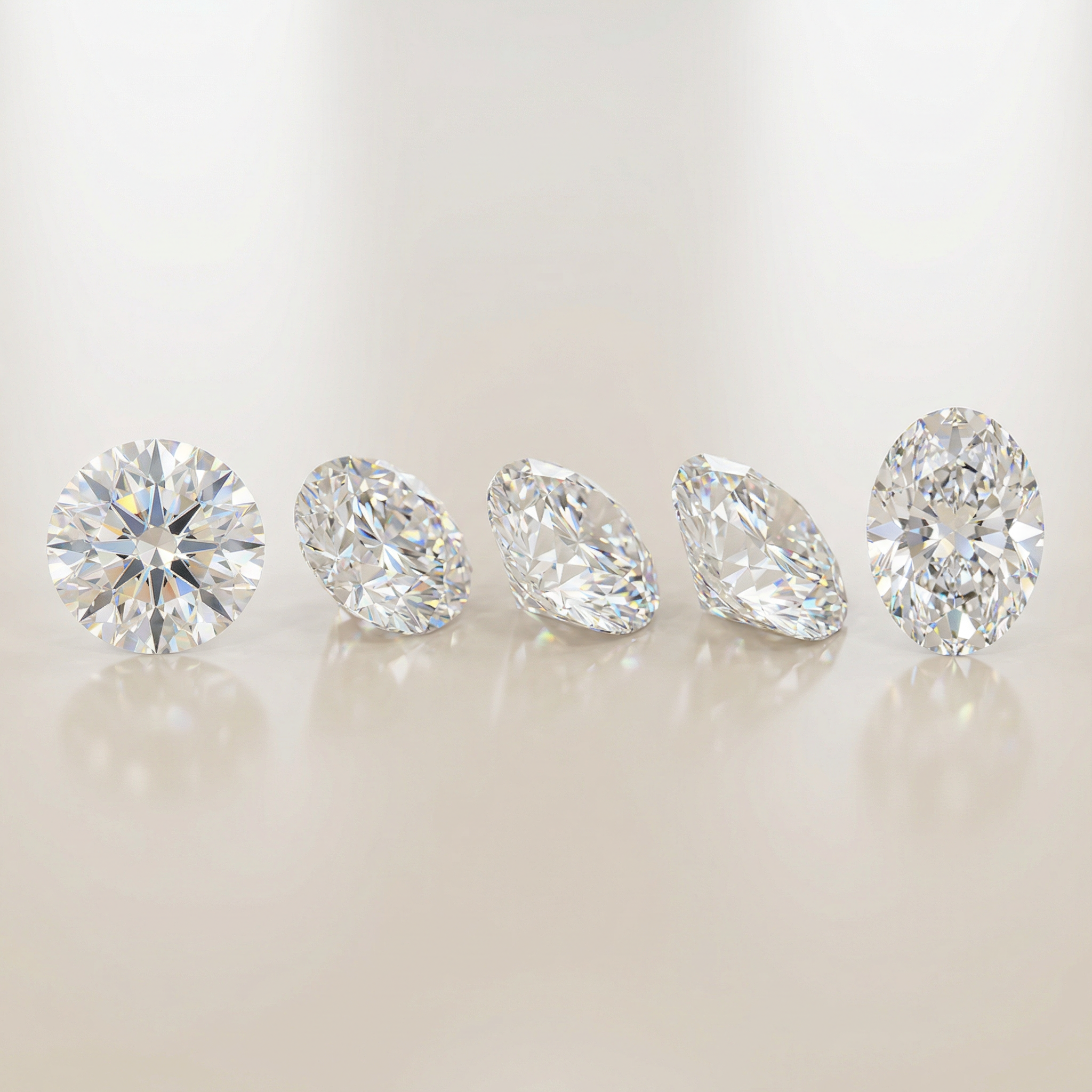
1957
Lazare Kaplan develops and patents the modern oval brilliant cut, applying the 58-facet round brilliant structure to an elliptical outline for the first time.
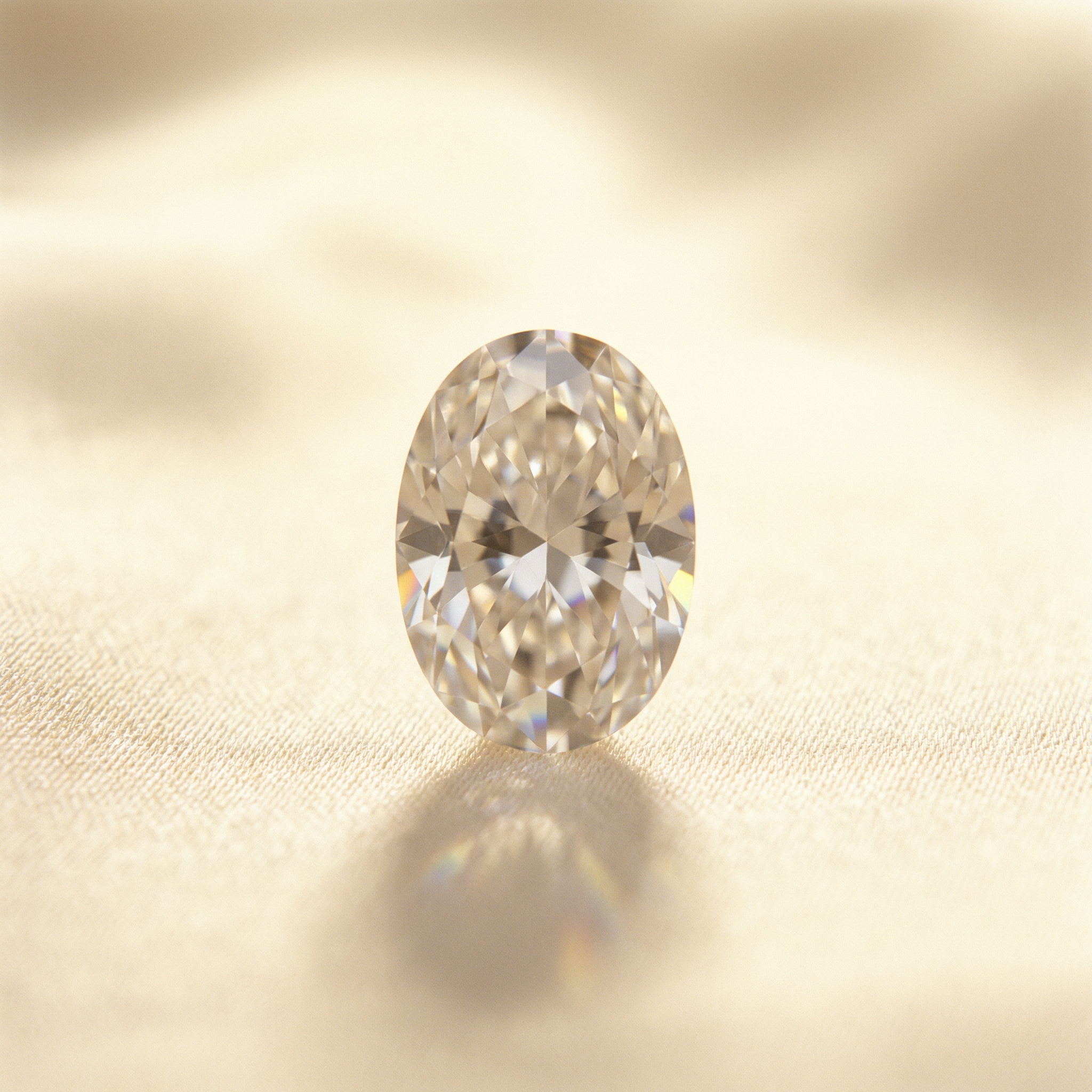
1960s
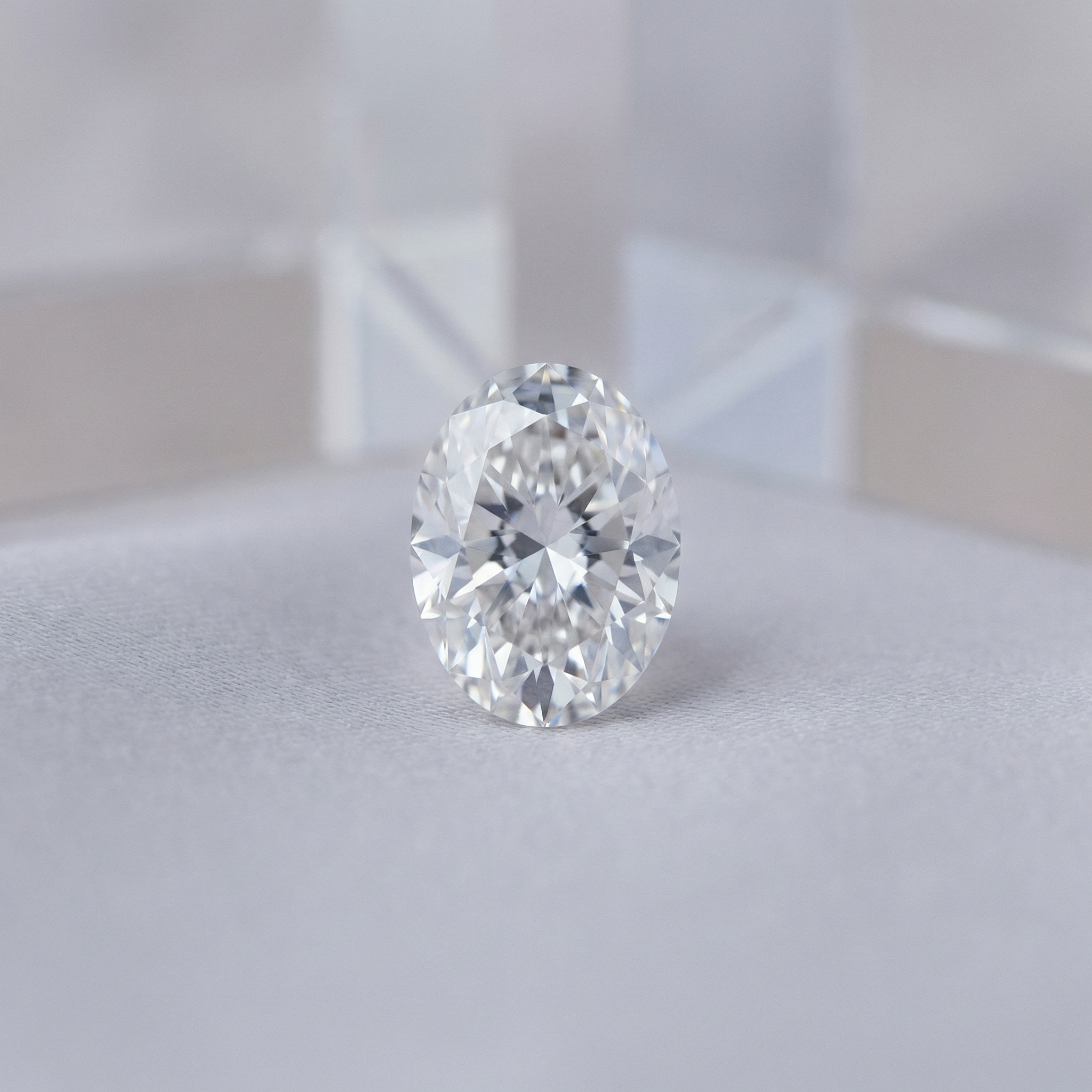
The oval gains rapid popularity in the postwar luxury market, favored for its distinctive silhouette and brilliant light performance. High jewelry houses in Paris and New York begin showcasing it prominently.
1980s
Fashion trends shift toward angular, geometric shapes. Princess and emerald cuts rise in popularity as the oval temporarily recedes from the mainstream.
2012
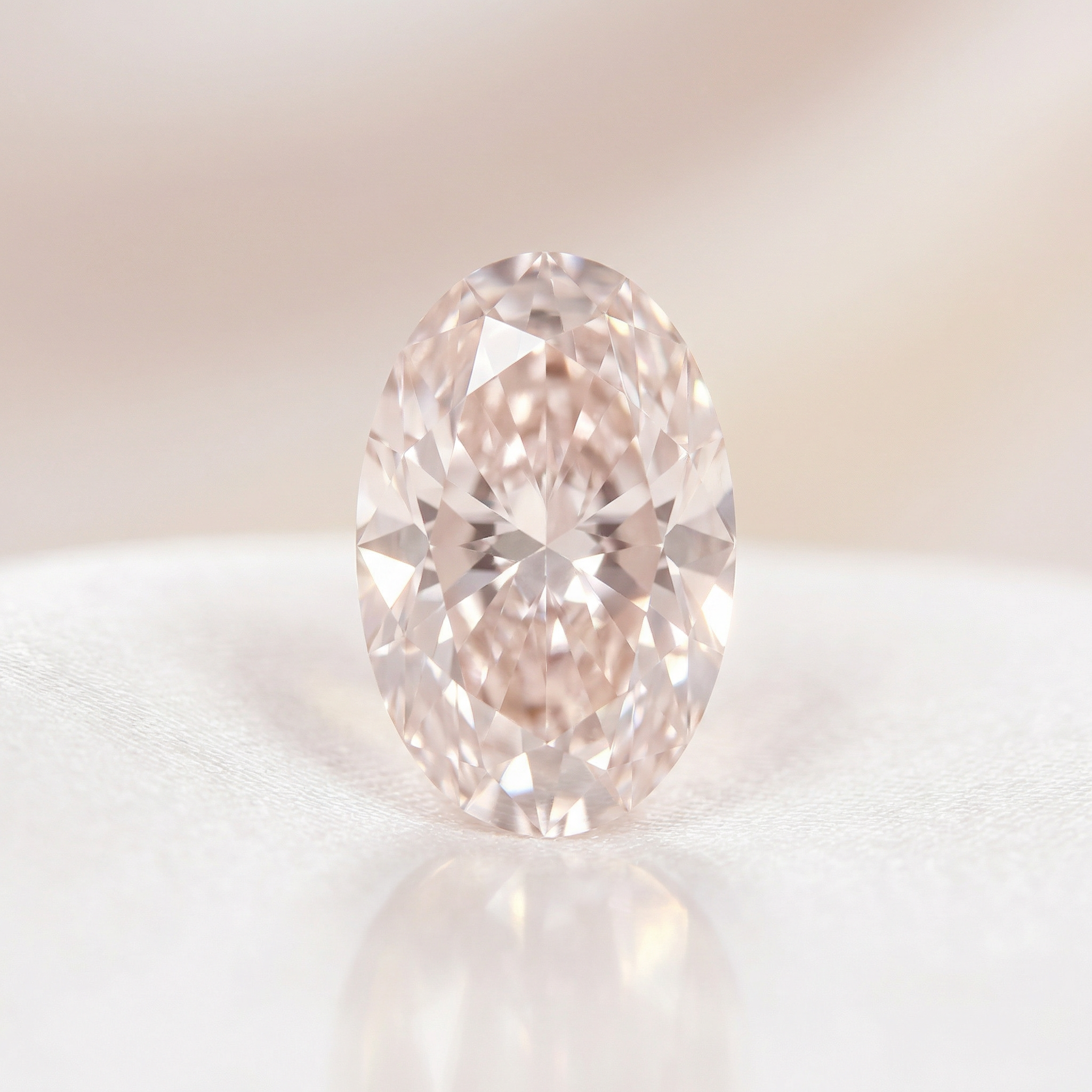
Blake Lively's engagement ring — a pale pink oval by Lorraine Schwartz — becomes one of the most discussed engagement rings of the decade, reigniting widespread interest in the oval cut.
2020s
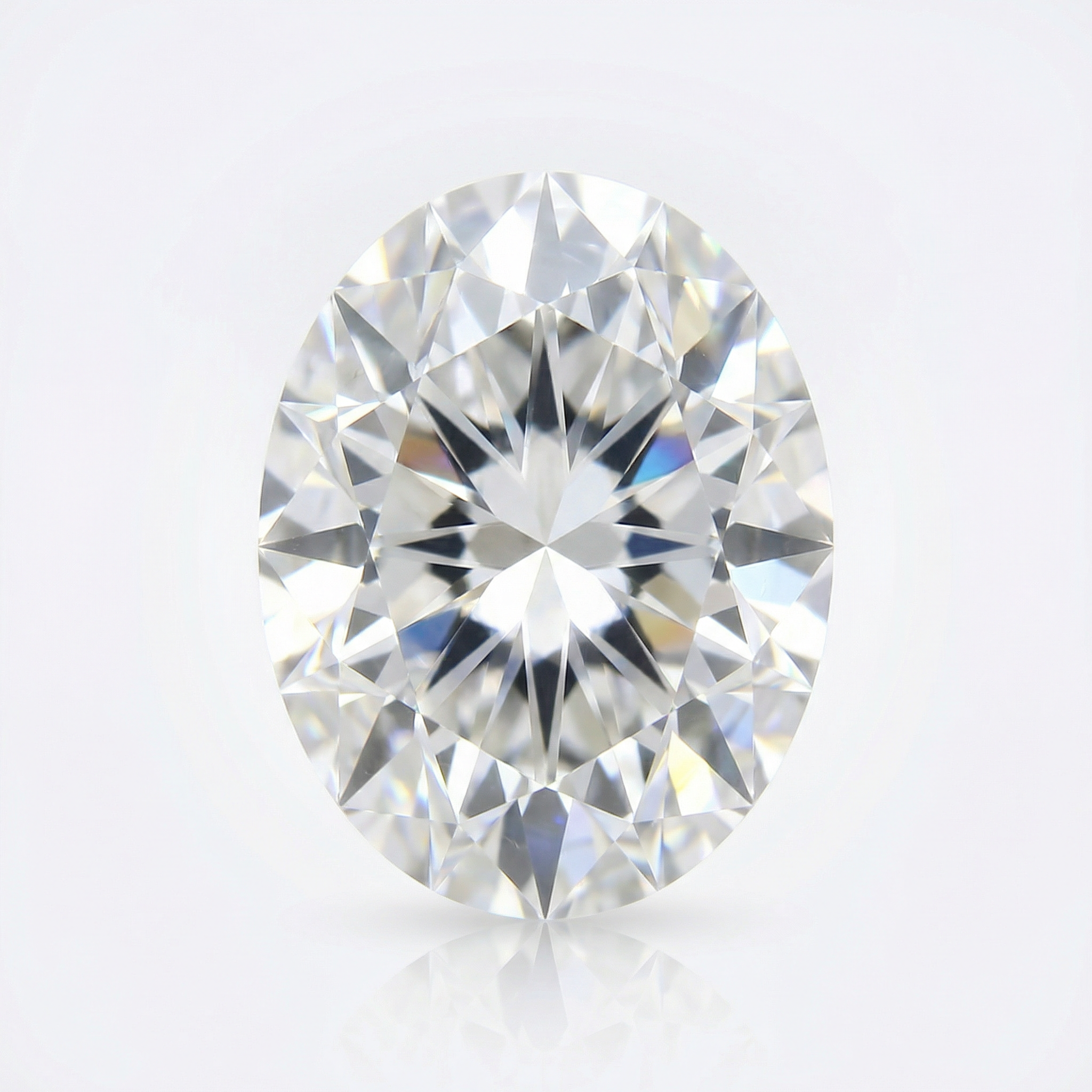
The oval becomes the fastest-growing fancy shape in global diamond sales, driven by its elongating properties, face-up size advantage, and strong presence on social media and in bridal editorial.
Anatomy
The Anatomy of the Oval Diamond
The oval shares the round brilliant's 58-facet architecture but applies it across a non-circular outline — a modification that introduces unique optical considerations, most notably the bow-tie effect, that require careful attention when evaluating any individual stone.

Important Optical Consideration
Understanding the Bow-Tie Effect
The bow-tie effect is a dark, bowtie-shaped shadow that appears across the centre of oval diamonds (and other elongated shapes — pear, marquise) when viewed face-up. It is caused by light entering the stone from a direction that is not reflected back toward the viewer through those central facets. Every oval diamond has some degree of bow-tie — the question is how prominent and intrusive it is. A slight bow-tie is normal and, in many stones, adds depth and contrast. A severe bow-tie is a significant flaw that reduces beauty. There is no certificate grade for bow-tie severity; the only way to evaluate it is to view the actual stone. At Michael Gabriels, we assess and disclose bow-tie character for every oval diamond in our inventory.
The two pointed ends of the oval along its length axis. Unlike the sharp point of a marquise, oval tips are gently rounded, making them more resistant to chipping. The curvature of the tips affects the stone's overall length-to-width ratio perception.
The widest section of the oval, at its midpoint. The belly's curvature — how much the oval 'bows out' at its widest — affects the overall fullness of the shape. Overly narrow bellies produce a thin, elongated appearance; too much belly creates a look closer to round.
The upper half above the girdle, comprising the table, star facets, bezel facets, and upper girdle facets — the same facet groups as the round brilliant but arranged over an elliptical rather than circular footprint.
The perimeter edge. In ovals, the girdle thickness should be monitored at the tips — this is the most structurally vulnerable area and should be at least 'Thin' to avoid chipping risk in prong settings.
The lower half below the girdle. The pavilion facet arrangement of an oval is adapted from the round — 8 main pavilion facets, 8 lower girdle facets — but the angles must be modified to account for the elliptical outline. Poor pavilion angles are the primary cause of a severe bow-tie.
The central flat facet on the crown, elliptical in shape to match the outline. The table percentage for ovals is typically evaluated as a proportion of the stone's width at its widest point. Most well-cut ovals have a table of 53–63%.
Buying Guide
Expert Advice for Buying an Oval Diamond
Choose Your Length-to-Width Ratio Intentionally
The length-to-width (L/W) ratio is the most important proportion decision you will make when choosing an oval. A ratio of 1.35–1.50 produces the classic oval silhouette — visibly elongated but not excessively thin. Below 1.30, the stone begins to look nearly round. Above 1.55, it can appear pencil-thin and the bow-tie effect tends to worsen. Your preferred ratio is ultimately a matter of personal taste and hand proportions — longer hands typically carry a more elongated oval beautifully, while shorter fingers may prefer a ratio closer to 1.35.
Always Evaluate the Bow-Tie in Person
No grading certificate will tell you how severe a given oval's bow-tie effect is — this must be assessed by viewing the stone itself, ideally in multiple lighting environments. A slight bow-tie is natural and even desirable in many stones, providing depth and visual contrast. A severe bow-tie — one that dominates the centre of the diamond and remains visible in all lighting — is a meaningful optical flaw. When reviewing an oval at Michael Gabriels, our gemologists will specifically point out and explain the bow-tie character of any stone you are considering.
Protect the Tips with a Proper Setting
The two pointed ends of an oval — though more durable than the sharp points of a marquise — are still the most structurally vulnerable parts of the stone. For everyday wear, ensure that your setting design includes prongs specifically positioned to cover and protect each tip. A V-prong or pointed prong at each tip is the most secure approach. Bezel settings offer even greater protection and give the oval a clean, modern aesthetic, though they reduce the amount of light entering the stone from the sides.
Consider a Slightly Lower Color Grade
Oval diamonds, like rounds, are brilliant-cut shapes and therefore mask color reasonably well through light dispersion. However, color can concentrate at the tips — particularly in lower color grades. In a white metal setting, G–H color delivers a near-colorless appearance with excellent value. In yellow or rose gold, H–I is a practical and beautiful choice. Avoid going below I colour in white gold if colour sensitivity is important to you — the tips may show a noticeable warmth that the metal setting will not conceal.
Continue Exploring
Shapes Related to the Oval Diamond

The oval's closest relative — same 58-facet brilliant architecture, the benchmark for light performance, and the world's most popular diamond shape. If you love the oval's sparkle and want the most universally flattering option, the round is your reference point.

Like the oval, the pear is an elongated brilliant-cut shape with strong finger-slimming properties. Where the oval is symmetrical at both ends, the pear tapers to a point — offering a more dramatic, directional silhouette for buyers who want a bolder statement.

The most elongated of all diamond shapes, the marquise shares the oval's finger-elongating properties but takes them to their extreme. Both shapes also share the bow-tie optical characteristic. For buyers who want maximum length and maximum drama, the marquise is the logical progression from the oval.
Ready to Begin?
Find Your Perfect Oval Diamond
Browse Michael Gabriels' curated selection of oval diamonds — each independently certified, hand-selected for bow-tie character, and reviewed by our gemologists for exceptional light performance and proportion quality.
Common Questions
Diamond Shape FAQ
Shape refers to the outline of the diamond as viewed from above — round, oval, pear, and so on. Cut refers to the quality of the craftsmanship: how well the diamond's facets are angled, polished, and proportioned. A round diamond with an Excellent cut grade has been faceted to precise ideal proportions. A round diamond with a Poor cut grade has the same shape but far inferior light performance. Both shape and cut matter; shape determines the diamond's silhouette, cut determines how beautifully it performs within that silhouette.
Elongated shapes — particularly the marquise, oval, and pear — tend to have the largest face-up appearance relative to their carat weight, because their mass is spread across a longer surface area. The emerald cut also reads as large due to its open table. The round brilliant, by contrast, concentrates mass into a compact depth, so a 1.00ct round will measure approximately 6.5mm across, while a 1.00ct oval may measure 8.0 x 5.5mm — appearing visibly larger in many settings.
The round brilliant is the most scientifically optimised shape for light return — its 58 facets are positioned according to precise mathematical principles that maximise brilliance, fire, and scintillation simultaneously. However, "best" is subjective. A well-cut oval, cushion, or radiant can be extraordinarily beautiful, and many buyers prefer the distinctiveness of a fancy shape over the conventional round. The most important factor is ensuring the cut quality is excellent, regardless of the shape you choose.
Round brilliant diamonds have historically held their resale value better than fancy shapes, largely because they represent the largest segment of market demand. Fancy shapes — ovals, pears, cushions — can fluctuate more in resale value depending on current trends. That said, diamonds are generally not considered liquid investment assets, and the intrinsic beauty and personal meaning of your chosen shape should take precedence over resale considerations in most purchasing decisions.
For round brilliants, the GIA and AGS provide cut grades (Excellent/Ideal) that reflect overall proportion quality. For fancy shapes, no equivalent standardized cut grade currently exists — which means buyers must evaluate proportions themselves. At Michael Gabriels, each of our individual shape guides includes a detailed proportions section with the specific measurements you should look for, and our gemologists are available to review any stone you are considering.


