

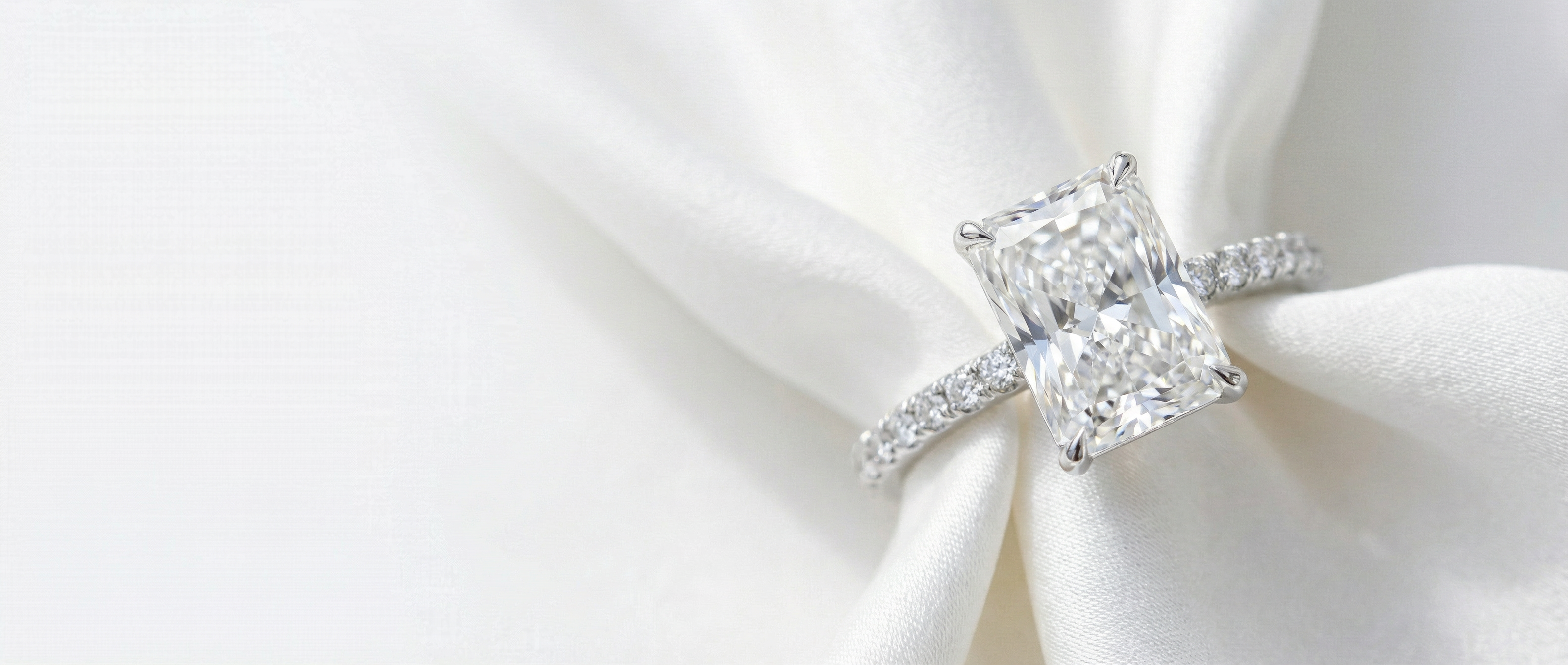
Shape No. 03 · Radiant Cut Diamond
Radiant Cut
Geometric Brilliance, Uncompromised
The radiant cut diamond occupies a singular position in the world of fine diamonds: it is the only shape to combine a rectangular or square outline with a fully brilliant-cut facet pattern. The result is a stone of extraordinary intensity — the clean, architectural lines of a step-cut shape, charged with the explosive sparkle of a round brilliant. For buyers who want geometry and fire in equal measure, the radiant is without rival.
"Grossbard didn't choose between geometry and fire — he proved they could coexist in a single diamond. The radiant cut was the answer to a question the industry had stopped asking."
History
Origin & History of the Radiant Cut
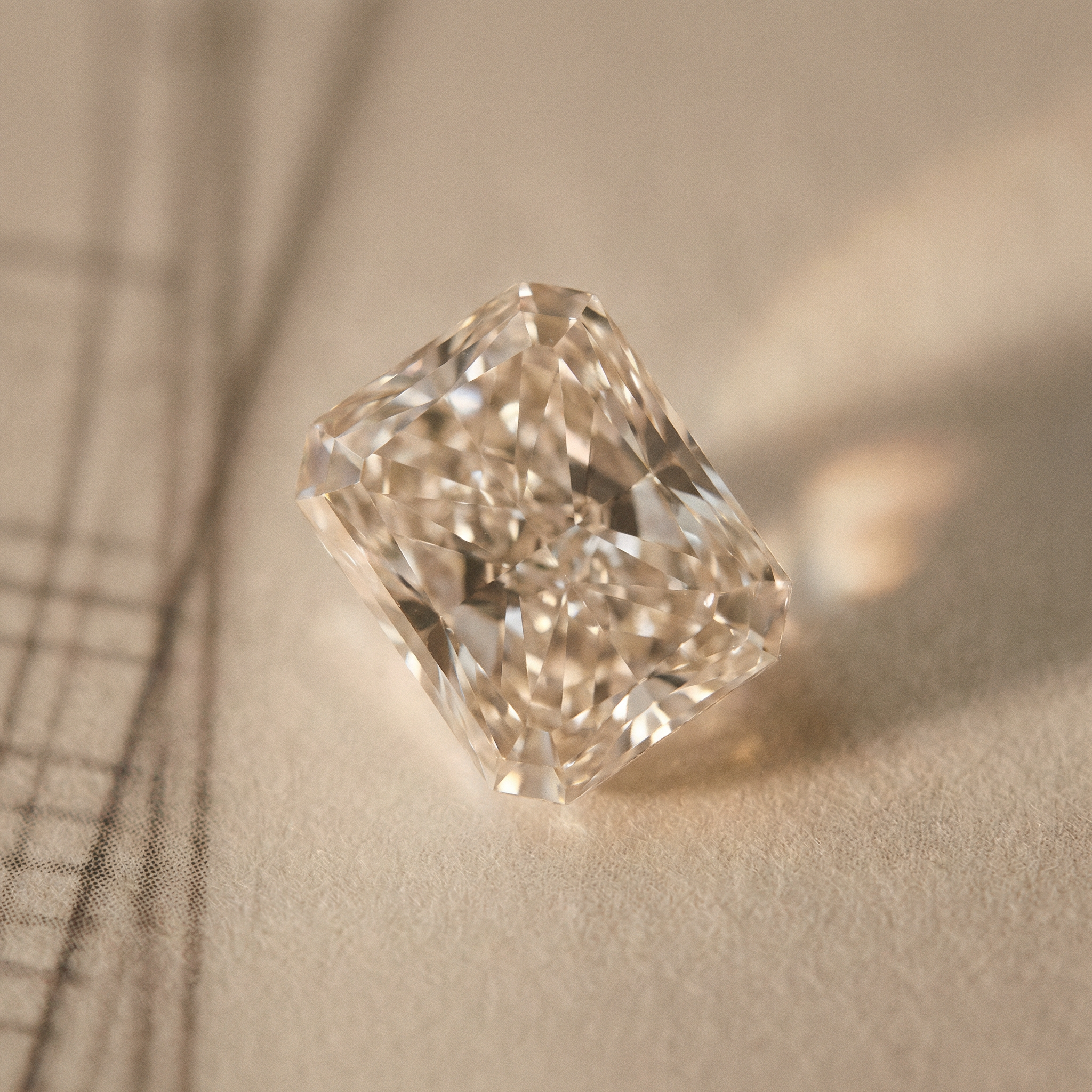
The radiant cut diamond is one of the most deliberately engineered diamond shapes in the history of fine gemstones. It was developed in 1977 by Henry Grossbard, a New York-based diamond cutter who had spent years grappling with what he saw as a fundamental compromise at the heart of diamond cutting: buyers who wanted a rectangular or square diamond were forced to choose between the clean geometry of a step cut — emerald or Asscher — and the dynamic brilliance of round-based shapes. They could not have both. Grossbard set out to resolve that tension.
Working over several years, Grossbard designed a facet pattern that applied brilliant-cut principles — the triangular and kite-shaped facets that produce maximum light return — to a rectangular outline with trimmed corners. The trimmed corners served a dual purpose: they softened the visual harshness of a purely rectangular shape and eliminated the structural vulnerability of sharp corners that can chip in setting. His design used between 62 and 70 facets, more than the standard round brilliant's 58, producing a distinctly crushed-ice sparkle pattern that many buyers find even more visually dynamic than the round.
It is worth noting that Tolkowsky himself was aware his calculations were a starting point rather than a final answer. He acknowledged that small variations in proportions could produce different, valid balances between brilliance and fire. This insight — that the ideal cut is a range of proportions rather than a single point — laid the groundwork for everything that followed, from the GIA's cut grading system to the Hearts and Arrows ideal cut standard.
Over the twentieth century, advances in diamond cutting technology — from the introduction of the bruting machine to the precision of modern computer-aided manufacturing — allowed cutters to achieve Tolkowsky's proportions with increasing accuracy and consistency. Today's top-graded round brilliants are cut to tolerances measured in fractions of a degree.
1977
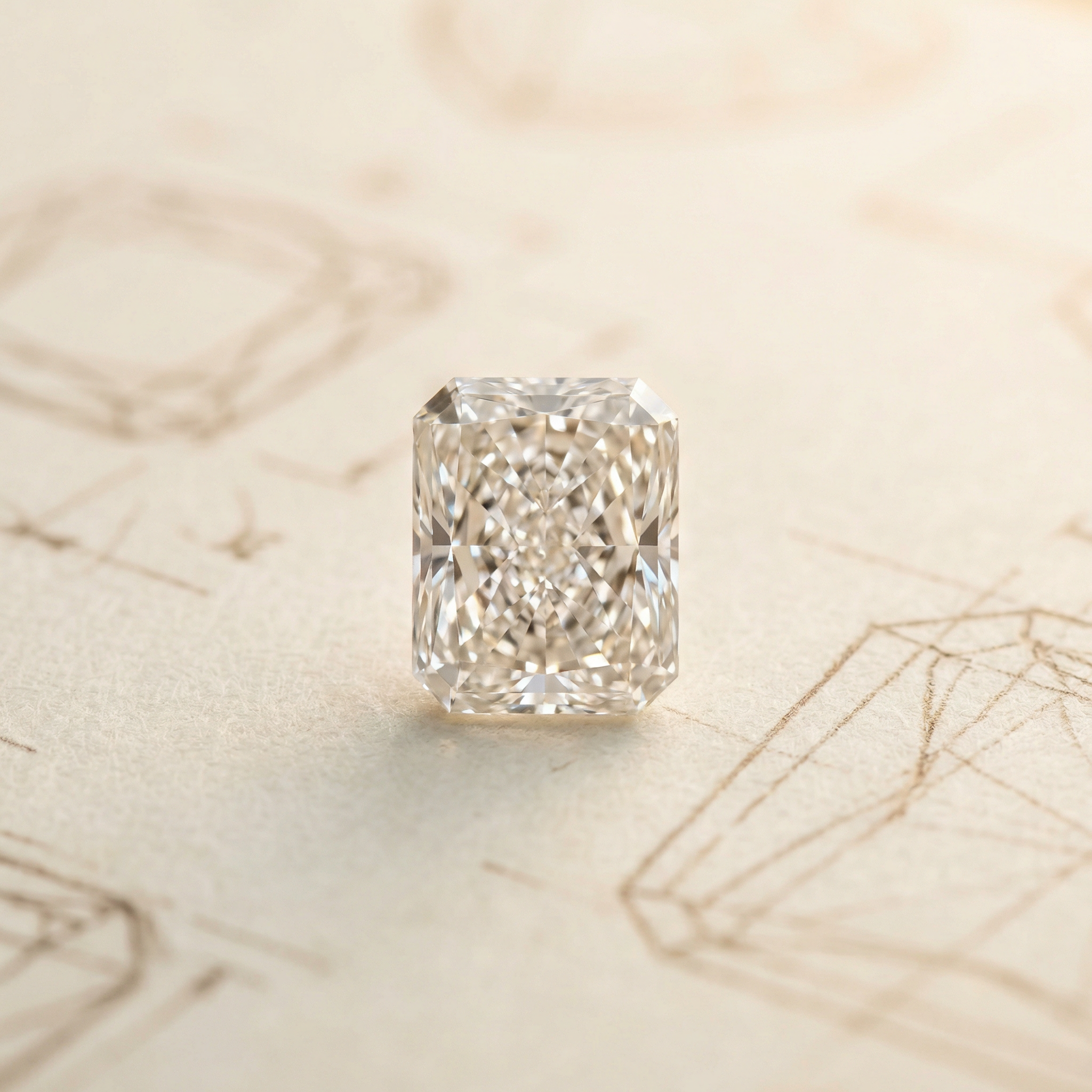
Henry Grossbard develops and patents the radiant cut diamond — the first rectangular shape to combine brilliant-cut faceting with trimmed corners.
1980s
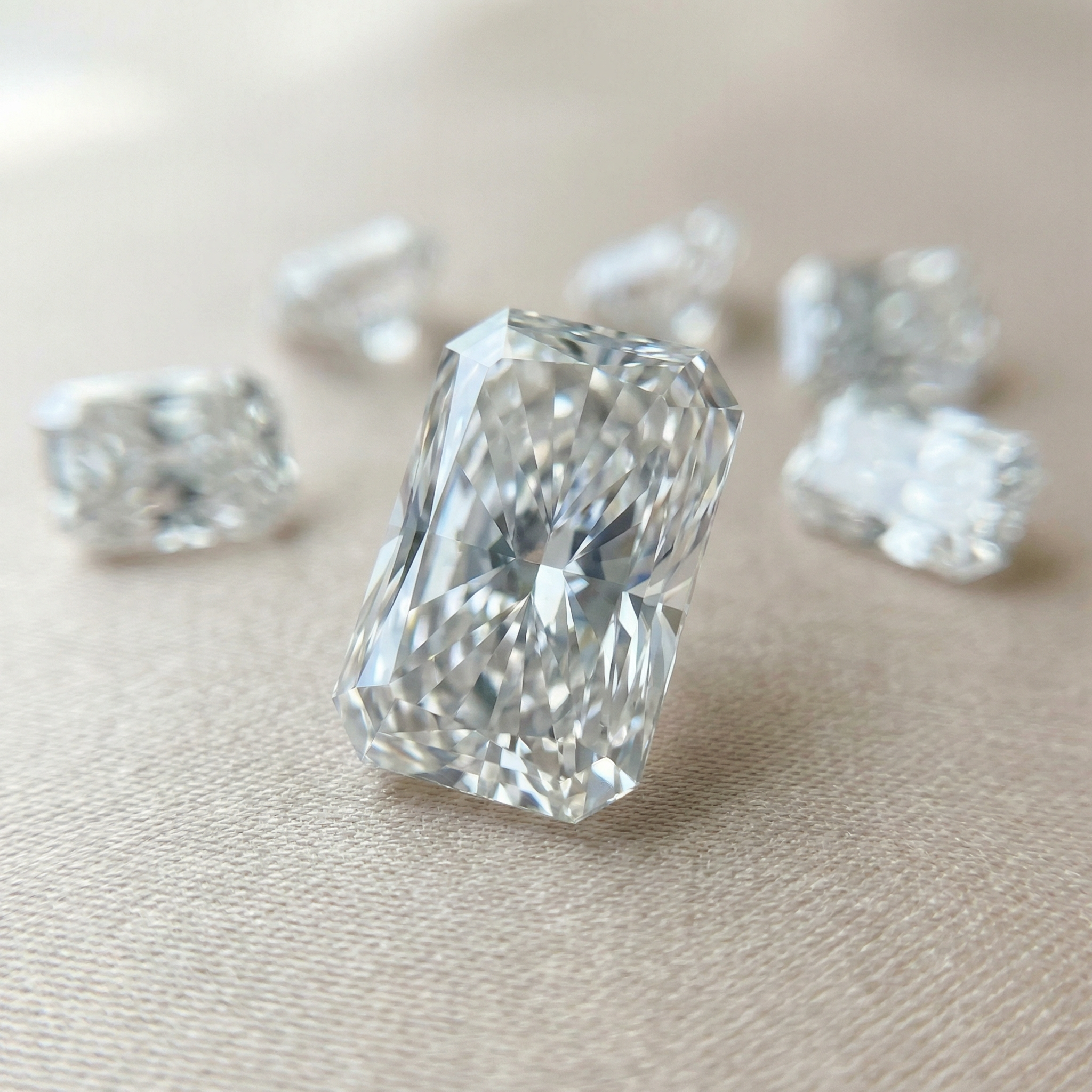
The radiant gains a following among buyers seeking a rectangular shape with more fire than the emerald cut. Luxury jewelers begin featuring it prominently in high jewelry collections.
Late 1990s
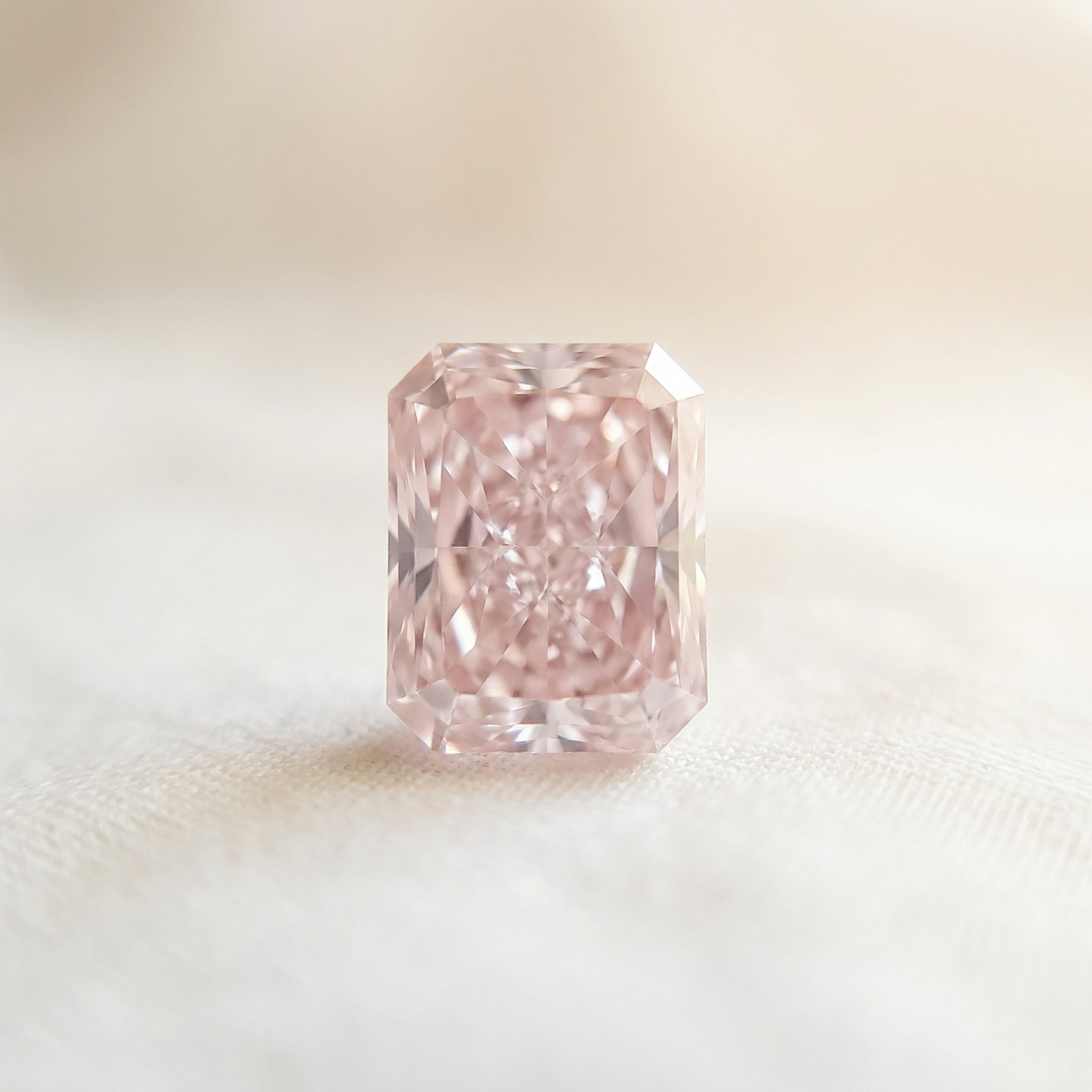
Grossbard's patent expires. Competing cutters begin producing their own rectangular brilliant-cut variants, expanding the category and driving down production costs.
2002
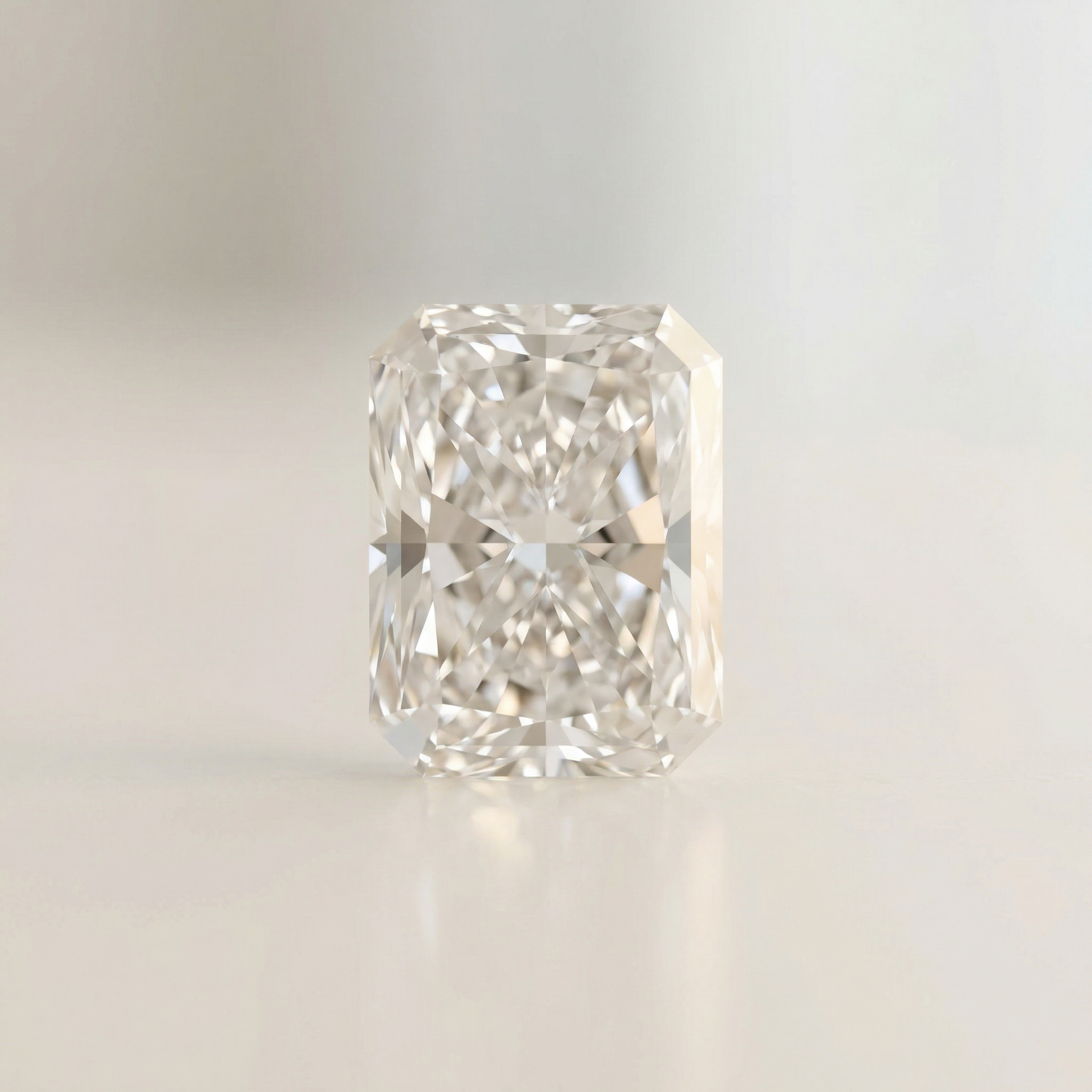
Jennifer Lopez receives a pink radiant cut diamond engagement ring from Ben Affleck — at that time one of the most expensive engagement rings ever gifted publicly — elevating the shape's cultural profile significantly.
2020s
The radiant maintains strong market share as a preferred shape for both white diamonds and fancy colored stones, valued for its color retention and versatility in three-stone and east-west settings.
Anatomy
The Anatomy of the Radiant Cut
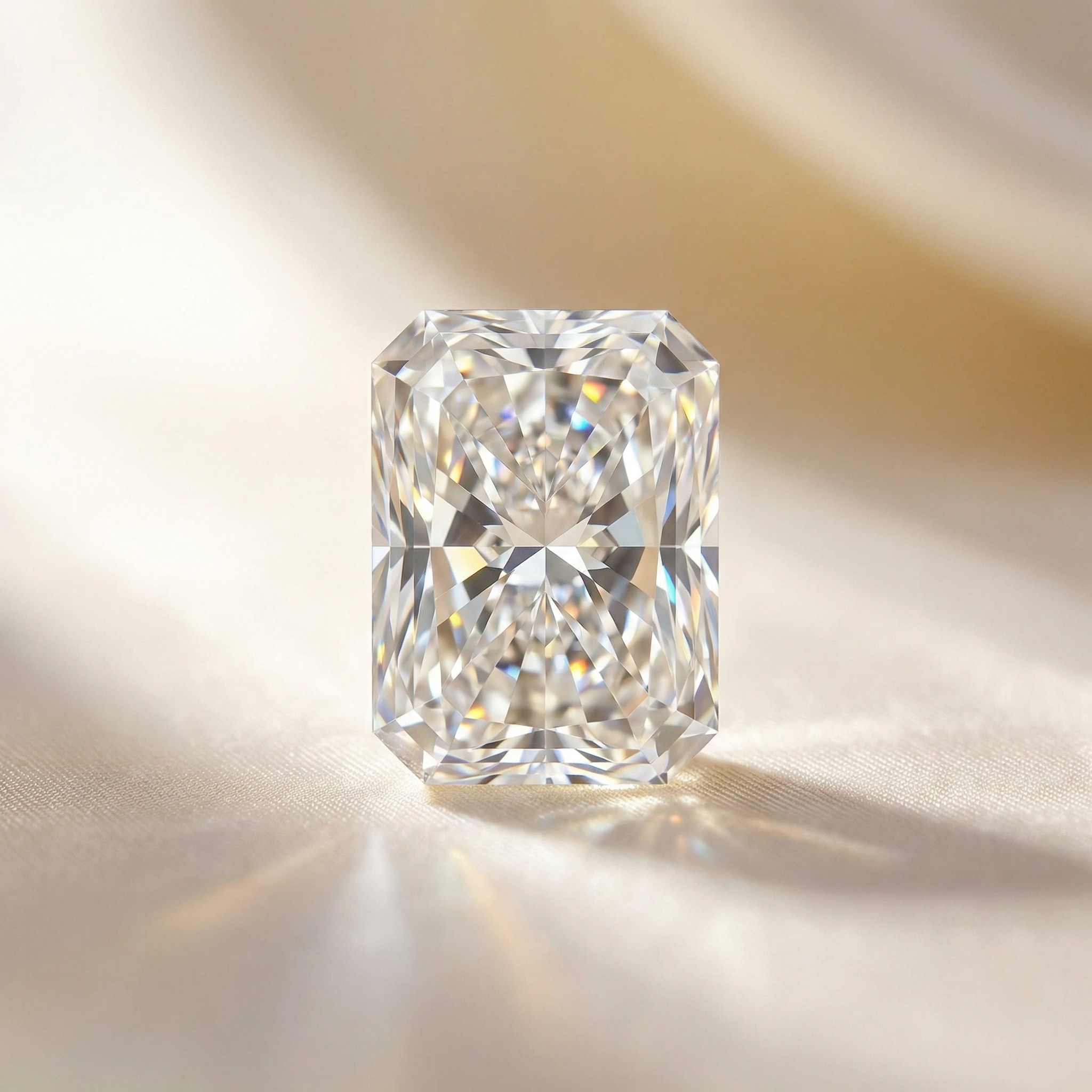
The radiant's defining characteristic is its trimmed octagonal outline combined with a fully brilliant-cut facet structure. This combination produces the shape's signature look: geometric and structured from a distance, explosively sparkling up close.
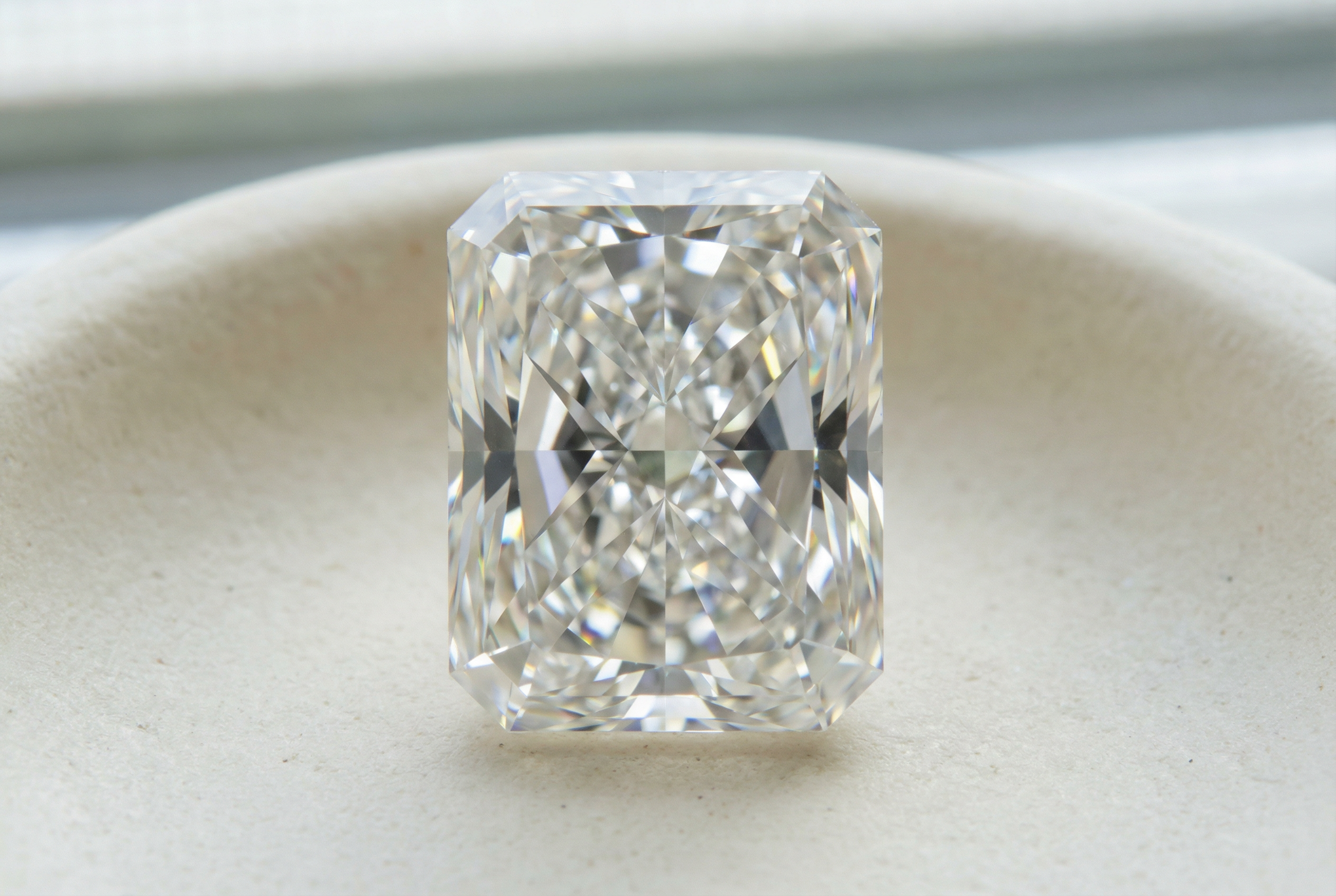
The radiant's most visually distinctive feature — the four angled corners that transform the outline from a rectangle into an octagon. These corners eliminate the chipping vulnerability of sharp corners (as seen in the princess cut) and soften the overall silhouette.
The large rectangular flat facet on the crown. Radiant tables typically run 61–69% of the stone's width. Because the radiant is a brilliant cut, the table does not produce the "window" transparency of a step-cut shape — light is dispersed rather than reflected in broad, clear flashes.
Triangular and kite-shaped facets that cover the crown between the table and girdle. The radiant's additional facets (62–70 vs. the round's 58) produce its characteristic crushed-ice sparkle — a more random, glittering light pattern versus the organized scintillation of a round.
The octagonal perimeter of the stone. The radiant's girdle follows the trimmed-corner outline, running parallel to the table facets. Girdle thickness in a radiant should be even around the entire perimeter — uneven girdles are a common quality issue in this shape.
The lower half, faceted with the same brilliant-cut pattern adapted for the rectangular outline. The pavilion is responsible for the radiant's exceptional color retention — the multiple small facets trap and concentrate color more effectively than the large open facets of a step cut.
The proportion that defines whether the radiant reads as square (1.00–1.05) or rectangular (1.20 and above). Unlike some shapes where ratios are standardized, the radiant is produced across a wide range of L/W ratios — making this one of the first specifications to define when purchasing.
Buying Guide
Expert Advice for Buying a Radiant Diamond
Decide on Shape First: Square or Rectangular
The radiant is produced across a wider range of length-to-width ratios than almost any other shape. A ratio of 1.00–1.05 gives you a square radiant; 1.20–1.40 gives a clearly rectangular stone. Both are legitimate and beautiful — but they communicate very different aesthetics. The square radiant is a strong, bold alternative to the princess cut without the corner vulnerability; the rectangular radiant is a brilliant-cut alternative to the emerald. Decide which expression you are seeking before evaluating individual stones.
Embrace a Lower Color Grade for Colored Diamonds
The radiant cut's brilliant facet pattern is uniquely effective at concentrating and amplifying color — a property that makes it the preferred shape for fancy colored diamonds worldwide. If you are considering a fancy yellow, pink, or any other colored stone, the radiant will deliver more intense color saturation than an emerald or Asscher cut of the same grade. For white diamonds, however, this same colour retention works in reverse: a radiant will show warmth more readily than an oval or round. Stay at G or above in white metal settings.
Depth Percentage Matters More Than in Other Shapes
Radiant cuts tend to carry more of their carat weight in depth (the distance from table to culet) than other shapes — a radiant with a depth percentage over 70% will look smaller face-up than its carat weight suggests. When comparing two radiant diamonds of the same carat weight, always check the table dimensions in millimeters rather than relying on carat weight alone. A well-proportioned radiant at 65% depth will appear noticeably larger than a deeper stone of identical weight.
Choose Settings That Protect the Corners
While the radiant's trimmed corners are far more durable than the sharp points of a princess cut, they are still the areas of greatest structural exposure. Prongs placed directly at each of the four trimmed corners provide the best protection. Many buyers also choose a half-bezel or full bezel for the radiant — this setting style complements the geometric outline and provides complete corner coverage. Avoid settings where the corners are unsupported over the edge of the setting.
Continue Exploring
Shapes Related to the Radiant Cut

The princess shares the radiant's brilliant-cut faceting and square outline, but retains sharp, unclipped corners. It produces a similar sparkle intensity with a more rigidly geometric, architectural silhouette. Compare both before choosing your square shape.

The radiant's conceptual opposite — same rectangular outline, trimmed corners, and octagonal shape, but with step-cut rather than brilliant-cut faceting. The emerald produces calm, architectural flashes of light where the radiant produces explosive sparkle. Ideal for comparing both aesthetics.

Like the radiant, the cushion combines brilliant-cut faceting with a non-circular outline. Where the radiant is angular and geometric, the cushion is softly rounded — offering a warmer, more romantic expression of the same sparkle intensity.
Ready to Begin?
Find Your Perfect Radiant Diamond
Browse Michael Gabriels' selection of radiant cut diamonds — white and fancy colored, each independently certified and reviewed by our gemologists for depth, proportions, and light performance.
Common Questions
Diamond Shape FAQ
Shape refers to the outline of the diamond as viewed from above — round, oval, pear, and so on. Cut refers to the quality of the craftsmanship: how well the diamond's facets are angled, polished, and proportioned. A round diamond with an Excellent cut grade has been faceted to precise ideal proportions. A round diamond with a Poor cut grade has the same shape but far inferior light performance. Both shape and cut matter; shape determines the diamond's silhouette, cut determines how beautifully it performs within that silhouette.
Elongated shapes — particularly the marquise, oval, and pear — tend to have the largest face-up appearance relative to their carat weight, because their mass is spread across a longer surface area. The emerald cut also reads as large due to its open table. The round brilliant, by contrast, concentrates mass into a compact depth, so a 1.00ct round will measure approximately 6.5mm across, while a 1.00ct oval may measure 8.0 x 5.5mm — appearing visibly larger in many settings.
The round brilliant is the most scientifically optimised shape for light return — its 58 facets are positioned according to precise mathematical principles that maximise brilliance, fire, and scintillation simultaneously. However, "best" is subjective. A well-cut oval, cushion, or radiant can be extraordinarily beautiful, and many buyers prefer the distinctiveness of a fancy shape over the conventional round. The most important factor is ensuring the cut quality is excellent, regardless of the shape you choose.
Round brilliant diamonds have historically held their resale value better than fancy shapes, largely because they represent the largest segment of market demand. Fancy shapes — ovals, pears, cushions — can fluctuate more in resale value depending on current trends. That said, diamonds are generally not considered liquid investment assets, and the intrinsic beauty and personal meaning of your chosen shape should take precedence over resale considerations in most purchasing decisions.
For round brilliants, the GIA and AGS provide cut grades (Excellent/Ideal) that reflect overall proportion quality. For fancy shapes, no equivalent standardized cut grade currently exists — which means buyers must evaluate proportions themselves. At Michael Gabriels, each of our individual shape guides includes a detailed proportions section with the specific measurements you should look for, and our gemologists are available to review any stone you are considering.


