


The Definitive Stud Guide · Michael Gabriels
Everything You Need, Expertly Explained
Lab grown diamond stud earrings are the ultimate everyday essential—minimal, bright, and effortlessly dressy. The challenge is choosing the rightsize, 4Cs, shape, metal, and settingso they look perfect on your ears and fit your lifestyle.
This guide explains how to choose lab grown diamond stud earrings step by step and links directly to:
How to Choose Lab Grown Diamond Stud Earrings
Start With How You’ll Wear Your Stud Earrings
Before diving into specifications, decide how you want to wear your lab grown diamond studs:
- Everyday, all-day wear
Something you put on and forget—office, errands, casual weekends. - Desk-to-dinner
A pair that works for daytime but still looks special in the evening. - Occasion-only
High-impact studs reserved for events, weddings, or formal nights.
Most shoppers looking for lab grown diamond stud earrings want versatile everyday or desk-to-dinner pieces, which usually points to mid-range sizes and practical, low-profile settings.
10 Iconic Cuts
Choose Your Stud Diamond Shape
Select any shape to read its complete guide — covering origin, anatomy, ideal proportions, light performance, and expert buying advice written by the gemologists at Michael Gabriels.


Carat vs Millimeter: How Big Will My Studs Look?
For round brilliant lab-grown diamonds, you can use approximate mm sizes to visualize how each carat weight will sit on the ear.
Below is a general reference using pair total carat weight (CTW), typical per-ear weight, and approximate diameter per diamond:
| Pair Total (CTW) | Approx. Per Ear (ct) | Approx. Diameter (mm, each) | Typical Look & Feel |
|---|---|---|---|
| 0.25 CTW | ~0.12–0.13 ct | ~3.0 mm | Very delicate; subtle sparkle; ideal for second holes or ultra-minimal looks. |
| 0.50 CTW | ~0.25 ct | ~4.0–4.1 mm | Light everyday sparkle; refined and understated. |
| 0.75 CTW | ~0.37 ct | ~4.7–4.8 mm | Noticeable but still easy for daily wear; a touch more presence. |
| 1.00 CTW | ~0.50 ct | ~5.0–5.2 mm | Classic "sweet spot" size; balanced, eye-catching on most ears. |
| 1.50 CTW | ~0.75 ct | ~5.8–5.9 mm | Bold everyday or soft statement; strong sparkle without feeling oversized for many people. |
| 2.00 CTW | ~1.00 ct | ~6.5 mm | Statement studs; luxurious, very visible across the room. |
| 3.00+ CTW | ~1.50 ct+ | ~7.4 mm and above | High-impact glamour; suited to bold style or special occasions. |
Understand CTW vs Carat Per Ear
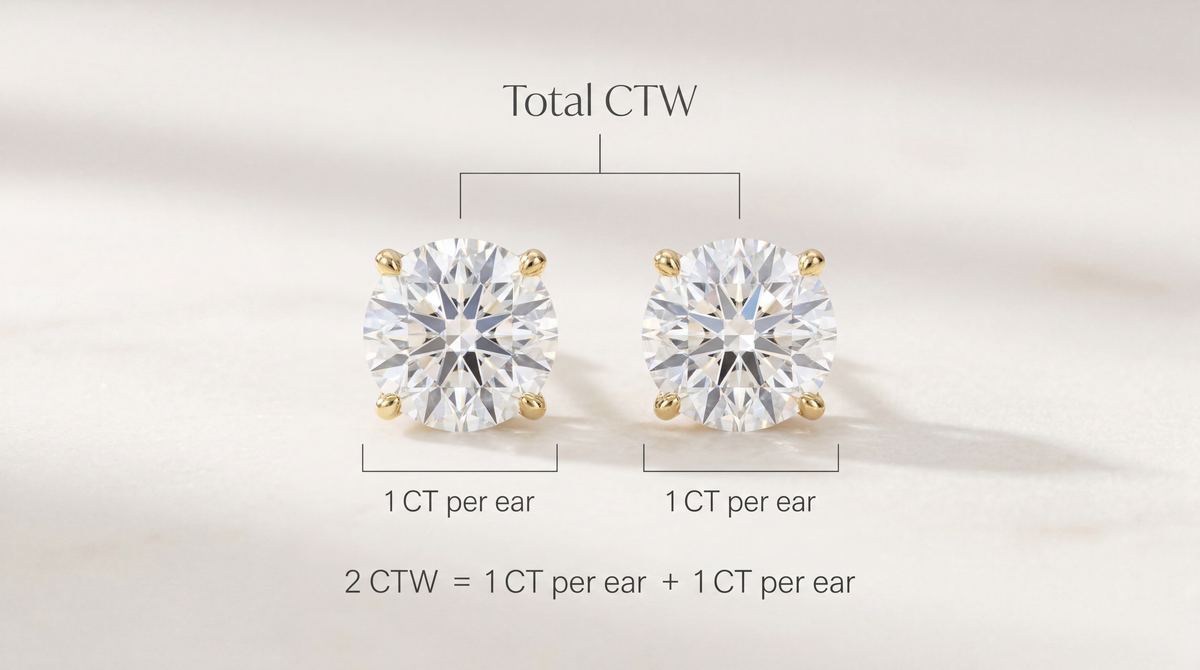
The first technical step in learning how to choose lab grown diamond stud earrings is understanding how carat weight is listed.
- CTW / CTTW / CTW = Carat Total Weight (combined weight of both earrings in the pair)
- Per-ear carat weight = CTW ÷ 2 (for matched pairs)
Common examples:
- 0.50 CTW studs → roughly 0.25 ct per ear
- 1.00 CTW studs → roughly 0.50 ct per ear
- 2.00 CTW studs → roughly 1.00 ct per ear
Carat is a measure of weight, not direct physical size, so two 0.50 ct diamonds can look slightly different depending on cut and proportions. This is why millimeter (mm) measurements and on-ear photos are helpful when finalizing your choice.
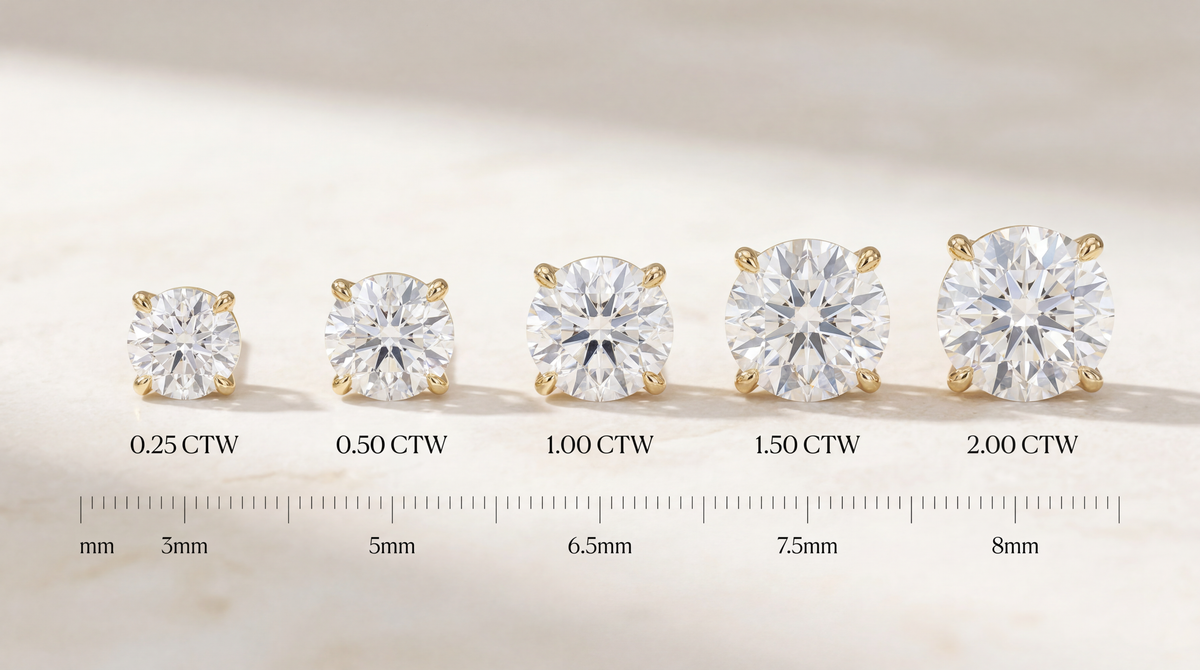
Choose Your Ideal Stud Size (CTW & Approx. mm)
Because studs sit directly on the lobe, size is one of the most important decisions you’ll make.
Disclaimer: The approximate millimeter ranges below are based on commonly used round brilliant size charts; actual sizes may vary slightly by stone and setting.
Popular size ranges
0.25–0.50 CTW (pair)
- Approx. 3.0–4.1 mm each
- Very subtle and lightweight. Great for second piercings, petite lobes, or ultra-minimal looks.
0.50–1.00 CTW (pair)
- Approx. 4.0–5.2 mm each
- Widely considered the everyday “sweet spot”—noticeable sparkle without being overpowering or heavy.
1.00–1.50 CTW (pair)
- Approx. 5.0–5.9 mm each
- Strong presence on the ear. Ideal if you want your studs to be a key accessory for both day and night.
2.00 CTW and above (pair)
- Approx. 6.5 mm and larger each
- Clearly statement studs; high-impact sparkle that reads as luxurious and bold.
Because lab grown diamonds generally cost less per carat than mined diamonds, shoppers often move up one or two size brackets (for example, from 0.50 CTW to 1.00–1.50 CTW) without leaving their budget range.
Dial in the 4Cs for Studs
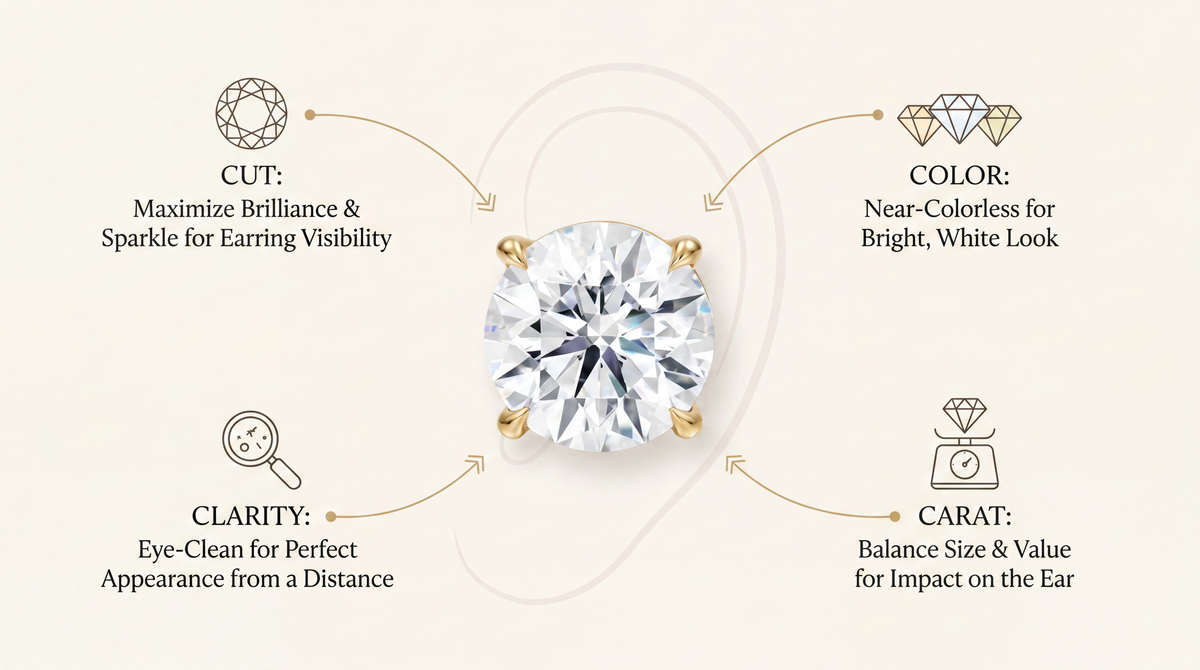
You don’t need “perfection” across all 4Cs to get beautiful lab grown diamond studs. Because studs are seen at arm’s length and framed by your face and hair, you can optimize for sparkle and balance instead of chasing top grades everywhere.
Cut: your top priority
Cut has the greatest effect on brilliance and fire.
- Aim for Excellent/Ideal cuts (or the highest category your grading system uses).
- A well-cut lab grown diamond often looks bigger and brighter than a poorly cut stone of the same carat.
Color: near-colorless is usually enough
For studs, near-colorless diamonds typically look beautifully white on the ear, especially in white metals.
- D–F: Colorless; crisp and icy.
- G–I: Near-colorless; excellent value and generally appear white when worn, particularly in round cuts and white settings.
Clarity: focus on eye-clean
You rarely need Flawless clarity for stud earrings. The key is that the diamonds look clean to the naked eye at normal viewing distance.
- VS and SI ranges often offer the best balance of clarity and price for studs, as inclusions are usually too small or well-placed to notice in the ear.
Carat: guided by your size choice
Once you know your target range (e.g., 0.75–1.00 CTW for everyday studs), you can:
- Compare stones in that CTW band with strong cut and eye-clean clarity.
- Use color and clarity to fine-tune budget inside your size bracket.
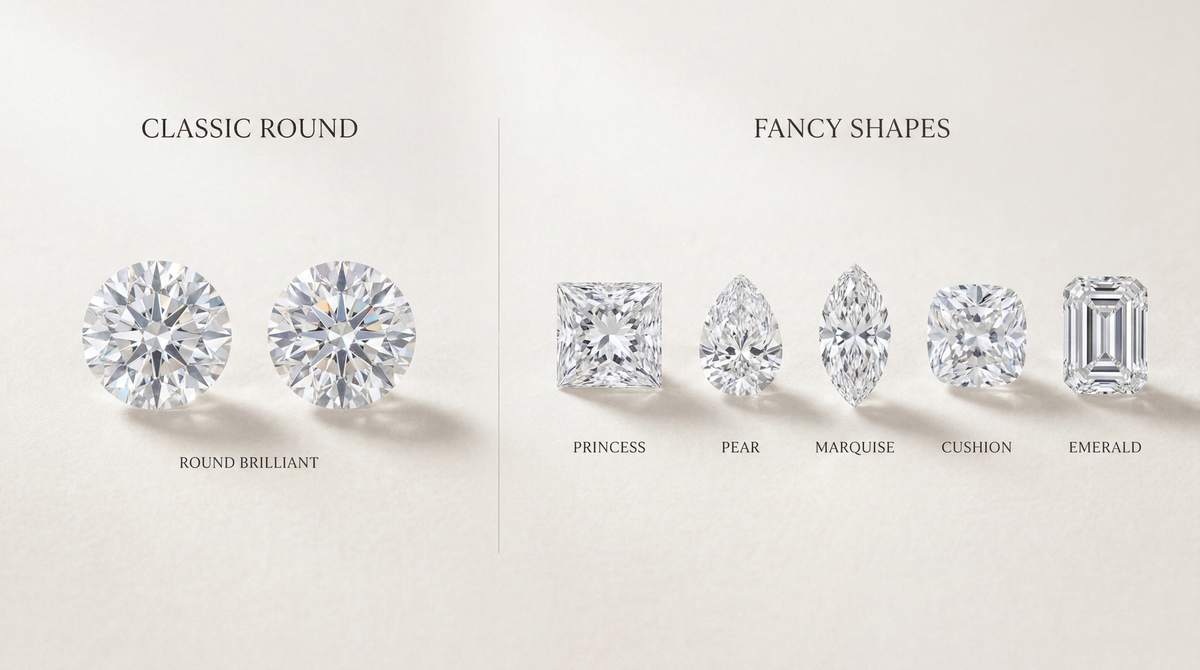
Pick a Shape: Round vs Fancy Cuts
Shape influences both style and face-up size. Round is the classic choice, but fancy shapes add personality.
Round brilliant studs
- Most traditional and versatile option.
- Maximizes light performance for a given carat weight.
- Easy to match and stack with other jewelry.
Princess and other fancy shapes
- Princess (square) – modern and geometric, slightly different face-up appearance compared to round at the same carat.
- Oval, cushion, emerald, radiant, pear, etc. – more distinctive; can make the stud look larger or more elongated on the lobe, depending on the proportions.

Choose Your Metal: White, Yellow, Rose, or Platinum
The right metal ties your studs to your overall jewelry wardrobe and affects comfort over years of wear. Common choices for lab grown diamond stud earrings are 14k or 18k gold (in white, yellow, or rose) and platinum.
White metals (white gold & platinum)
- Create a bright, neutral frame that emphasizes diamond whiteness and brilliance.
- White gold often uses rhodium plating for a crisp white finish; this may need periodic replating over time.
- Platinum is naturally white, denser, and often preferred by those with sensitive skin.
Yellow & rose gold
- Add warmth and contrast; yellow gold gives a classic look, while rose gold feels soft and romantic.
- Can visually soften slightly warmer color grades, especially in near-colorless ranges.
14k vs 18k gold
- 14k gold Contains a higher proportion of alloy metals, so it is generally more durable for everyday studs.
- 18k gold has higher pure gold content; shows richer color and feels more luxurious but is slightly softer.
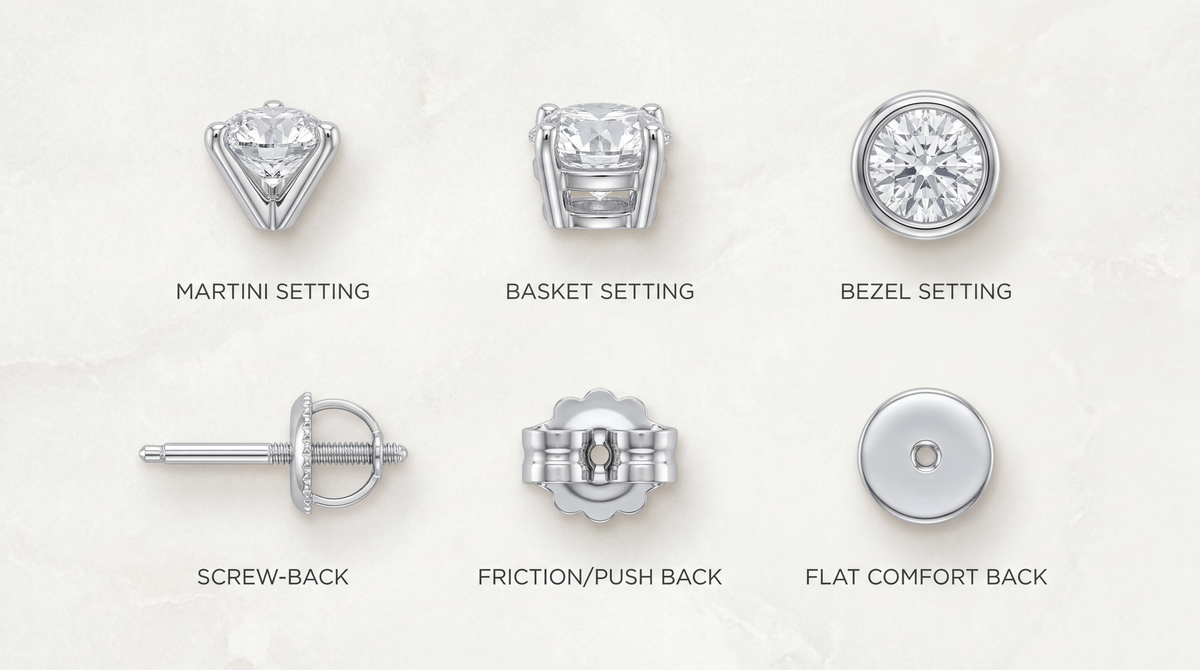
Select Setting & Backing for Comfort and Security
Even with perfect stones, studs won’t feel right if the setting and backing don’t suit your ears or lifestyle.
Common stud settings
- Martini (3‑prong): Low-profile and sits close to the lobe, reducing “droop” and maximizing visible face-up size.Very popular for everyday studs.
- Basket (4‑prong): Classic, slightly taller profile with strong security.Great if you prefer a traditional stud silhouette.
- Bezel: Metal rim fully encircles the diamond’s edge, giving a smooth, snag-resistant finish.Can make the diamond appear a bit larger on the ear due to the surrounding metal.
Backing options
- Screw-backs: Lock onto a threaded post; prioritized for higher CTW studs and all-day wear because they’re harder to lose.
- Friction (push) backs: Slide on and off easily; popular for people who change earrings frequently.
- Flat / comfort backs: Larger back surface distributes weight, helping larger studs sit more comfortably and upright.
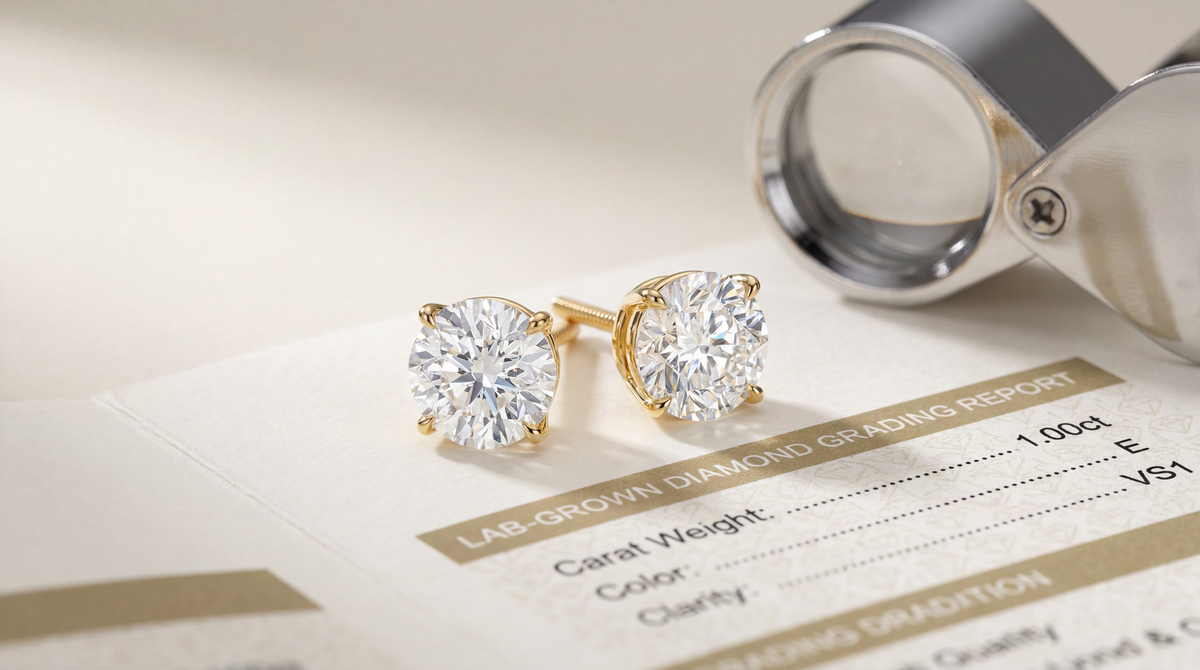
Confirm Lab-Grown Origin & Certification
To make sure you’re truly choosing lab grown diamond stud earrings and not simulants, look for:
- Clear wording that the stones are lab grown diamonds, not moissanite or cubic zirconia.
- Certification from recognized labs (such as IGI or GIA for lab grown) stating the 4Cs and confirming lab-grown origin.
Certification adds transparency and helps you compare options objectively by cut, color, clarity, and carat.
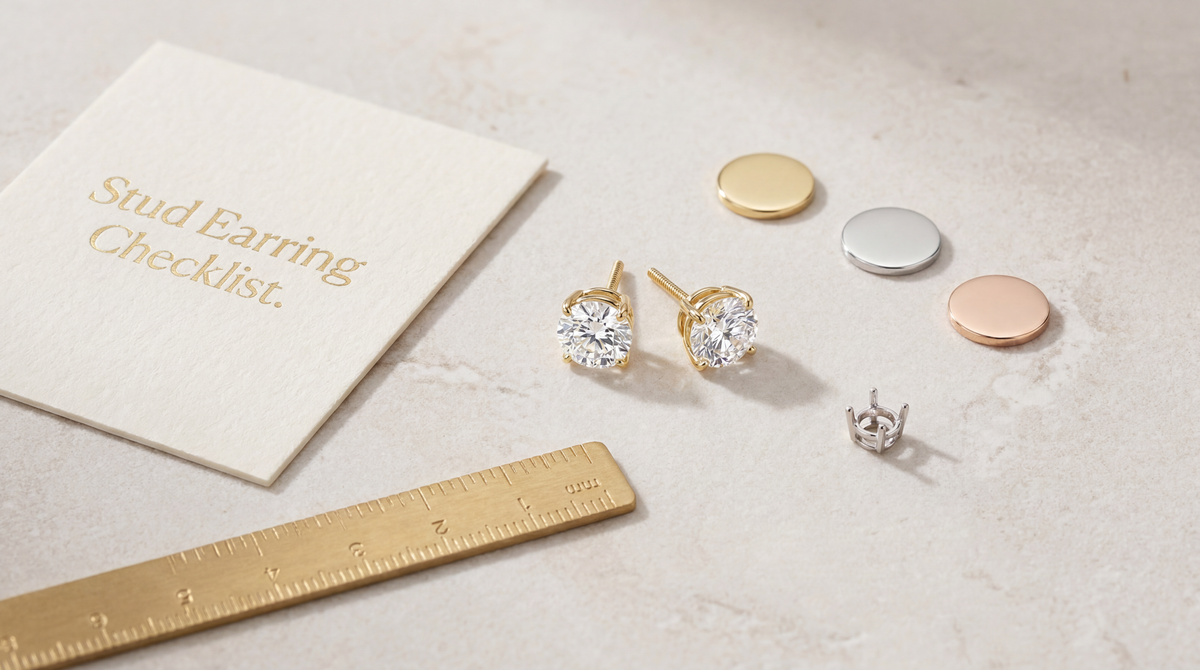
Putting It All Together
When you combine everything, here’s a simple framework for how to choose lab grown diamond stud earrings:
Decide how you’ll wear them
- Everyday? Desk-to-dinner? Special occasions only?
Pick a CTW & approximate size range
- 0.25–0.50 CTW for very subtle wear
- 0.50–1.50 CTW for most everyday and elevated looks
- 2.00+ CTW for strong statements
Optimize the 4Cs for stud earrings
- Prioritize cut first for sparkle.
- Choose near-colorless color (often D–I) for balanced brightness and value.
- Aim for eye-clean clarity (often VS/SI).
- Select carat within your size and budget range.
Choose a shape and metal
- Round for classic versatility; fancy shapes for extra personality.
- White metals for brightness, yellow/rose gold for warmth; 14k/18k or platinum based on durability and feel.
Select setting and backing
- Martini or basket for classic studs; bezel for maximum security and softness.
- Screw-backs for security, friction backs for convenience.
Verify lab-grown origin and certification
- Confirm “lab grown diamond” language and look for reputable grading reports.
From here, you’re ready to explore specific pieces:
- Browse our Lab Grown Diamond Stud Earrings Collection to see all shapes, metals, settings, and size options side by side.
- Use the Stud Size & Carat Guide to fine-tune your CTW and approximate mm targets before you commit to a pair:
Where To Find the Most Exclusive Shaped Lab Grown Diamond Stud Earrings?
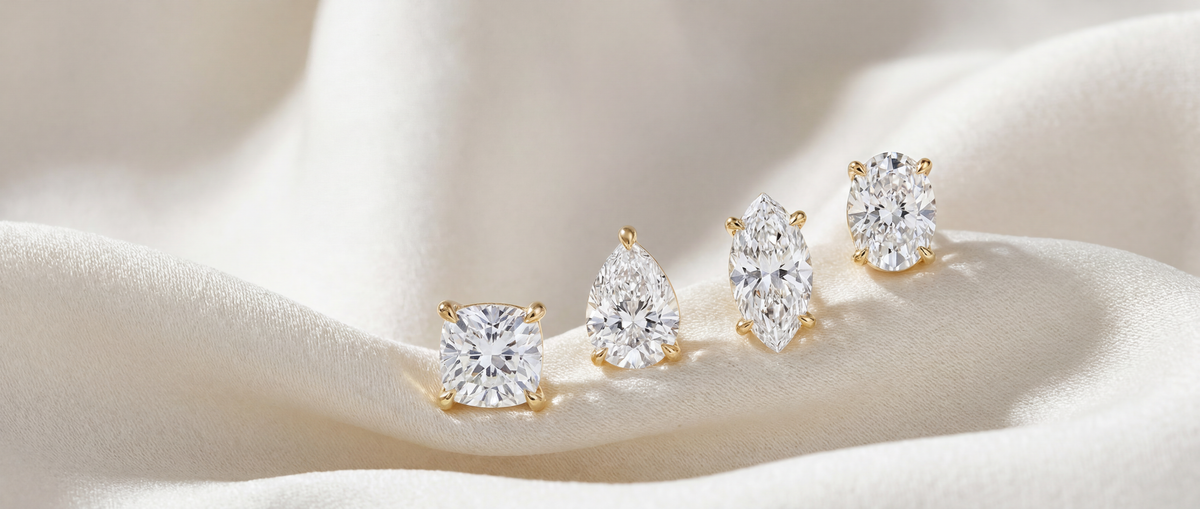
Michael Gabriels has the best online selection of lab grown diamonds in a huge variety of cuts and shapes so you can find the perfect gem for your earrings. We also offer custom jewelry design services where you can collaborate with our experienced design team and jewelry makers to create one-of-a-kind, bespoke pieces.
Explore our pre-designed stud earrings by our design tool and "start with setting" to shop for earrings, We guarantee that you will enjoy our free shipping and free returns, as we want to ensure your satisfaction and always put our customers first!
For more information on the cut, clarity, color or carat weight of diamonds or how lab grown diamonds are made, feel free to learn more on our Education section. Connect with us on our social media channels by following us on Visit Facebook, Visit Instagram, and Visit Pinterest for inspiration!
Common Questions
Choosing Your Diamond Stud Earrings
Start with how you’ll wear them: for everyday use, many people choose a total range of about 0.50–1.50 carats for the pair, balancing visibility and comfort. If you want a subtle look, stay closer to 0.25–0.50 CTW; for bolder, more noticeable studs, 1.00 CTW and above will have more presence on the ear.
CTW/CTTW (Carat Total Weight) refers to the combined weight of all diamonds in the pair, while per-ear carat weight is CTW divided by two for matched studs. So a pair listed as 1.00 CTW typically means approximately 0.50 ct in each ear, not 1.00 ct per stud.
Near‑colorless grades like G–I generally look bright and white on the ear, especially in white metals, while offering better value than the highest color grades. For clarity, most people are happy with VS or SI stones that appear clean to the naked eye, since tiny inclusions are very hard to see once the studs are in the ear.
Round brilliant is the most popular choice because it maximizes light return and works with almost any style, which is why it dominates stud earring size charts and buying guides. However, fancy shapes like princess, oval, or cushion can add personality; just remember that they may look slightly different in face‑up size and style compared to rounds of the same carat.
Choose metal based on skin tone, existing jewelry, and wear habits: white gold and platinum emphasize brightness and pair well with cooler or neutral tones, while yellow and rose gold add warmth and contrast. For everyday studs, many people prefer durable 14k gold or platinum, while 18k gold is ideal if you prioritize richer color and a slightly softer, more luxurious feel.
Low‑profile settings like martini (3‑prong) and basket (4‑prong) help studs sit closer to the ear and reduce drooping, which is especially important at higher carat weights. For backings, screw‑backs offer maximum security for daily wear, while friction backs are quicker to put on and remove if you change earrings often.
Look for clear labeling that the stones are lab grown diamonds, not simulants like moissanite or cubic zirconia, and ask for grading reports from reputable labs such as IGI or GIA. A certificate should list the 4Cs and explicitly state the diamond’s lab‑grown origin, giving you confidence in both quality and authenticity.
Yes. Lab grown diamonds have the same hardness as natural diamonds — 10 on the Mohs scale — so they are highly resistant to scratching and are well‑suited for daily use. As with any fine jewelry, durability also depends on a sturdy setting and proper care, including occasional checks on the prongs and backings.
Lab grown diamond studs offer the same look, durability, and grading structure as mined diamond studs, but typically at a significantly lower price for comparable quality. That means you can often upgrade to larger or higher‑grade stones within the same budget, while also choosing a product with a more transparent and controllable origin.
For studs,cut is the most important C because it has the greatest impact on brightness and sparkle at real viewing distances. After that, many buyers choose near‑colorless color (often G–I) and eye‑clean clarity (frequently in the VS/SI range), then select carat weight based on their preferred size and budget.


