

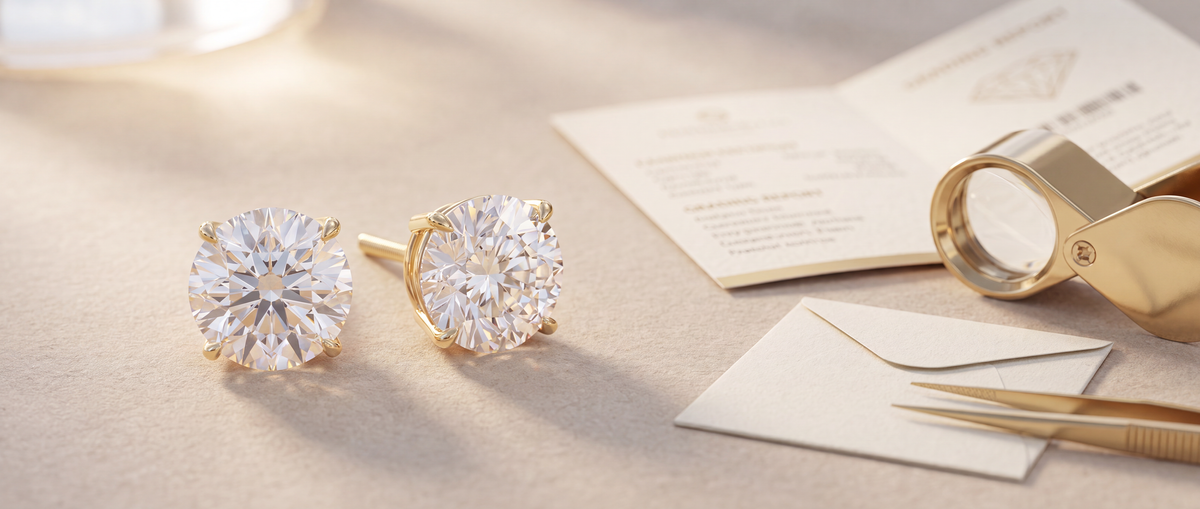
Stud Earring Certification · Michael Gabriels
Lab Grown Diamond Certification & Grading for Stud Earrings Explained
Lab grown diamond stud earrings are real diamond jewelry—and the best way to prove that is through independent certification and grading. This guide explains how lab grown diamonds for studs are graded on the 4Cs, which laboratories certify them, how to read a diamond report, and the standards Michael Gabriels uses for every stud pair we offer.
Lab Grown Diamond Stud Earrings Certification & Grading
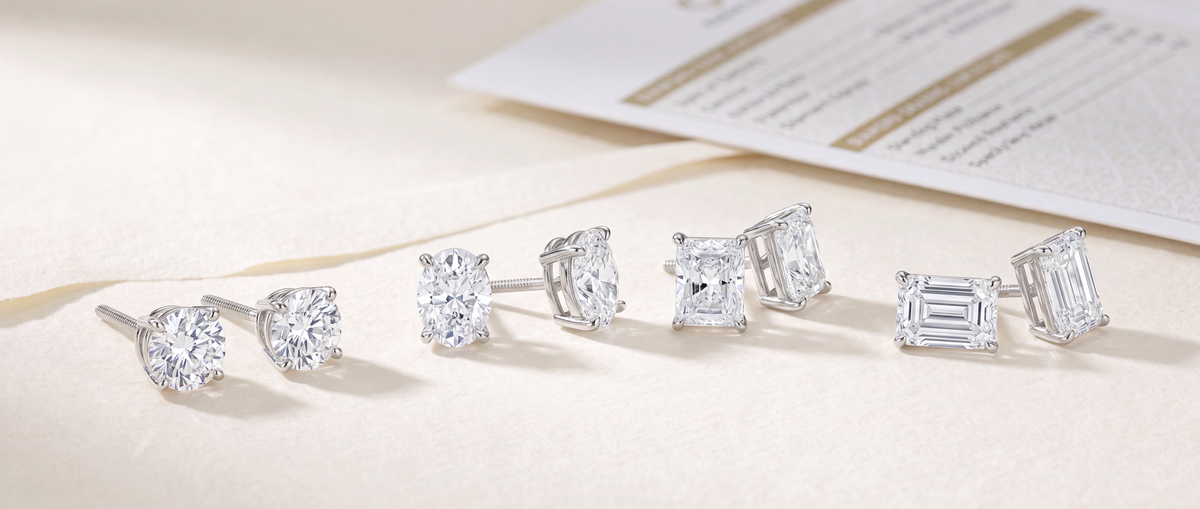
Stud Earrings Certification & Grading
Lab grown diamond stud earrings should come with more than sparkle — they should come with grading details that help you understand exactly what you’re buying. This guide explains how certification works for lab grown diamond studs, what the report tells you, and which quality factors matter most when you’re choosing a pair for everyday wear.
10 Iconic Cuts
Choose Your Stud Diamond Shape
Select any shape to read its complete guide — covering origin, anatomy, ideal proportions, light performance, and expert buying advice written by the gemologists at Michael Gabriels.


Carat vs Millimeter: How Big Will My Studs Look?
For round brilliant lab-grown diamonds, you can use approximate mm sizes to visualize how each carat weight will sit on the ear.
Below is a general reference using pair total carat weight (CTW), typical per-ear weight, and approximate diameter per diamond:
| Pair Total (CTW) | Approx. Per Ear (ct) | Approx. Diameter (mm, each) | Typical Look & Feel |
|---|---|---|---|
| 0.25 CTW | ~0.12–0.13 ct | ~3.0 mm | Very delicate; subtle sparkle; ideal for second holes or ultra-minimal looks. |
| 0.50 CTW | ~0.25 ct | ~4.0–4.1 mm | Light everyday sparkle; refined and understated. |
| 0.75 CTW | ~0.37 ct | ~4.7–4.8 mm | Noticeable but still easy for daily wear; a touch more presence. |
| 1.00 CTW | ~0.50 ct | ~5.0–5.2 mm | Classic "sweet spot" size; balanced, eye-catching on most ears. |
| 1.50 CTW | ~0.75 ct | ~5.8–5.9 mm | Bold everyday or soft statement; strong sparkle without feeling oversized for many people. |
| 2.00 CTW | ~1.00 ct | ~6.5 mm | Statement studs; luxurious, very visible across the room. |
| 3.00+ CTW | ~1.50 ct+ | ~7.4 mm and above | High-impact glamour; suited to bold style or special occasions. |
Quick Comparison: Lab Grown vs Natural Diamond Stud Earrings
| Feature | Lab Grown Diamond Stud Earrings | Natural Diamond Stud Earrings |
|---|---|---|
| Origin | Grown in a lab using advanced HPHT or CVD technology. | Formed naturally in the earth over billions of years. |
| Appearance & Sparkle | Same chemical, physical, and optical properties; look identical to natural. | Classic diamond brilliance; visual differences can't be seen with the naked eye. |
| Durability (Mohs hardness) | Mohs 10—just as hard and durable as mined diamonds, ideal for everyday studs. | Mohs 10—equally durable for daily wear. |
| Price / Carat | Typically 30–75%+ less expensive for the same size and quality. | Higher price due to rarity and traditional demand. |
| Ethics & Environment | Lower‑impact production; marketed as more sustainable and conflict‑free. | Modern suppliers follow ethical standards, but mining has a greater environmental footprint. |
| Resale & Heirloom Potential | Weaker resale market today; great for maximizing look now. | Stronger long‑term value and traditional heirloom appeal. |
Decision Guide
How to Choose Your Diamond Shape
Consider Light Performance First
Brilliant cut shapes — round, oval, cushion, princess, radiant, pear, marquise, and heart — maximise sparkle by returning light upward through a pattern of triangular and kite-shaped facets. Step cut shapes — emerald and Asscher — create a different, more subdued effect: long flashes of light and dark that connoisseurs call the "hall of mirrors." Neither approach is superior; they are simply different expressions of a diamond's relationship with light.
Think About Size and the Setting
Elongated shapes — oval, pear, marquise, and emerald — visually tend to make diamonds look larger relative to their carat weight. Compact shapes — round, princess, Asscher, cushion — sit squarely and give a different sense of presence. Before deciding, consider the shape of your ear and the style you have in mind. An oval in a simple solitaire reads very differently from the same stone in a pavé halo.
Match Shape to Your Clarity Budget
Step cut shapes like the emerald and Asscher have large, open facets that act like windows into the diamond — inclusions are far more visible than in brilliant-cut shapes. If you are drawn to a step cut, budget for VS2 or better clarity. Brilliant cuts, by contrast, scatter light in a way that makes inclusions harder to spot with the naked eye, allowing you to buy a lower clarity grade without visible compromise. This is an important practical consideration that can significantly affect your overall budget.
Why Certification Matters for Stud Earrings
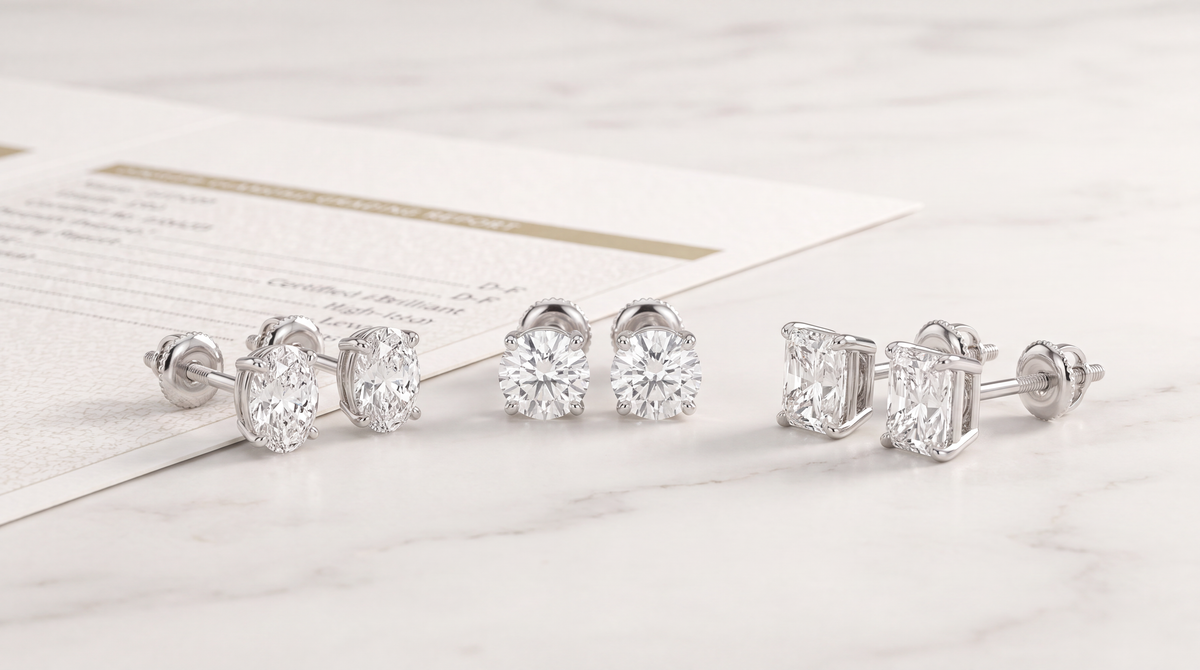
Certification is especially important for stud earrings because you are buying a matched pair, not a single stone. A grading report helps confirm that both diamonds are identified correctly and that their carat, cut, color, and clarity are documented in a way that is easy to verify.
For studs, certification also helps with one of the most important parts of the buying process: matching. Even if each stone is attractive on its own, the pair should still look balanced together on the ear.

What A Grading Report Shows
A lab grown diamond grading report is the document that describes the key qualities of the diamonds in your stud earrings. The most useful information for stud shoppers is the same 4Cs used across diamond grading: carat, cut, color, and clarity.
For stud earrings, these details matter because they affect not just quality on paper, but how the pair actually looks when worn.
Carat
- Carat tells you the weight of each diamond, which influences the overall size and presence of the studs on the ear.
Cut
- Cut is the biggest factor in sparkle. A well-cut stud diamond can look more brilliant and lively than a larger stone with weaker proportions.
Color
- Color grade shows how close the diamond is to colorless. In stud earrings, many shoppers prefer near-colorless stones because they look bright and white in everyday light.
Clarity
- Clarity describes the presence of inclusions and blemishes. For studs, clarity matters because the stones are often viewed up close, and most buyers want a clean, polished look.
Which Labs Matter Most
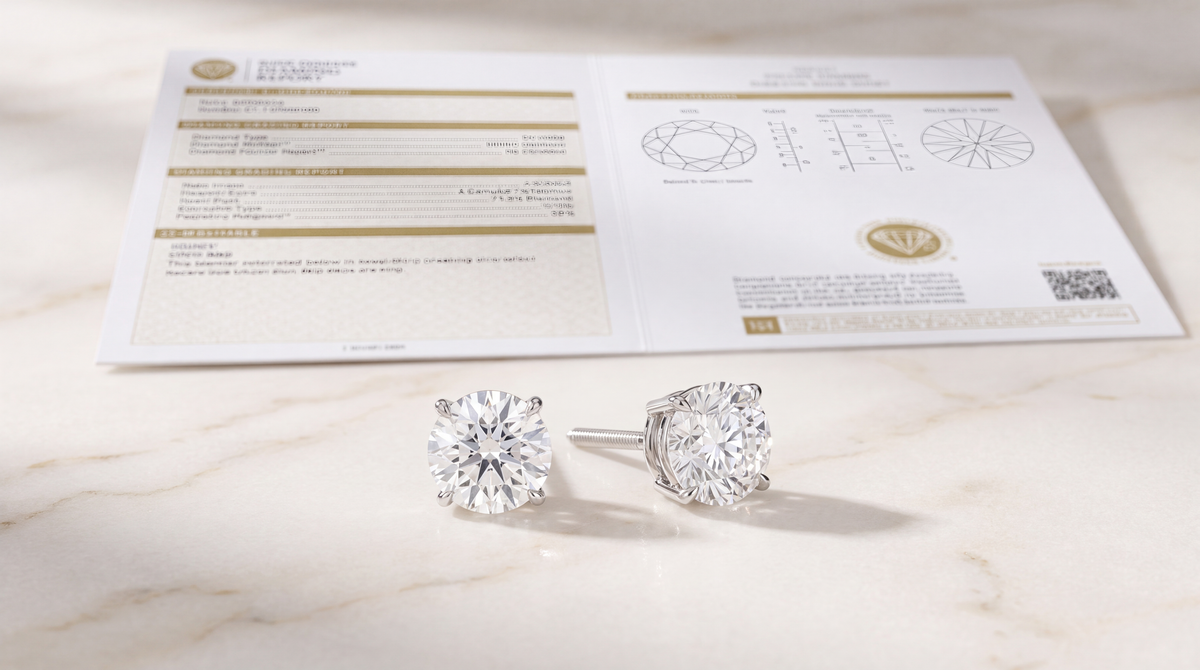
The most recognized names in lab grown diamond grading are GIA and IGI, with both widely used in the market for certified lab grown stones.
For lab grown diamond stud earrings, the lab name matters less than whether the report is clear, consistent, and easy to verify. The report should identify the stone, explain the grades, and give you confidence that the pair has been reviewed by an independent laboratory.
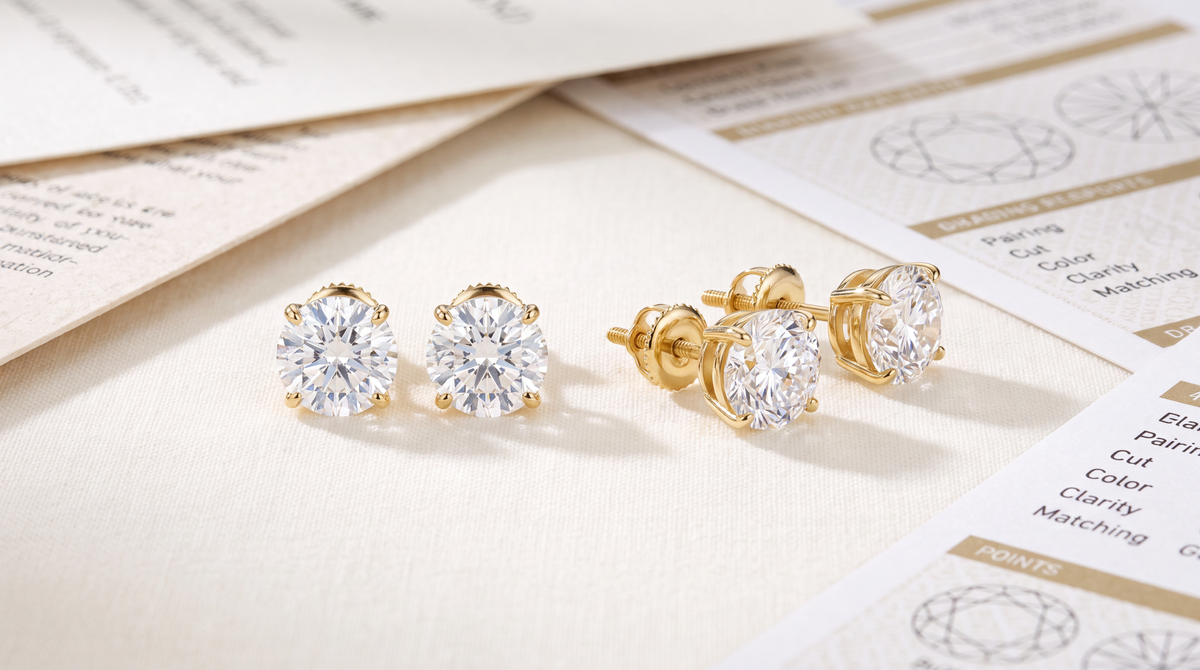
What To Look For In Stud Earrings
When you shop for certified lab grown diamond studs, the report should help answer a few simple questions:
- Do both diamonds match well as a pair?
- Is the cut strong enough for a good sparkle?
- Are the color and clarity grades good enough for the way you plan to wear them?
- Can you verify the stones through the grading report or inscription number?
These are the details that matter most because studs are worn together, seen together, and judged together.
Michael Gabriels Standards For Studs
At Michael Gabriels, the goal is to make lab grown diamond stud shopping feel straightforward. The grading details should help shoppers choose a pair with confidence, not force them to decode complicated jargon.
That is why our stud pages highlight the information that matters most for the ear: color, clarity, certification, and balanced appearance. For eligible pairs, certification and documentation support the buying decision so customers can compare options more clearly.
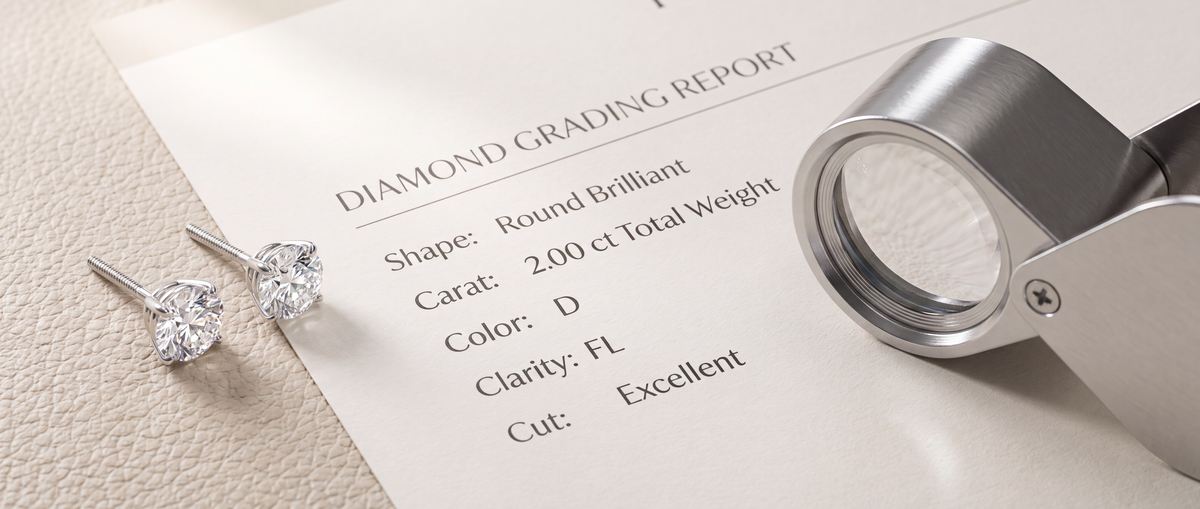
How To Read The Report
If you are comparing stud earrings, start with cut, because sparkle is one of the most visible differences between pairs. Then look at color and clarity together, since those grades influence how clean and bright the earrings appear when worn.
Finally, check whether the two stones are closely matched in weight and appearance. In stud earrings, the pair should feel visually even from every angle.
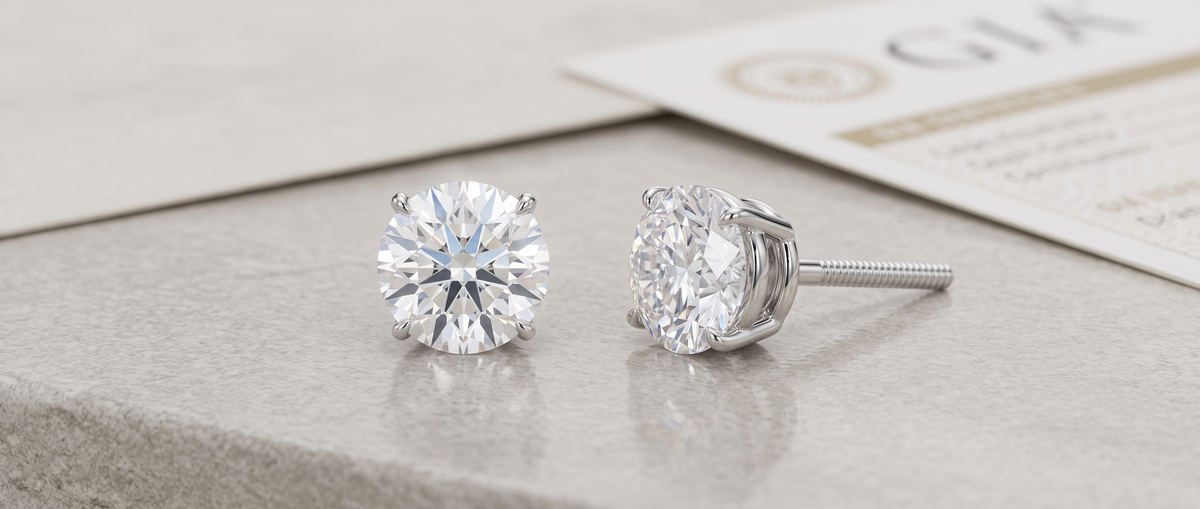
Key Takeaway
Lab grown diamond stud earrings are easiest to evaluate when you focus on the grading details that matter most for earrings: cut, color, clarity, carat, and matching. Certification helps confirm what you are buying and gives you a reliable way to compare pairs before you choose.
For shoppers who want clarity and confidence, a certified stud pair is not just about paperwork — it is about knowing the earrings will look beautiful, feel balanced, and make sense as a long-term purchase.
Where To Find the Most Exclusive Shaped Lab Grown Diamond Stud Earrings?
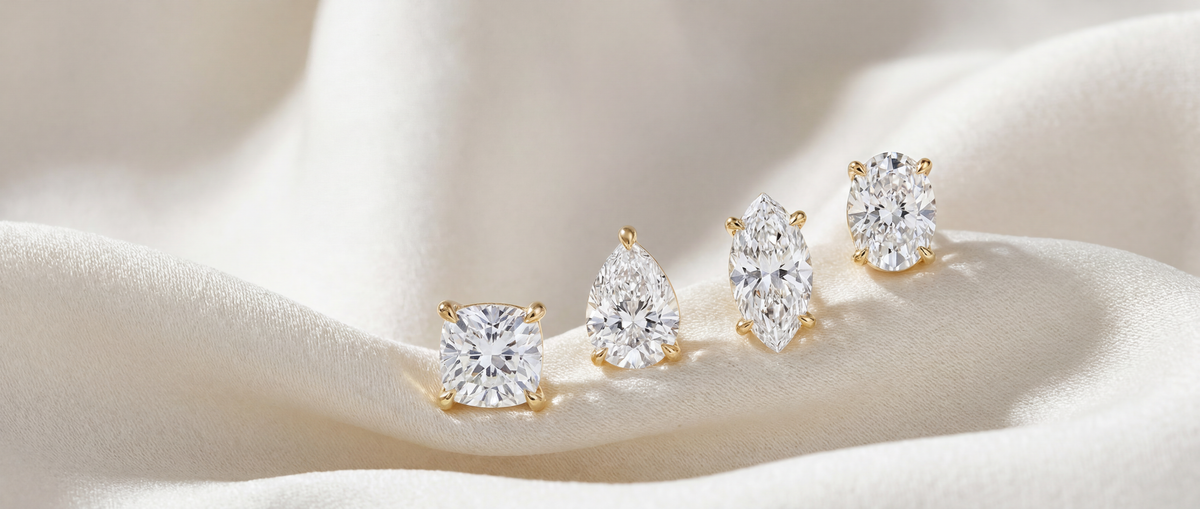
Michael Gabriels has the best online selection of lab grown diamonds in a huge variety of cuts and shapes so you can find the perfect gem for your earrings. We also offer custom jewelry design services where you can collaborate with our experienced design team and jewelry makers to create one-of-a-kind, bespoke pieces.
Explore our pre-designed stud earrings by our design tool and "start with setting" to shop for earrings, We guarantee that you will enjoy our free shipping and free returns, as we want to ensure your satisfaction and always put our customers first!
For more information on the cut, clarity, color or carat weight of diamonds or how lab grown diamonds are made, feel free to learn more on our Education section. Connect with us on our social media channels by following us on Visit Facebook, Visit Instagram, and Visit Pinterest for inspiration!
Common Questions
Lab Grown Diamond Studs FAQs
Yes. Lab grown diamond studs feature diamonds with the same chemical, physical, and optical properties as mined diamonds—they’re made of crystallized carbon and graded using the same standards. The only difference is origin: lab grown stones are created in controlled labs instead of being mined from the earth.
CTW (or CTW/CTTW) stands for Carat Total Weight and refers to the combined weight of all diamonds in the pair of earrings. A pair labeled 1.00 CTW typically has two 0.50 ct diamonds—one in each ear—unless otherwise specified.
There’s no single best size, but many people find that 0.25–1.00 CTW offers a practical everyday range—visibly sparkling without being too heavy or flashy. Within that, about 0.50–1.00 CTW(roughly 0.25–0.50 ct per ear) is often described as the “sweet spot” for daily wear.
Carat measures weight, not exact dimensions, but for round studs there are typical size ranges—for example, around 4.0–4.1 mm diameter for 0.50 CTW and about5.0–5.2 mm for 1.00 CTW. Larger CTWs, like 2.00 CTW, often measure around6.5 mm per ear and create a clearly statement look.
Yes. Lab grown diamonds are just as hard as natural diamonds, ranking 10 on the Mohs hardness scale, so they’re highly resistant to scratching and suitable for daily wear. With proper setting and occasional checks, lab-grown stud earrings can retain their brilliance and structure for many years.
Popular settings include martini (3‑prong), which sits low and close to the lobe, basket (4‑prong) for a classic look, and bezel for extra security and a slightly larger visual footprint. For backings,screw-backs offer maximum security, while friction (push) backs are faster to put on and take off.
Most diamond studs are crafted in 14k or 18k gold (white, yellow, or rose) or platinum, each balancing color, durability, and feel differently. Fourteen‑karat gold and platinum are especially popular for everyday studs because of their strength and resistance to wear, while 18k gold offers a richer hue for those prioritizing color.
Quality lab grown stud earrings often feature diamonds graded by reputable labs such as IGI or GIA, with reports covering cut, color, clarity, and carat weight. Certification helps verify that each pair matches its stated specifications and confirms the stones are lab grown rather than simulants'.
Clean lab grown studs the same way you would natural diamond jewelry: soak them in warm water with a few drops of mild dish soap, gently brush with a soft toothbrush, then rinse and dry with a lint-free cloth. Avoid harsh chemicals, and have prongs and settings checked periodically to ensure the diamonds remain secure.
Lab-grown diamond studs generally cost significantly less than comparable mined diamond studs, often allowing buyers to choose larger or higher-quality stones within the same budget. They offer the same look and durability as mined diamond studs, making them an attractive value choice for people who prioritize appearance, ethics, and price over traditional rarity.


