

The Everyday Stud Guide · Michael Gabriels
Can You Wear Lab GrownDiamond Studs Every Day?
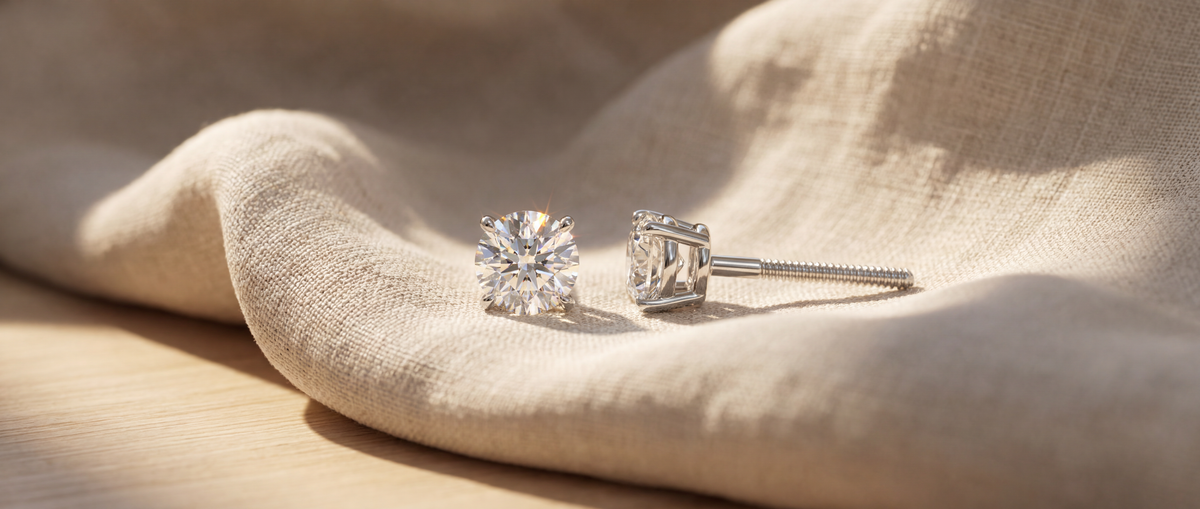
Yes—lab grown diamond stud earrings are real diamonds with the same hardness and everyday durability as natural diamonds. This guide explains how they hold up to daily wear, what actually affects long-term performance, and what to look for in a secure, well-made pair.
How Durable Are Lab Grown Diamond Stud Earrings
Are Lab Grown Diamond Stud Earrings Durable Enough for Everyday Wear?
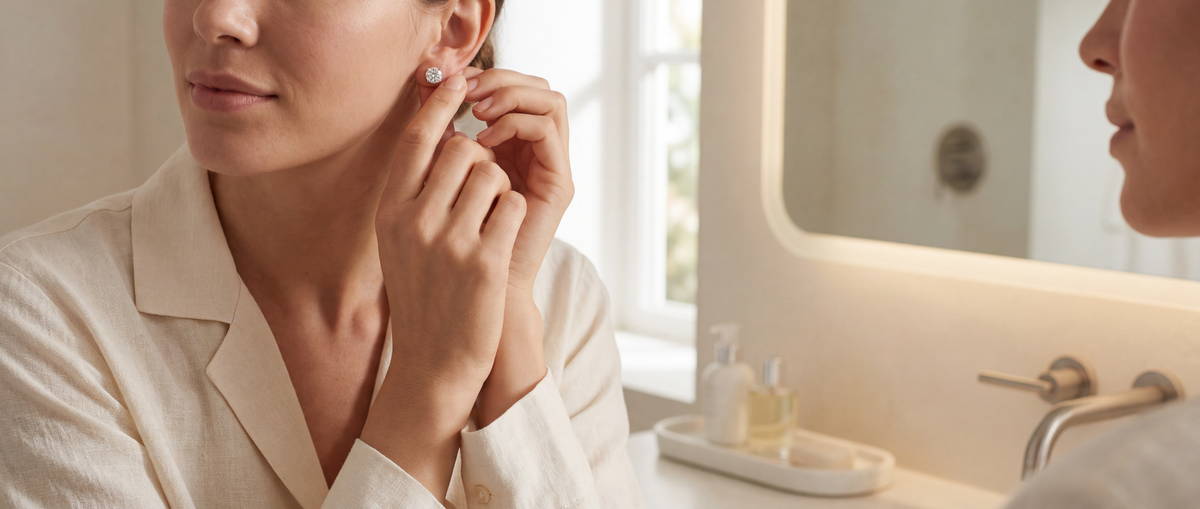
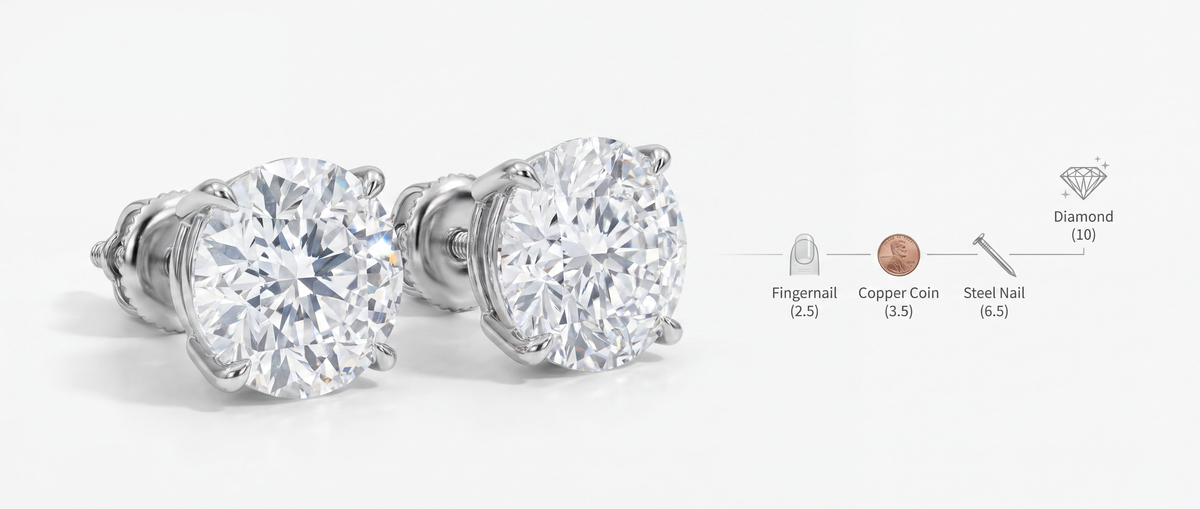
Yes, lab grown diamond stud earrings are durable enough for everyday wear. They are real diamonds with the same chemical, physical, and optical properties as natural diamonds, which means they deliver the same sparkle, hardness, and day-to-day performance in jewelry. Diamond also ranks 10 on the Mohs scale, making it the hardest gemstone commonly used in fine jewelry.
That combination makes lab grown diamond studs one of the most practical fine-jewelry choices for people who want something timeless, low-maintenance, and easy to wear often. They offer the classic look of diamond studs without feeling like a piece you need to save for special occasions.
10 Iconic Cuts
Choose Your Stud Diamond Shape
Select any shape to read its complete guide — covering origin, anatomy, ideal proportions, light performance, and expert buying advice written by the gemologists at Michael Gabriels.


Carat vs Millimeter: How Big Will My Studs Look?
For round brilliant lab-grown diamonds, you can use approximate mm sizes to visualize how each carat weight will sit on the ear.
Below is a general reference using pair total carat weight (CTW), typical per-ear weight, and approximate diameter per diamond:
| Pair Total (CTW) | Approx. Per Ear (ct) | Approx. Diameter (mm, each) | Typical Look & Feel |
|---|---|---|---|
| 0.25 CTW | ~0.12–0.13 ct | ~3.0 mm | Very delicate; subtle sparkle; ideal for second holes or ultra-minimal looks. |
| 0.50 CTW | ~0.25 ct | ~4.0–4.1 mm | Light everyday sparkle; refined and understated. |
| 0.75 CTW | ~0.37 ct | ~4.7–4.8 mm | Noticeable but still easy for daily wear; a touch more presence. |
| 1.00 CTW | ~0.50 ct | ~5.0–5.2 mm | Classic "sweet spot" size; balanced, eye-catching on most ears. |
| 1.50 CTW | ~0.75 ct | ~5.8–5.9 mm | Bold everyday or soft statement; strong sparkle without feeling oversized for many people. |
| 2.00 CTW | ~1.00 ct | ~6.5 mm | Statement studs; luxurious, very visible across the room. |
| 3.00+ CTW | ~1.50 ct+ | ~7.4 mm and above | High-impact glamour; suited to bold style or special occasions. |
Decision Guide
How to Choose Your Diamond Shape
Consider Light Performance First
Brilliant cut shapes — round, oval, cushion, princess, radiant, pear, marquise, and heart — maximise sparkle by returning light upward through a pattern of triangular and kite-shaped facets. Step cut shapes — emerald and Asscher — create a different, more subdued effect: long flashes of light and dark that connoisseurs call the "hall of mirrors." Neither approach is superior; they are simply different expressions of a diamond's relationship with light.
Think About Size and the Setting
Elongated shapes — oval, pear, marquise, and emerald — visually tend to make diamonds look larger relative to their carat weight. Compact shapes — round, princess, Asscher, cushion — sit squarely and give a different sense of presence. Before deciding, consider the shape of your ear and the style you have in mind. An oval in a simple solitaire reads very differently from the same stone in a pavé halo.
Match Shape to Your Clarity Budget
Step cut shapes like the emerald and Asscher have large, open facets that act like windows into the diamond — inclusions are far more visible than in brilliant-cut shapes. If you are drawn to a step cut, budget for VS2 or better clarity. Brilliant cuts, by contrast, scatter light in a way that makes inclusions harder to spot with the naked eye, allowing you to buy a lower clarity grade without visible compromise. This is an important practical consideration that can significantly affect your overall budget.
What Makes Diamond Studs Durable
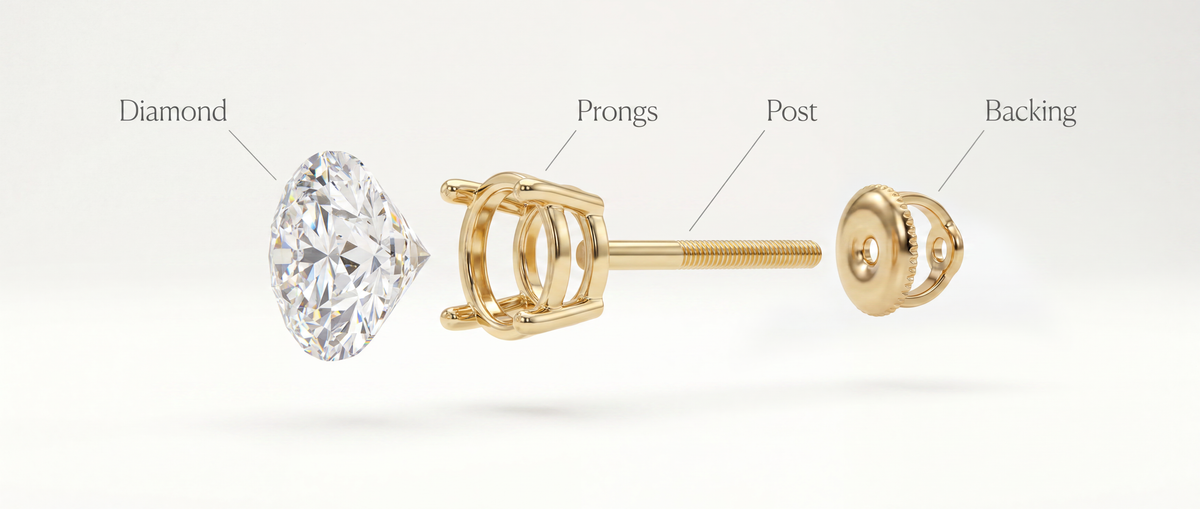
Durability in jewelry is about more than just hardness. For diamond studs, durability includes the stone, the setting, the post, and the backing. A diamond may be highly scratch-resistant, but if the setting is weak or the backing is loose, the earrings may still wear down over time.
That is why lab grown diamond studs are best judged as a complete piece, not just as individual stones. A well-made stud earring should feel secure, sit comfortably on the ear, and hold up to regular movement, styling, and everyday use.
Why Lab Grown Diamonds Hold Up So Well
Lab grown diamonds are still diamonds, which is the main reason they work so well for daily wear. They have the same essential properties as mined diamonds, including the same resistance to scratching and the same brilliance when properly cut.
This means lab grown diamond studs can handle normal daily wear such as work, errands, travel, and social events. They are made for people who want something beautiful but realistic enough to wear often.
The Role of the Setting
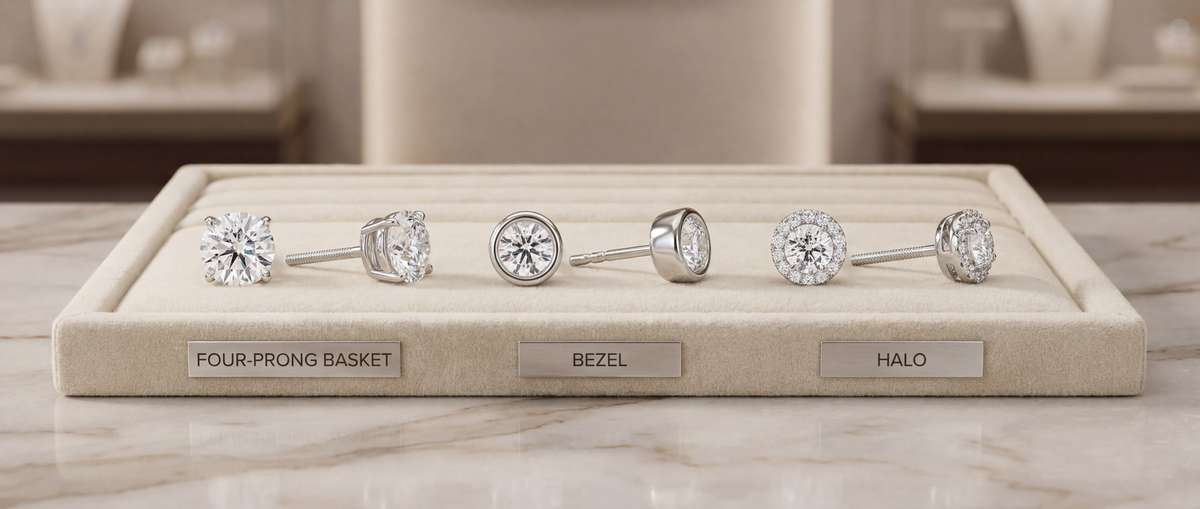
The diamond itself is usually not the weak point in an everyday pair of studs. The setting is often more important. Prongs, posts, and backs experience the most stress because they are the parts that get pulled, bent, rubbed, or pressed over time.
For this reason, a secure setting matters just as much as diamond quality. A good setting helps protect the stone and makes the earrings more comfortable and reliable for daily use.
Best Setting Styles for Everyday Wear
Some settings are especially practical for frequent wear.
- Martini settings sit closer to the ear and give a clean, low-profile look.
- Basket settings add structure and support, which can be helpful for larger stones.
- Screw backs offer extra security.
- Friction backs are simple, comfortable, and easy to wear every day.
If the goal is daily wear, the safest choice is a setting that feels secure and balanced, not just one that looks attractive in photos.
Does Shape Affect Durability?
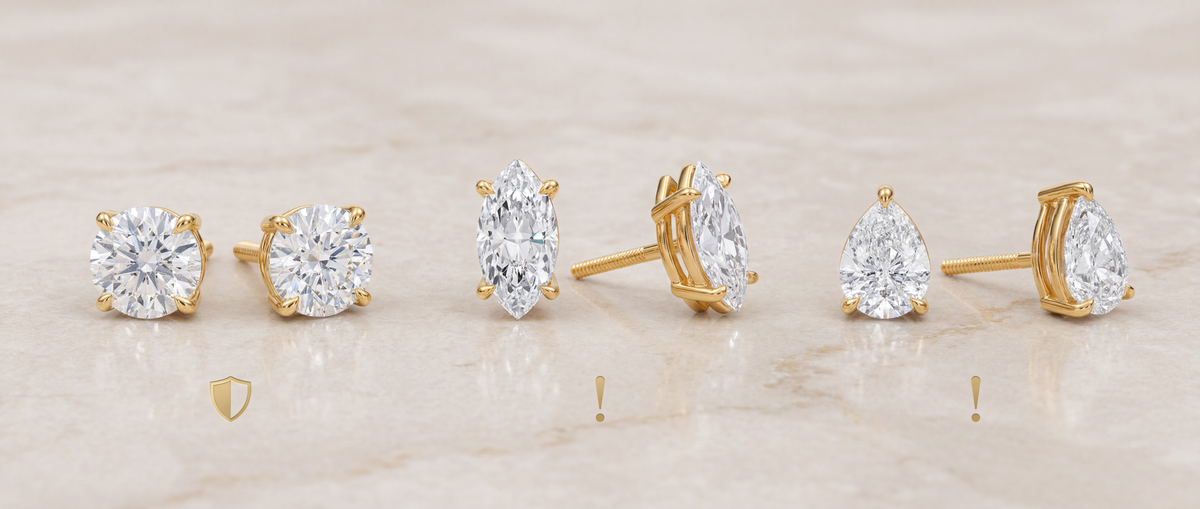
Yes, diamond shape can make a difference. Round diamonds are usually the most practical choice for everyday studs because they have no sharp corners and offer maximum brilliance.
Other shapes like oval, cushion, emerald, radiant, and pear can also work well, but some shapes need more protective settings. Pointed corners and tips are more vulnerable to chipping if the earrings take a hard knock.
For people who want a worry-free everyday pair, round studs are usually the easiest option. For those who want a more distinctive look, the shape should be paired with a strong setting.
Can You Wear Them Every Day?
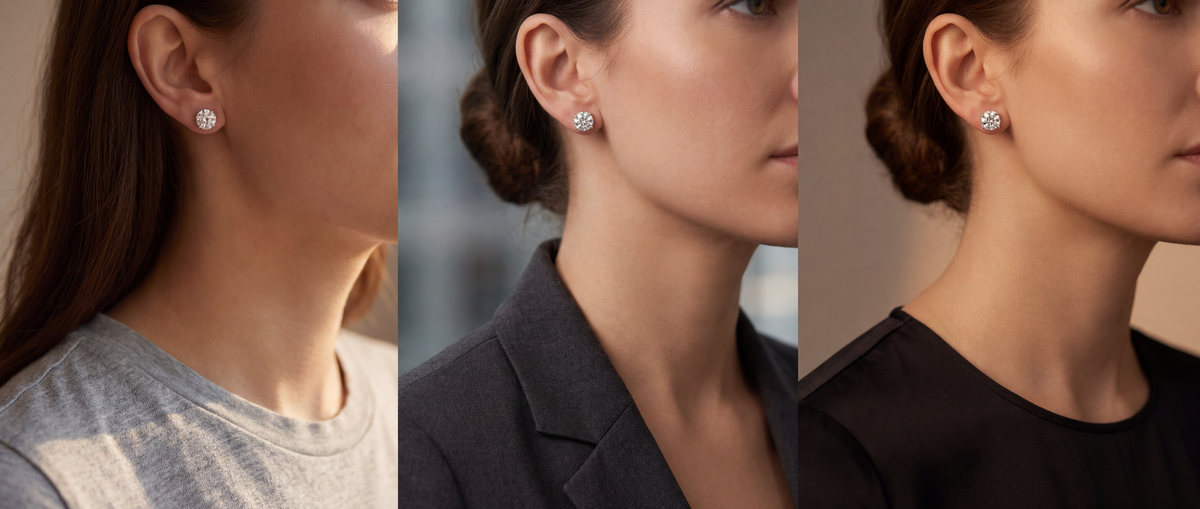
Yes, you can wear lab grown diamond studs every day in most normal situations. They are one of the most versatile forms of diamond jewelry because they sit close to the ear, do not snag easily, and work with casual, office, and dressy outfits.
That is what makes them so appealing: they are elegant enough to feel special but practical enough to wear regularly. For many buyers, that balance is the real value of stud earrings.
When to Remove Them
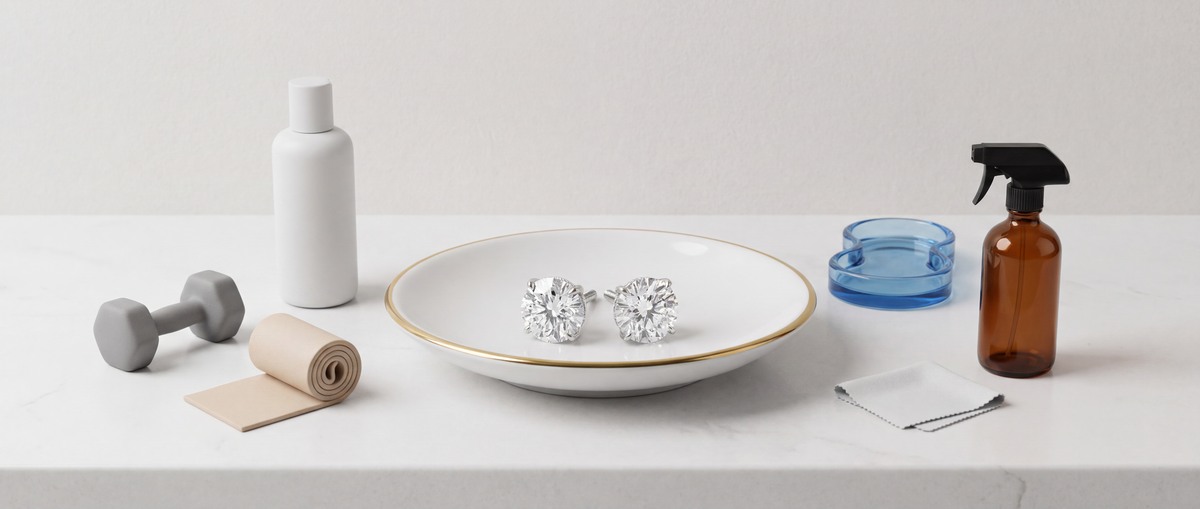
Even though lab grown diamond studs are durable, they should not be treated as indestructible. It is still smart to remove them before activities that create unnecessary risk.
That includes:
- Swimming, especially in chlorinated pools.
- Heavy exercise or sports.
- Showering, if you want to reduce buildup and wear.
- Sleeping, if you want to protect the posts and backs.
- Household cleaning with harsh chemicals.
The diamond will usually remain fine, but the setting and metal parts can take damage over time. Preventive care helps the earrings last longer and stay secure.

What to Look For Before Buying
If you want lab grown diamond stud earrings for everyday wear, look for these qualities:
- A secure, well-made setting.
- Comfortable and reliable backs.
- A shape that suits your lifestyle.
- Balanced proportions on the ear.
- A carat size that feels comfortable for daily use.
For many shoppers, a moderate size is the best fit for everyday wear because it looks polished without feeling heavy or overly noticeable. Larger studs can also work, but they benefit more from secure settings and stronger support.
Final Takeaway
Lab grown diamond stud earrings are absolutely durable enough for everyday wear. Their real-diamond composition gives them the same strength and scratch resistance as natural diamond studs, while their stud design makes them easy to wear in daily life.
The biggest factor in long-term performance is not whether the diamond is lab grown or mined. It is the quality of the setting, the backing, and the care you give the earrings over time. If you want a pair of studs that can look elegant every day without feeling delicate, lab grown diamond studs are an excellent choice.
Where To Find the Most Exclusive Shaped Lab Grown Diamond Stud Earrings?
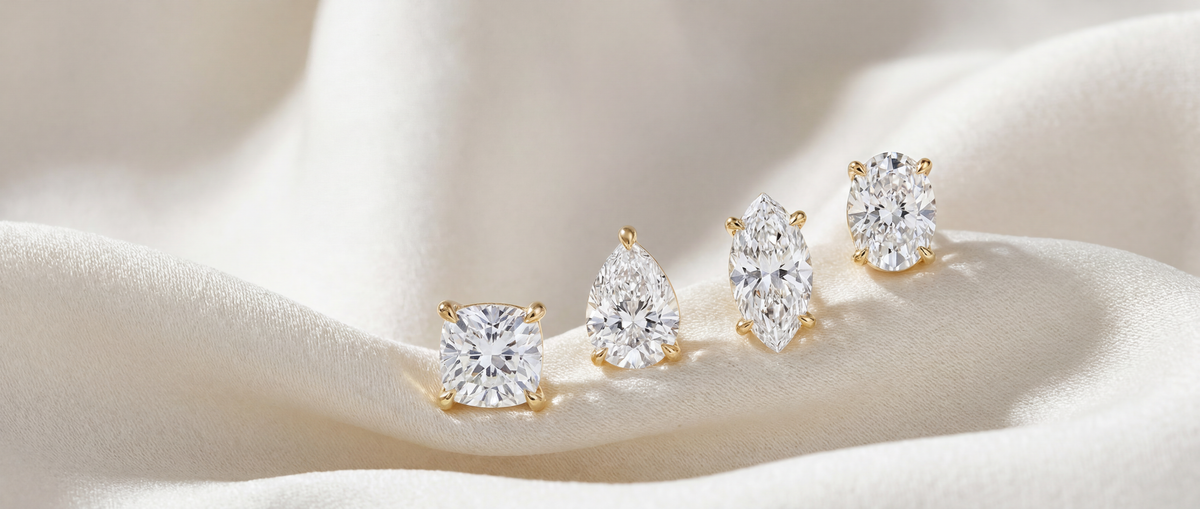
Michael Gabriels has the best online selection of lab grown diamonds in a huge variety of cuts and shapes so you can find the perfect gem for your earrings. We also offer custom jewelry design services where you can collaborate with our experienced design team and jewelry makers to create one-of-a-kind, bespoke pieces.
Explore our pre-designed stud earrings by our design tool and "start with setting" to shop for earrings, We guarantee that you will enjoy our free shipping and free returns, as we want to ensure your satisfaction and always put our customers first!
For more information on the cut, clarity, color or carat weight of diamonds or how lab grown diamonds are made, feel free to learn more on our Education section. Connect with us on our social media channels by following us on Visit Facebook, Visit Instagram, and Visit Pinterest for inspiration!
Common Questions
Lab Grown Diamond Studs FAQs
Yes. Lab grown diamond studs feature diamonds with the same chemical, physical, and optical properties as mined diamonds—they’re made of crystallized carbon and graded using the same standards. The only difference is origin: lab grown stones are created in controlled labs instead of being mined from the earth.
CTW (or CTW/CTTW) stands for Carat Total Weight and refers to the combined weight of all diamonds in the pair of earrings. A pair labeled 1.00 CTW typically has two 0.50 ct diamonds—one in each ear—unless otherwise specified.
There’s no single best size, but many people find that 0.25–1.00 CTW offers a practical everyday range—visibly sparkling without being too heavy or flashy. Within that, about 0.50–1.00 CTW(roughly 0.25–0.50 ct per ear) is often described as the “sweet spot” for daily wear.
Carat measures weight, not exact dimensions, but for round studs there are typical size ranges—for example, around 4.0–4.1 mm diameter for 0.50 CTW and about5.0–5.2 mm for 1.00 CTW. Larger CTWs, like 2.00 CTW, often measure around6.5 mm per ear and create a clearly statement look.
Yes. Lab grown diamonds are just as hard as natural diamonds, ranking 10 on the Mohs hardness scale, so they’re highly resistant to scratching and suitable for daily wear. With proper setting and occasional checks, lab-grown stud earrings can retain their brilliance and structure for many years.
Popular settings include martini (3‑prong), which sits low and close to the lobe, basket (4‑prong) for a classic look, and bezel for extra security and a slightly larger visual footprint. For backings,screw-backs offer maximum security, while friction (push) backs are faster to put on and take off.
Most diamond studs are crafted in 14k or 18k gold (white, yellow, or rose) or platinum, each balancing color, durability, and feel differently. Fourteen‑karat gold and platinum are especially popular for everyday studs because of their strength and resistance to wear, while 18k gold offers a richer hue for those prioritizing color.
Quality lab grown stud earrings often feature diamonds graded by reputable labs such as IGI or GIA, with reports covering cut, color, clarity, and carat weight. Certification helps verify that each pair matches its stated specifications and confirms the stones are lab grown rather than simulants'.
Clean lab grown studs the same way you would natural diamond jewelry: soak them in warm water with a few drops of mild dish soap, gently brush with a soft toothbrush, then rinse and dry with a lint-free cloth. Avoid harsh chemicals, and have prongs and settings checked periodically to ensure the diamonds remain secure.
Lab-grown diamond studs generally cost significantly less than comparable mined diamond studs, often allowing buyers to choose larger or higher-quality stones within the same budget. They offer the same look and durability as mined diamond studs, making them an attractive value choice for people who prioritize appearance, ethics, and price over traditional rarity.


