Lab Grown vs Natural Diamond Earrings - Michael Gabriels
When you compare lab grown vs natural diamond earrings, you’re not choosing between “real” and “fake” diamonds—you’re choosing between different origins, price structures, and value stories for the same underlying gem. Both lab grown and natural diamonds can be used in studs, hoops, huggies, and drops; the difference lies in how they were formed and how they fit your priorities.
Origins and formation
Natural diamonds formed deep underground over millions of years under extreme pressure and heat before being brought to the surface through geological processes and mined. Lab grown diamonds are created in modern facilities using HPHT or CVD technology to recreate similar conditions above ground.
In earrings, the result is the same diamond material—pure carbon in a crystal lattice—cut and polished for maximum sparkle.
Appearance on the ear
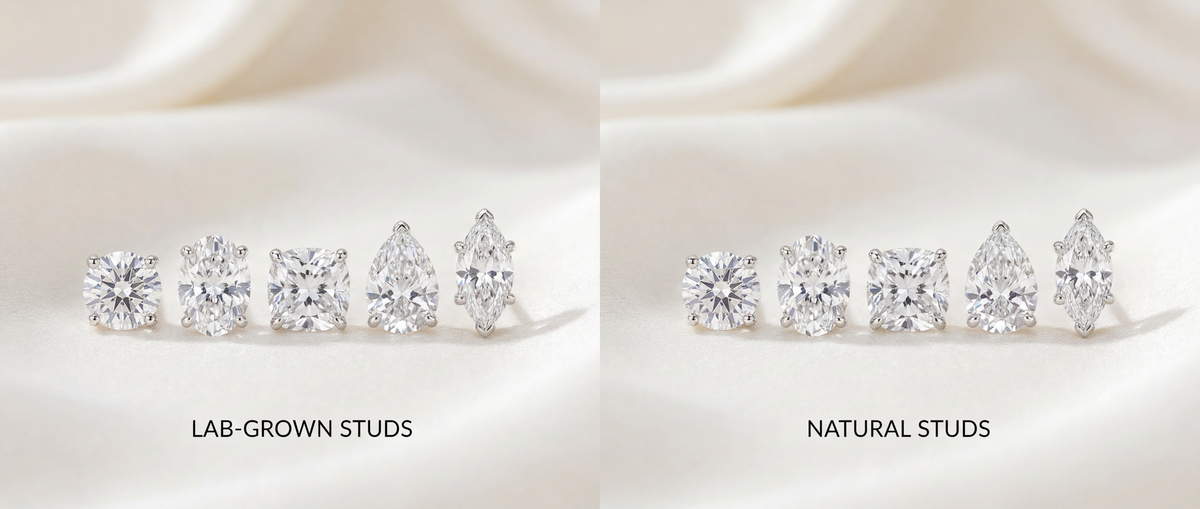
To the naked eye, lab grown and natural diamond earrings look the same at comparable quality levels.
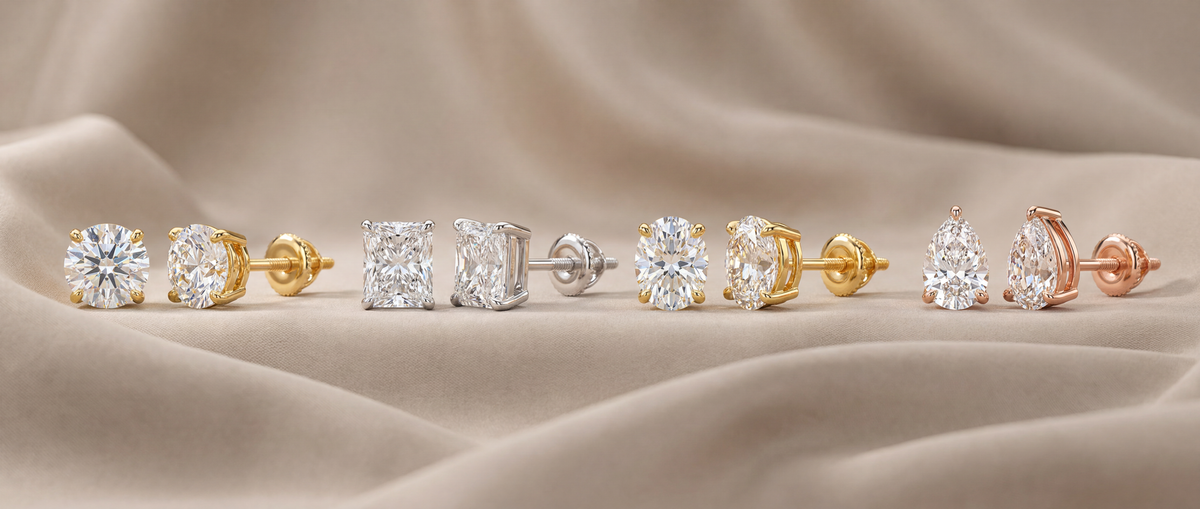
They can be cut into identical shapes, graded under the same 4Cs, and set in the same earring designs, making them visually interchangeable once they’re on the ear. Specialized gemological equipment is required to detect growth patterns and determine origin, so most wearers and observers cannot tell the difference in everyday life.
Durability and everyday wear
In terms of hardness and durability, there is no practical difference between lab grown and natural diamond earrings. Both types are rated 10 on the Mohs scale, making them highly resistant to scratching and well‑suited to daily wear in studs, hoops, and huggies when set securely.
Care routines—such as warm‑water cleaning, gentle brushing, and professional inspections—are the same for both lab grown and natural diamond earrings.
Price and perceived value
Pricing is one of the most noticeable differences between lab grown and natural diamond earrings.
Lab grown diamond earrings often cost significantly less than natural options of similar size and quality, with many recent guides citing price differences on the order of 30–70% depending on carat, cut, color, and clarity. This lower cost per carat lets buyers choose larger stones, better cut quality, or more intricate designs within the same budget.
Natural diamond earrings command higher prices because of their earth‑formed origin, limited mined supply, and long‑standing perception as rarer, traditional gemstones. For some buyers, that premium is part of the appeal; for others, lab grown’s value proposition is more compelling.
Resale and investment reality
Many experts caution that both lab grown and natural diamond earrings should be viewed primarily as luxury jewelry, not investment vehicles.
Natural diamonds have historically held stronger resale expectations, but resale offers are typically far below retail prices for most consumer jewelry, and market conditions can vary. Lab grown diamonds, being more plentiful and newer to the market, generally have lower and less predictable resale values.
If your main goal is future resale or “investment,” neither option is ideal; if your goal is to enjoy beautiful diamond earrings, lab grown often delivers more in the moment for the price paid.
Ethical and environmental impact
Ethical and environmental factors are a major reason many buyers now favor lab grown earrings.
Traditional diamond mining can disturb land, impact ecosystems, and require significant water and energy use, even as parts of the industry work toward more responsible practices. Lab grown diamonds avoid large‑scale open‑pit mining and are produced in controlled facilities, reducing land disruption and making supply chains more traceable.
Lab production does use energy, but some growers are adopting more efficient processes and renewable sources; overall, many third‑party analyses conclude that lab grown diamonds have a smaller environmental footprint than conventionally mined stones.
Sentiment and heirloom value
Natural diamonds carry a long cultural history and are often associated with heirloom pieces and multi‑generational stories, which some buyers find emotionally important. Lab grown diamonds cannot replicate the geological age of a natural gem, but they can still become meaningful family pieces based on the moments and people they represent.
For many modern shoppers, the ethical and value advantages of lab grown earrings outweigh the traditional sentiment attached to natural diamonds; for others, owning an earth‑formed stone is non‑negotiable.
Which is better for everyday earrings
For everyday stud, hoop, and huggie earrings, recent guides often lean toward lab grown diamonds because they offer real‑diamond durability, strong sparkle, and ethical benefits at more accessible pricing.
Natural diamond earrings remain appealing for those who prioritize traditional rarity and legacy over budget and ethics, especially in heirloom‑style designs. If your focus is on daily wear, comfort, and size, lab grown earrings typically provide a more generous “value stack” for everyday use.
Which is better for special occasions and gifts
For anniversaries, major birthdays, or heirloom‑intended pieces, some buyers still prefer natural diamond earrings to mark the significance of the occasion. At the same time, more brands now highlight lab grown earrings as ideal gifts for weddings, graduations, and milestones because they allow for more impressive stones and designs within a given budget.
Ultimately, the “better” choice for gifts depends on the recipient’s values—whether they care more about tradition and rarity, or about ethics, size, and style.
How to decide what fits you
To decide between lab grown and natural diamond earrings, ask yourself:
- Do you care more about size and quality for the budget, or about owning something rare and earth‑formed?
- How important are ethical origin and environmental considerations in this purchase?
- Are you buying earrings to wear and enjoy, or as something you hope to resell later?
Your answers will usually point clearly toward one option without needing to compromise on beauty or durability.
Why Michael Gabriels focuses on lab grown
Michael Gabriels is built around lab grown diamonds, offering real‑diamond earrings with modern ethics and strong value for everyday and special occasions. If this comparison pushes you toward lab grown, you can:
- Explore the Lab Grown Diamond Jewelry Collection for a wide view of styles.
- Check Lab Grown Diamond Stud Earrings Collection for classic studs.
- Read additional guides on durability, care, and sizing to finalize your decision with confidence.