

Lab Grown Diamond Education · Michael Gabriels
Every Question, Expertly Answered
From how lab grown diamonds are created to the 4Cs, ring styles, metals, sizing, and ethics, this hub is your complete guide to buying with confidence. Whether you are choosing your first lab grown diamond or upgrading to your dream piece, start here and explore every in-depth guide we’ve created for you.
Lab Grown Diamond Education Hub & Buyer’s Guide
Welcome to the Michael Gabriels Lab Grown Diamond Education Hub—your one-stop guide to understanding lab grown diamonds, engagement rings, wedding bands, and fine jewelry. Our goal is to give you clear, honest information so you can feel confident about every decision—from choosing a stone to picking a setting and finding the perfect ring size.
What Are Lab Grown Diamonds?
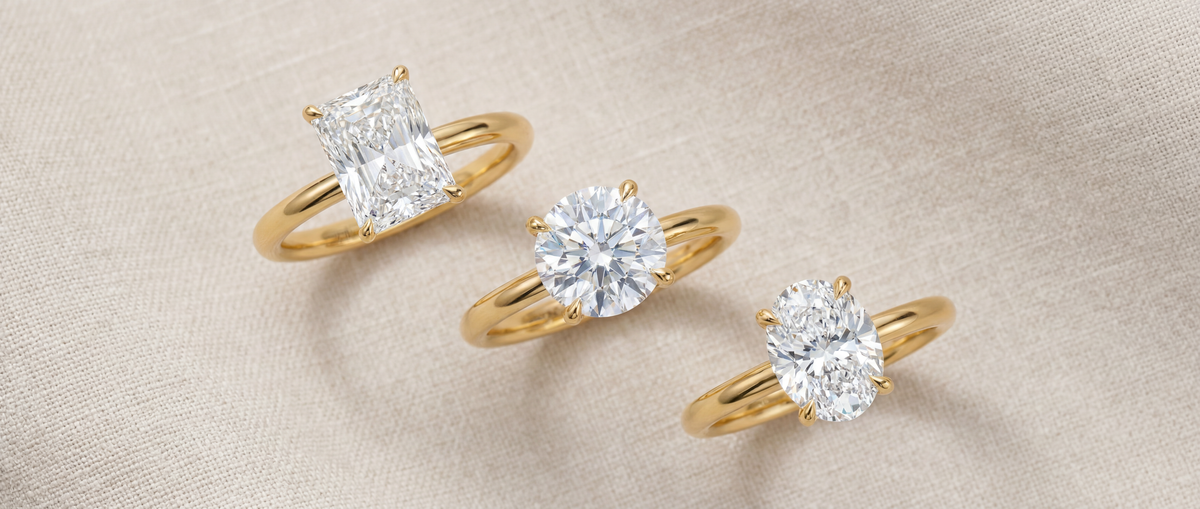
Lab grown diamonds are real diamonds created in modern laboratories using advanced technology that replicates the natural diamond-forming conditions inside the earth. They share the same chemical composition, crystal structure, hardness, brilliance, and durability as mined diamonds, which means they look and perform the same once set in jewelry.
The key difference is origin. Natural diamonds form over millions of years under extreme pressure and heat deep underground, while lab grown diamonds form over weeks in controlled environments designed to produce gem-quality stones. Because of this, lab grown diamonds are typically more affordable for the same quality and offer clearer traceability and ethical transparency.
10 Iconic Cuts
Choose Your Diamond Shape
Select any shape to read its complete guide — covering origin, anatomy, ideal proportions, light performance, and expert buying advice written by the gemologists at Michael Gabriels.


Quick Comparison: Lab Grown vs Natural Diamond
| Feature | Lab Grown Diamond | Natural Diamond |
|---|---|---|
| Origin | Grown in a lab using advanced HPHT or CVD technology. | Formed naturally in the earth over billions of years. |
| Appearance & Sparkle | Same chemical, physical, and optical properties; look identical to natural. | Classic diamond brilliance; visual differences can't be seen with the naked eye. |
| Durability (Mohs hardness) | Mohs 10—just as hard and durable as mined diamonds, ideal for everyday studs. | Mohs 10—equally durable for daily wear. |
| Price / Carat | Typically 30–75%+ less expensive for the same size and quality. | Higher price due to rarity and traditional demand. |
| Ethics & Environment | Lower‑impact production; marketed as more sustainable and conflict‑free. | Modern suppliers follow ethical standards, but mining has a greater environmental footprint. |
| Resale & Heirloom Potential | Weaker resale market today; great for maximizing look now. | Stronger long‑term value and traditional heirloom appeal. |
Decision Guide
How to Choose Your Diamond Shape
Consider Light Performance First
Brilliant cut shapes — round, oval, cushion, princess, radiant, pear, marquise, and heart — maximise sparkle by returning light upward through a pattern of triangular and kite-shaped facets. Step cut shapes — emerald and Asscher — create a different, more subdued effect: long flashes of light and dark that connoisseurs call the "hall of mirrors." Neither approach is superior; they are simply different expressions of a diamond's relationship with light.
Think About the Finger and the Setting
Elongated shapes — oval, pear, marquise, and emerald — visually lengthen the finger and tend to make diamonds look larger relative to their carat weight. Compact shapes — round, princess, Asscher, cushion — sit squarely and give a different sense of presence. Before deciding, consider the proportions of your hand and the ring style you have in mind. An oval in a simple solitaire reads very differently from the same stone in a pavé halo.
Match Shape to Your Clarity Budget
Step cut shapes like the emerald and Asscher have large, open facets that act like windows into the diamond — inclusions are far more visible than in brilliant-cut shapes. If you are drawn to a step cut, budget for VS2 or better clarity. Brilliant cuts, by contrast, scatter light in a way that makes inclusions harder to spot with the naked eye, allowing you to buy a lower clarity grade without visible compromise. This is an important practical consideration that can significantly affect your overall budget.
Lab Grown vs Mined Diamonds
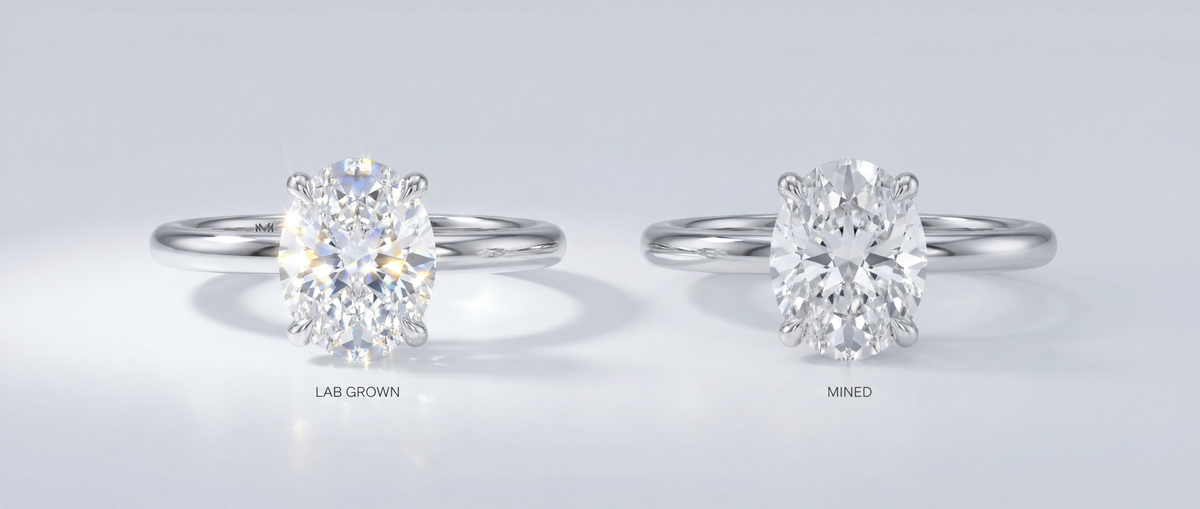
Many people start their search wondering whether they should choose a lab grown or mined diamond. Both are real diamonds with the same optical, chemical, and physical properties, but there are meaningful differences in price, environmental footprint, and sourcing.
Lab grown diamonds usually cost less than comparable mined diamonds because their supply is not limited by geology, allowing you to either save money or upgrade to a larger or higher-quality stone for the same budget. Lab grown diamonds also avoid many of the land disruption, water use, and waste associated with large-scale mining operations, and they offer a clearer path to conflict-free sourcing when compared to traditional mining in certain regions.
How Lab Grown Diamonds Are Made
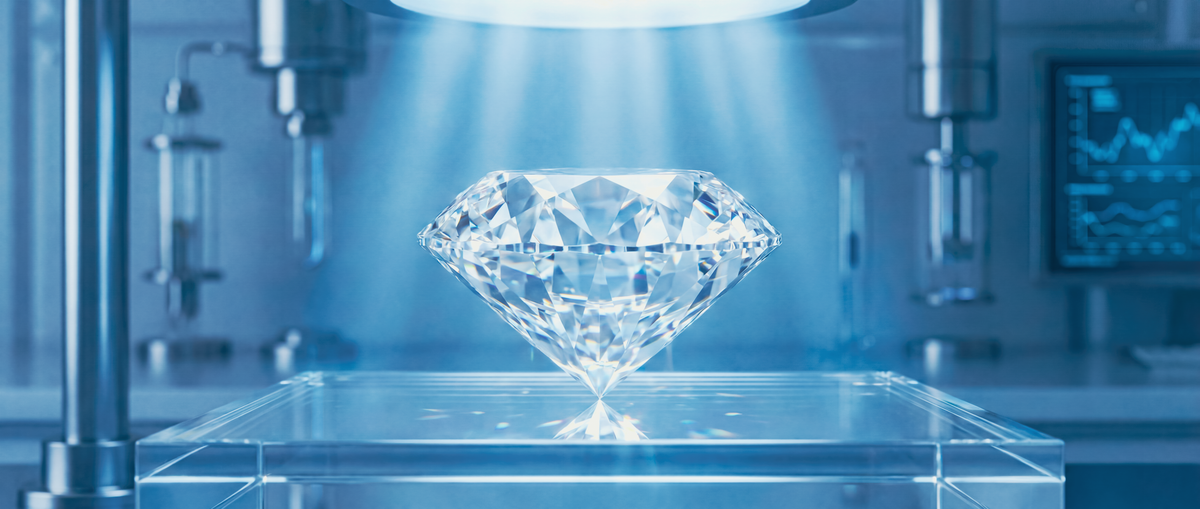
Lab grown diamonds are created using one of two main technologies: High Pressure High Temperature (HPHT) or Chemical Vapor Deposition (CVD). Both methods start with a tiny diamond “seed” and build carbon around it under extreme conditions until a full diamond crystal forms.
- HPHT mimics the intense pressure and heat conditions found deep in the earth’s mantle.
- CVD grows the diamond in a specialized chamber where carbon-rich gas is broken down and deposited onto the diamond seed layer by layer.
After growth, lab grown diamonds are cut, polished, and graded in the same way as mined diamonds, following established gemological standards. Specialist equipment is required to distinguish lab grown from mined diamonds—this is how similar they are once they’re finished.
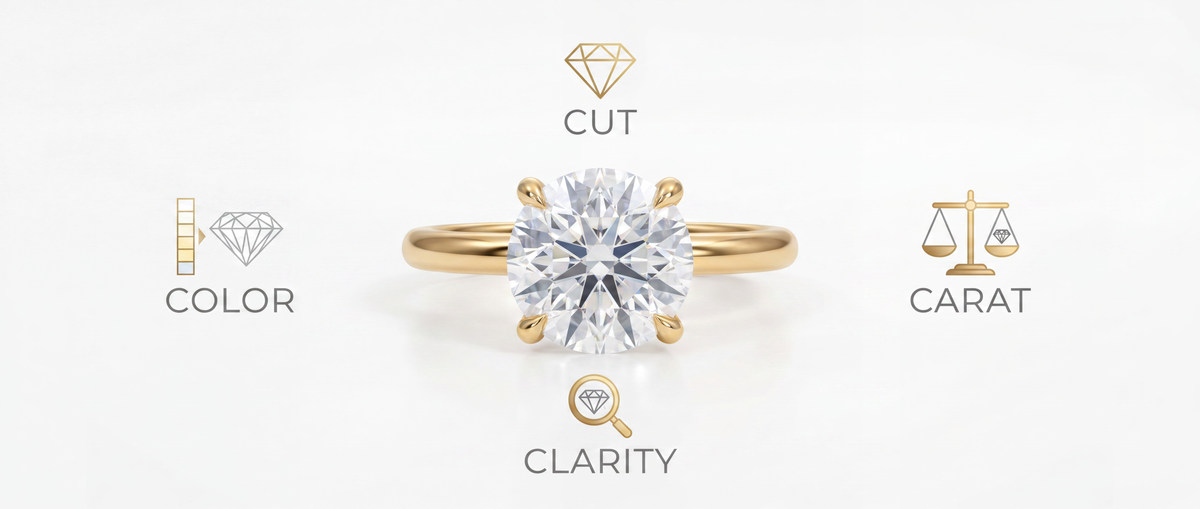
Understand the 4Cs for Lab Grown Diamonds
Every diamond, lab grown or mined—is evaluated using the 4Cs: Cut, Color, Clarity, and Carat weight. Together, these factors determine a diamond’s overall beauty and value.
- Cut describes how well a diamond’s facets, proportions, and symmetry are crafted, and it has the biggest impact on sparkle and brilliance.
- Color grades how close a diamond is to colorless on the D–Z scale, where D is colorless and lower grades show increasing warmth.
- Clarity measures internal inclusions and external blemishes, from Flawless down to Included, based on number, size, and visibility.
- Carat is a measure of weight, not just size; one carat equals 200 milligrams.
With lab grown diamonds, you can often prioritize excellent cut and eye-clean clarity while still choosing a larger carat weight for the same budget you might spend on a smaller mined diamond.

Certification & Diamond Grading Reports
A trusted diamond grading report (certificate) is your independent quality guarantee. It’s issued by a gemological laboratory that evaluates the diamond’s 4Cs and other characteristics according to standardized criteria.
For lab grown diamonds, recognized labs such as IGI and GIA use the same core grading scales as they do for mined stones, clearly noting the diamond’s lab grown origin. A certificate helps you verify that the diamond you’re buying matches its description and enables apples-to-apples comparison between different stones.
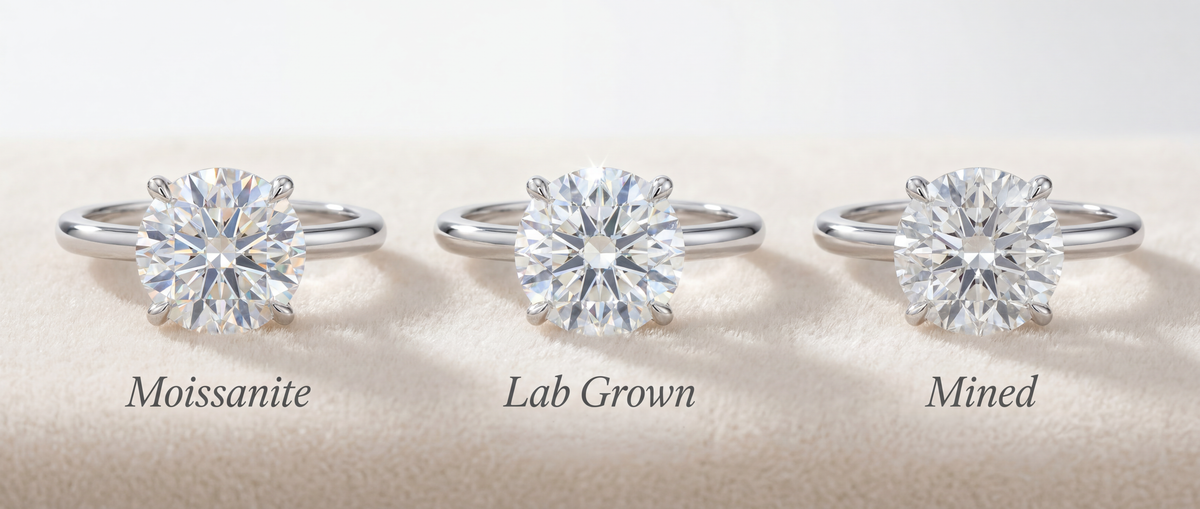
Moissanite, Lab Grown & Mined: Which Is Right for You?
As you compare options, you’ll likely see moissanite mentioned alongside lab grown and mined diamonds. Moissanite is a lab created gemstone with a different chemical composition and optical properties—it has higher dispersion, which can create a stronger rainbow effect compared to diamond’s more balanced white sparkle.
All three—moissanite, lab grown diamonds, and mined diamonds—can be beautiful choices, but they differ in how they look under different lighting, how they’re perceived, and how they’re priced. Lab grown diamonds are ideal if you want the traditional diamond look and grading structure, moissanite suits those who love extra fire and lower prices, and mined diamonds appeal most to buyers who specifically want a naturally formed stone.
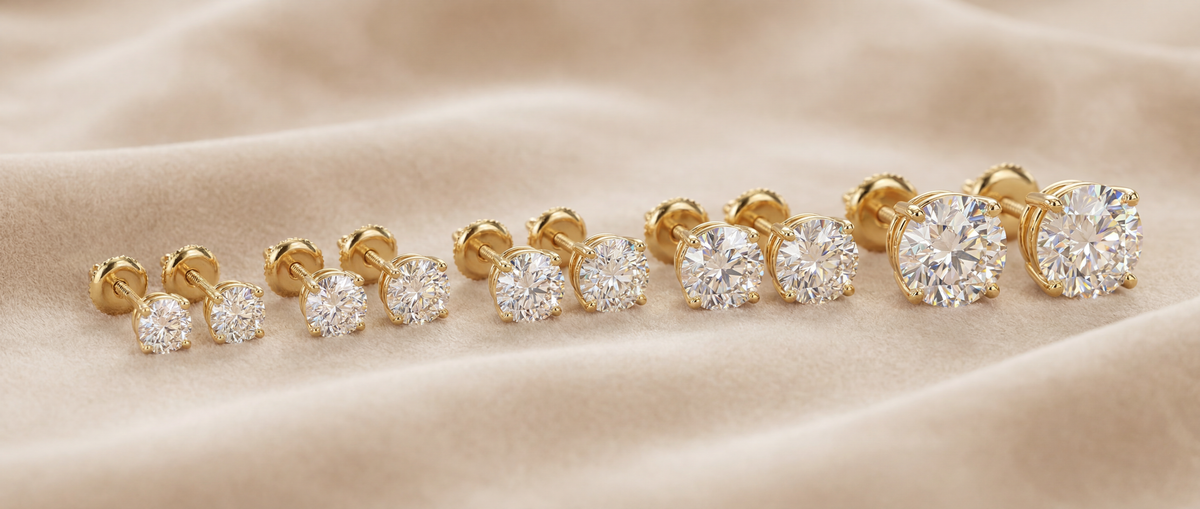
Lab Grown Diamond Stud Earrings Guide
Lab grown diamond studs are the definition of effortless luxury—simple, secure, and designed to sit close to the lobe so all you see is pure sparkle. They work with everything from T‑shirts to tailored looks, which is why many people choose them as their first lab grown diamond purchase or as an everyday “signature” piece.
Because lab diamonds offer more carat for the same budget, you can comfortably move into sizes that feel substantial on the ear without sacrificing cut quality or ethical peace of mind. Whether you prefer a delicate accent or a bold statement pair, understanding carat weight, millimeter size, and how different settings sit on the ear will help you select studs you’ll actually live in.
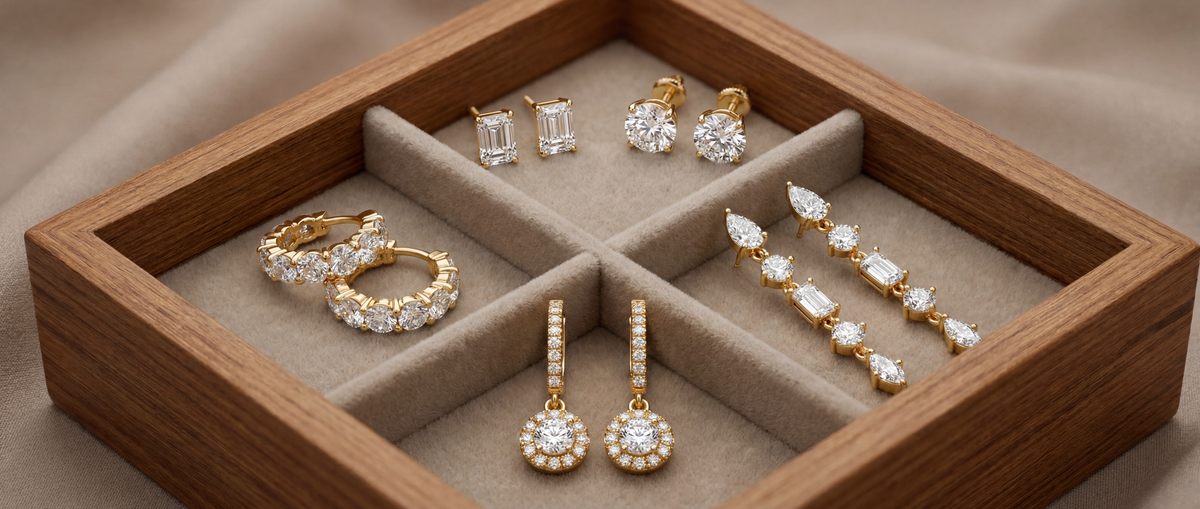
Lab Grown Diamond Earrings (Studs, Hoops & More)
Lab grown diamond earrings come in a range of silhouettes—studs, hoops, huggies, and drops—each offering a different way to frame the face and reflect light. Studs keep things minimal on the lobe, hoops and huggies add a modern curve around the ear, and drops introduce length and movement for more dramatic looks.
Because all of these styles can be crafted with lab grown diamonds, you can build an earring wardrobe that aligns with your values and your lifestyle—from low-profile pieces you sleep in to high-impact designs reserved for evenings out. The key is understanding how style, size, and setting work together so you can pick earrings that feel comfortable, secure, and true to your personal aesthetic.

Engagement Ring Buying Guide
Once you understand the stones, the next decision is how to turn that diamond into an engagement ring that matches your partner’s style and lifestyle. An effective buying approach considers budget, diamond quality, shape, setting, metal, and how the ring will be worn day-to-day.
A thoughtful guide can walk you through setting a budget, deciding which of the 4Cs to prioritize, choosing a shape that flatters the hand, and selecting a setting that balances beauty and practicality. It can also help you decide whether to build your ring from a loose diamond plus setting, or to choose from curated completed designs.
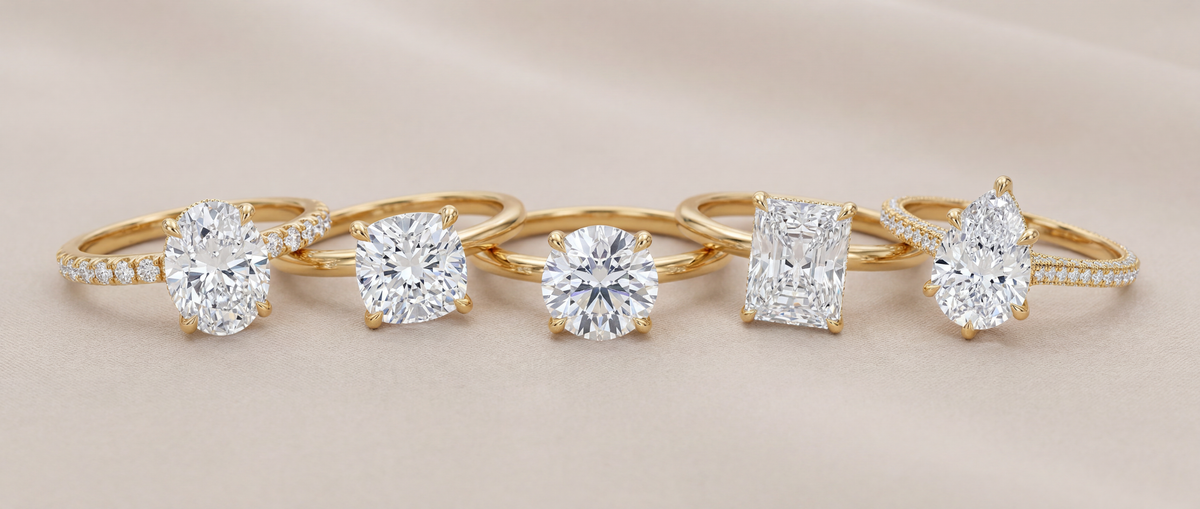
Engagement Ring Styles & Diamond Shapes
Style and shape are what most people notice first. Popular engagement ring styles include solitaire, halo, three-stone, hidden halo, pavé, and vintage-inspired designs, each making the diamond look and feel different on the hand.
Diamond shapes—like round, oval, emerald, radiant, pear, cushion, princess, and marquise—affect how big the stone looks per carat, how it sparkles, and the overall vibe (classic, modern, romantic, bold). Some shapes naturally elongate the finger, while others emphasize symmetry and clean lines.
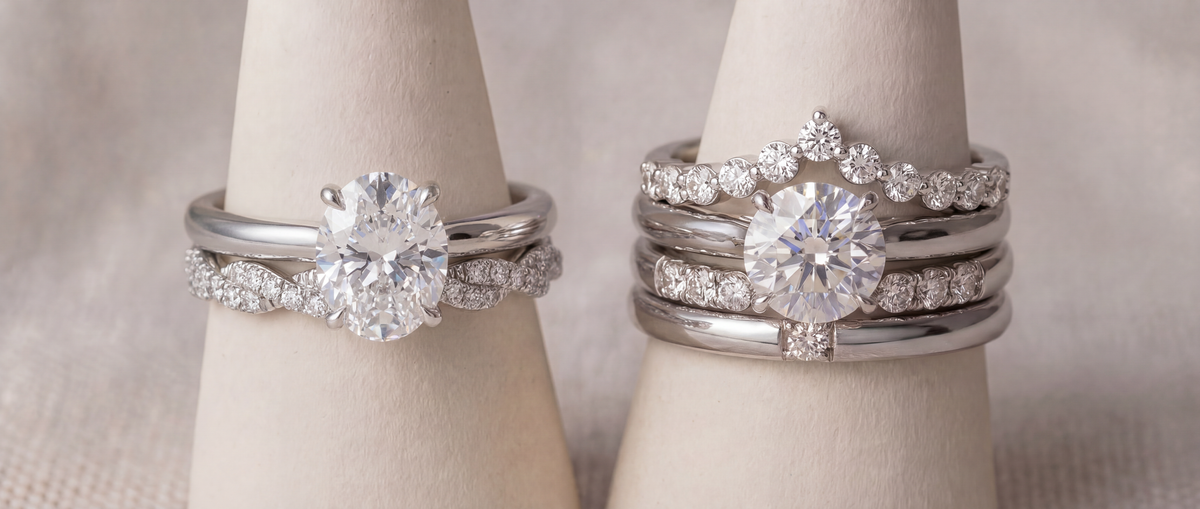
Wedding Bands & Stacking
Wedding bands complete the story of your engagement ring. The right band will complement your engagement ring’s shape and setting, feel comfortable for daily wear, and fit your long-term style.
From classic plain metal bands to pavé, eternity, contour, and guard bands, each design interacts differently with your engagement ring—some sit flush, others create a deliberate gap, and some are meant to stack for a layered look over time. Men’s bands also vary in width, profile, and metal, which affects weight and comfort.
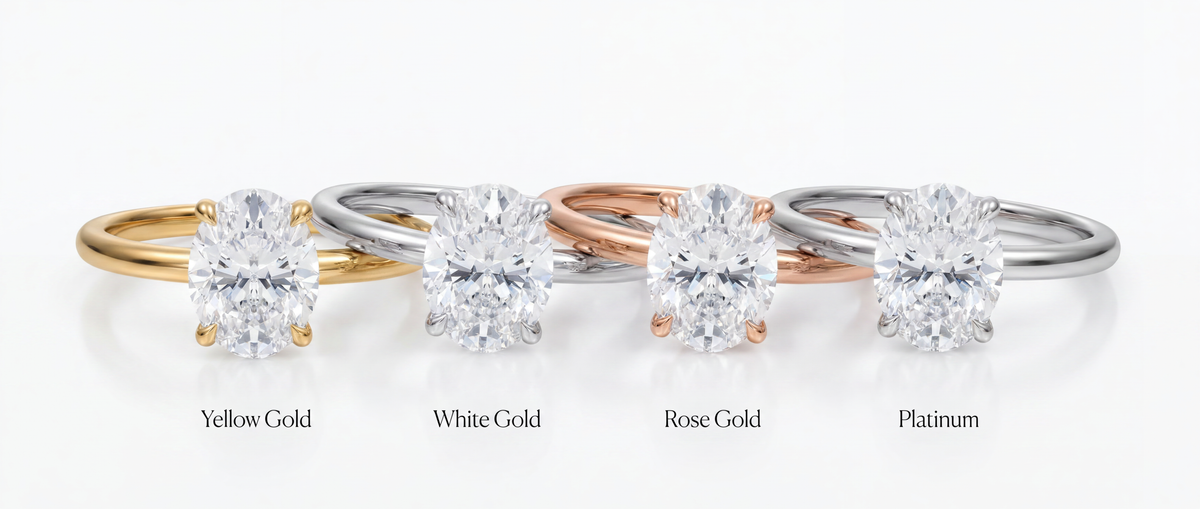
Metals Guide: Gold, Platinum & More
Your metal choice affects color, durability, weight, and maintenance of your ring. Common options for lab grown diamond jewelry are 14k or 18k gold (yellow, white, or rose) and platinum.
- Gold is available in multiple colors and karats; 14k gold is often more durable for everyday wear, while 18k has a richer hue due to higher gold content.
- Platinum is naturally white, dense, and hypoallergenic, making it a great choice for people with sensitive skin and those who want a premium feel.
- White metals (white gold and platinum) tend to emphasize brightness in near-colorless diamonds, while yellow and rose gold can soften warmth in slightly lower color grades.
Ethics, Conflict-Free & Sustainability
One of the strongest reasons people choose lab grown diamonds is peace of mind. Traditional diamond mining can involve significant land disturbance, water usage, and social challenges, whereas lab grown diamonds avoid the large-scale excavation required to recover stones from the earth.
Lab grown diamonds are inherently free from the specific conflict dynamics associated with certain mined diamonds, which historically have been linked to regions with unregulated mining and armed conflict. While both mined and lab grown producers are working to improve their environmental performance, lab diamonds typically use far less land and water and allow for more transparent tracking of energy sources and supply chains.

Find Your Ring Size
A comfortable, secure fit is essential for everyday wear. You don’t need to guess—there are simple methods to find your ring size at home.
Common approaches include:
- Measuring a ring that already fits the intended finger and comparing it to a size chart
- Using a strip of paper or string around the base of the finger, then measuring the length and comparing to a sizing table
- Using a printable ring sizer or a reusable plastic sizer if you prefer a physical tool
It’s also wise to consider how finger size can change with temperature, time of day, and life events, and to check your jeweler’s resizing policies.
Common Questions
Lab Grown Diamonds Diamond FAQs
Yes. Lab grown diamonds have the same chemical composition, crystal structure, hardness, and optical properties as mined diamonds—they are made of crystallized carbon and are graded using the same 4Cs. The only difference is their origin: one is formed in the earth over millions of years, the other is grown in a lab over weeks.
Lab grown diamonds are created using High Pressure High Temperature (HPHT) or Chemical Vapor Deposition (CVD), both of which grow diamond crystals from a small “seed” under controlled conditions. After growth, they are cut, polished, and graded just like mined diamonds.
Lab grown and mined diamonds look the same, have the same hardness, and use the same grading scales, but lab grown diamonds typically cost significantly less for comparable quality. The main differences are origin, price, rarity, and long-term resale behavior.
Yes. Lab grown diamonds share the same hardness rating of 10 on the Mohs scale as mined diamonds, meaning they are extremely resistant to scratching and suitable for everyday wear. As with any fine jewelry, they should still be protected from hard knocks and stored carefully.
Lab grown diamonds tend to have lower resale value than comparable mined diamonds because they are easier to produce and prices have generally decreased as technology has scaled. They are best viewed as a purchase for personal enjoyment and ethical preference rather than as a long-term financial investment.
The 4Cs are Cut, Color, Clarity, and Carat weight, the four main factors used to evaluate diamond quality. Cut affects how a diamond handles light, color measures how close it is to colorless, clarity describes internal and external characteristics, and carat refers to its weight.
Yes. Lab grown diamonds are graded using the same 4C criteria as mined diamonds, and the same trade-offs between cut, color, clarity, and carat apply. The main advantage is that you can often choose higher cut quality and carat weight for the same budget compared to mined stones.
Most experts recommend prioritizing cut first for maximum sparkle, then balancing color, clarity, and carat according to your budget and preferences. For many buyers, a bright cut, near-colorless grade, and eye-clean clarity offers the best visual result at an efficient price point.
A diamond grading report is an independent evaluation from a gemological laboratory that documents a diamond’s 4Cs and other key characteristics. It helps you verify quality, compare stones objectively, and confirm that a diamond is lab-grown or mined as described.
Leading labs like GIA and IGI grade lab grown diamonds using established cut, color, clarity, and carat scales, clearly noting the stone’s lab grown origin on the report. The grading process for lab-grown diamonds follows the same core standards that apply to mined diamonds.
Moissanite is a different gemstone with a different chemical composition and a higher dispersion, which creates a more intense “rainbow” fire than diamond. Lab grown diamonds are true diamonds with the same look and grading structure as mined stones, while moissanite is a diamond alternative that usually costs less but has a distinct visual personality.
Lab grown diamonds are available in the same shapes as mined diamonds, including round, oval, emerald, radiant, pear, cushion, princess, and more. They work beautifully in all major styles—solitaire, halo, three-stone, pavé, and vintage-inspired—so the “best” choice comes down to taste, finger shape, and lifestyle.
Popular choices are 14k or 18k gold (yellow, white, or rose) and platinum, each with different looks, weights, and durability profiles. White metals emphasize brightness, yellow and rose gold add warmth, and platinum offers a naturally white, hypoallergenic option with a premium feel.
You can measure an existing ring that fits well and compare the inner diameter or circumference to a size chart, or wrap a non-stretchy strip of paper or string around your finger and measure its length. Many jewelers also offer printable ring sizers or low-cost plastic sizers you can use at home for extra accuracy.
Lab grown diamonds avoid the large-scale excavation associated with traditional diamond mining, which can reduce land disturbance and certain social risks when compared to some mined sources. However, they do require significant energy, so the overall impact depends on how the electricity is produced and how responsible each producer’s practices are.


