Lab Grown Diamond Earring Size Guide - Michael Gabriels
Lab grown diamond earrings make it easier to afford larger, higher‑quality designs—but they also make size decisions more important. This guide explains how CTW (carat total weight), per‑ear carat, and millimeter (mm) measurements translate into real on‑ear size so you can choose the right lab grown studs, hoops, huggies, and drops for your ears and lifestyle.
- All CTW and mm ranges in this guide are approximate, based on typical size charts for round‑cut diamonds; always rely on each product’s specific measurements and grading report for exact sizing.

Why earring size matters with lab grown diamonds
Because lab grown diamonds are more accessible in price, many buyers move up in carat weight or more complex designs compared with mined options. The result is that sizing—how earrings sit on your ear, how much coverage they have, and how comfortable they feel—becomes the key decision, not just “can I afford it?”.
Choosing the right size upfront reduces returns and ensures your earrings match both your aesthetic and everyday comfort.
Understanding CTW vs per‑ear carat
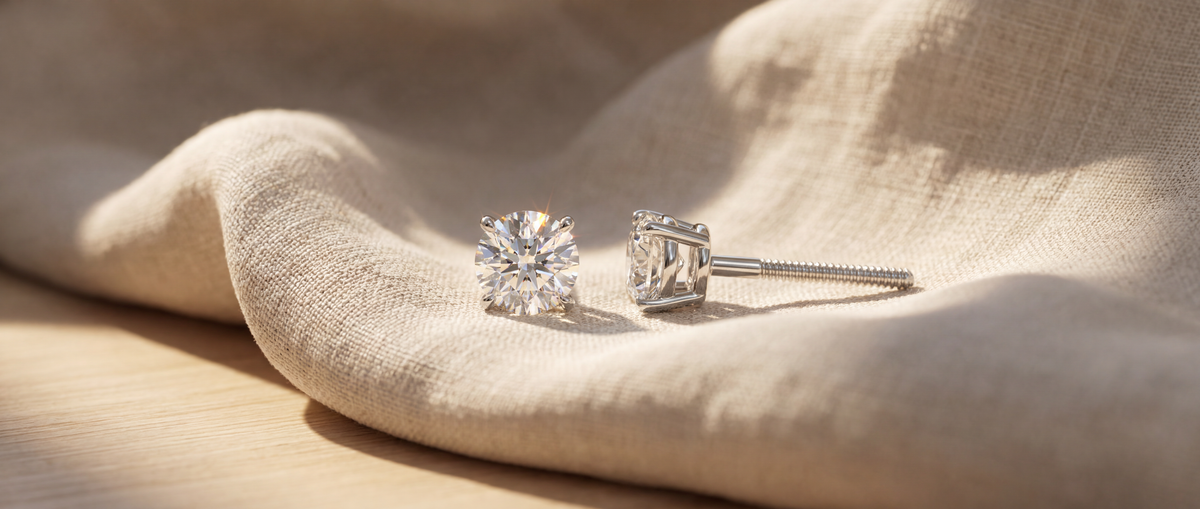
Most lab grown earring listings, including stud pairs, use CTW (carat total weight) for both earrings combined. To understand actual size, you need to convert CTW to per‑ear carat weight.
For typical round solitaire studs, size guides break CTW down roughly as:
- 0.50 CTW pair ≈ 0.25 ct per ear
- 1.00 CTW pair ≈ 0.50 ct per ear
- 1.50 CTW pair ≈ 0.75 ct per ear
- 2.00 CTW pair ≈ 1.00 ct per ear
These are approximate relationships based on commonly used stud charts; individual designs may vary. To avoid confusion, Michael Gabriels product pages should list both CTW and per‑ear carat for pairs so shoppers know exactly what each ear is wearing.

How millimeter (mm) measurements translate to on‑ear size
Carat measures weight; millimeters measure physical dimensions. Because different cuts and proportion styles distribute weight differently, mm numbers give a more reliable sense of how large each earring will look on the ear.
Round‑stud size charts commonly pair per‑ear carat and mm roughly like this:
- ≈0.25 ct per ear → around 4.1–4.3 mm
- ≈0.50 ct per ear → around 5.0–5.2 mm
- ≈0.75 ct per ear → around 5.8–5.9 mm
- ≈1.00 ct per ear → around 6.5 mm
Again, these values are approximate and assume standard round proportions; actual mm sizes depend on individual cut and grading.
Lab grown diamond stud earring size ranges
Public stud guides and 2026 lab grown stud articles typically group stud sizes into three everyday‑relevant categories.
Petite studs (subtle everyday sparkle)
Petite stud earrings offer a light, low‑profile look—ideal for office wear, second piercings, or minimalist styling.
Approximate ranges (round‑cut baseline):
- Per‑ear carat: about 0.15–0.35 ct
- CTW: about 0.30–0.70 CTW per pair
- Diameter: roughly 3.2–4.7 mm
These lab grown studs are especially useful for multi‑pierced “ear stack” looks or for customers who want just a hint of diamond rather than a focal point.
Everyday classic studs (balanced visibility and comfort)
Most “best everyday lab grown studs” lists recommend moderate CTW ranges for visible but wearable daily sparkle.
Common guidance:
- Per‑ear carat: about 0.40–0.75 ct
- CTW: about 0.80–1.50 CTW per pair
- Diameter: roughly 4.8–5.9 mm
One 2026 guide, for example, highlights round lab grown studs between around 0.50–1.00 CTW in 18K gold as a practical sweet spot for daily wear.
Statement studs (high impact)
Statement studs make the diamond the main focal point on the lobe—great for evenings, events, or bold everyday style.
Approximate baseline:
- Per‑ear carat: around 0.90 ct and above
- CTW: around 1.80 CTW and up
- Diameter: often 6.5 mm and above
Because lab grown pricing is more accessible, shoppers can step into these larger ranges more easily, but they may feel substantial on smaller lobes, so on‑ear visuals and your size guide become crucial for expectation‑setting.
Hoops and huggies: diameter, width, and stone size
Hoop and huggie sizing is described primarily by diameter (how far the hoop extends) and width or thickness, plus any CTW associated with pavé or channel‑set lab grown stones.
Common diameter tiers:
- Small huggies: roughly 8–12 mm diameter; sit close to the lobe and are frequently recommended for daily wear.
- Classic hoops: roughly 15–25 mm; visible but manageable for office and casual outfits.
- Large hoops: around 30 mm and above; best reserved for statement looks and events.
For lab grown hoops, CTW describes total diamond weight on the hoop, but overall effect depends on stone count, individual stone size, and hoop width.
Drop and dangle earrings: length and proportions
Drop and dangle sizes depend on total length and design proportion rather than one primary carat value.
Typical ranges:
- Short drops (≈15–25 mm): subtle movement, suitable for work and daytime events.
- Mid‑length drops (≈30–45 mm): commonly recommended for weddings and formal occasions.
- Long dangles (≈50 mm+): dramatic looks for evenings or red‑carpet‑style events.
Lab grown diamond drops may feature one main stone plus accents or multiple stones in a line; CTW indicates total diamond weight, but length and silhouette determine how bold the earrings feel in person and in photos.
Matching size to face shape, ear anatomy, and piercings
Current earring size guides stress that the same CTW or mm can look different depending on ear and face shape.
Examples:
- Petite lobes often look best in moderate CTW studs and small‑to‑classic hoops, which feel balanced rather than overwhelming.
- Multiple piercings benefit from mixing sizes—larger studs or huggies in the first lobe piercing, then petite studs or micro hoops in upper piercings.
- Longer faces or necks can support slightly longer drops and larger hoops more comfortably, while rounder faces may prefer mid‑length drops and classic hoop sizes.

Choosing sizes for different lifestyles
Lab grown earring content aimed at everyday wear and lifestyle frequently groups size recommendations by how people actually live.
- Office/remote work: petite to classic studs and small huggies that do not interfere with headphones or hair.
- Active lifestyles: low‑profile studs and close‑fit huggies in modest CTW ranges plus secure closures.
- Social and evening routines: larger studs, classic hoops, and mid‑length drops that photograph well and read clearly across a room.