How to Care for Your Lab Grown Diamond Earrings - Michael Gabriels
Lab grown diamond earrings are made to be worn and enjoyed, but like all fine jewelry, they need proper care to keep their brilliance and stay secure over time. The same simple routines recommended for natural diamond earrings apply to lab grown pieces: gentle daily habits, safe at‑home cleaning, and occasional professional checks.
-
All care routines described here are general best practices. Always consider your specific metal, setting style, and any jeweler recommendations before applying them.

Do Lab Grown Diamonds Need Different Care?
Lab grown diamonds share the same chemical composition, crystal structure, hardness, and optical behavior as natural diamonds, so they do not require a different care approach. Authoritative guides make clear that the origin of the diamond (lab or mined) does not change how you clean or maintain it; instead, the focus is on the diamond’s hardness and the metal and setting that surround it.
In practice, this means any care routine designed for diamond earrings—warm water, mild soap, soft brushes, careful storage—is suitable for lab grown diamond earrings as well.
Everyday Care Habits
Your daily habits have the biggest impact on long‑term appearance and safety.
Put Earrings On Last, Take Them Off First
Most care guides recommend applying skincare, sunscreen, perfume, and hairspray before putting on your earrings, then removing earrings before undressing or doing more physical tasks. This reduces product build‑up on diamonds and metal and cuts down on accidental bumps or snags.
Wipe After Wear
When you remove your lab grown diamond earrings, briefly wipe them with a soft, lint‑free cloth to remove any surface oils or light residue before storing. This simple step can help maintain clarity between deeper cleans.
Remove for Certain Activities
You should generally remove lab grown diamond earrings before swimming, heavy workouts, gardening, strong household cleaning, or activities involving impact or chemicals. This protects both the diamonds and the settings from unnecessary stress, chemical exposure, and potential accidents.
Safe At‑Home Cleaning
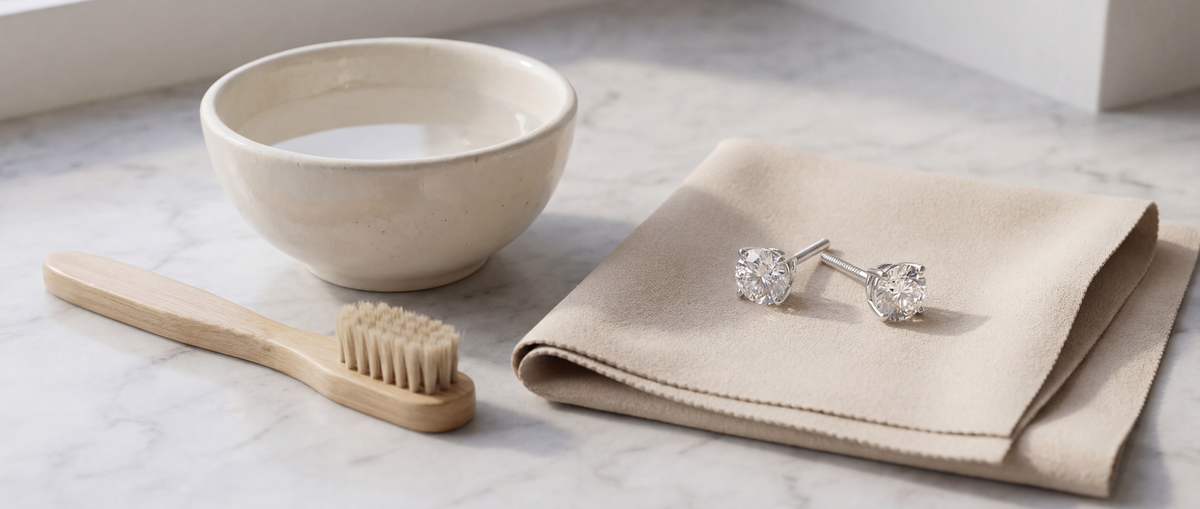
The most widely recommended cleaning method for lab grown diamond jewelry is a warm‑water and mild‑soap soak followed by gentle brushing.
Step‑by‑Step Home Routine
-
Prepare the solution
Fill a small bowl with lukewarm water and add a few drops of mild, detergent‑free dish soap, mixing until it disperses. -
Soak your earrings
Place your lab grown diamond earrings in the solution and soak for about 15–30 minutes to loosen dirt, oils, and residue around the stones and settings. -
Brush gently
With a soft‑bristled toothbrush, carefully brush around and behind the diamonds, focusing on prongs, baskets, posts, and backs where buildup is most common. -
Rinse thoroughly
Rinse the earrings in fresh lukewarm water or under a gentle stream, ensuring all soap residue is removed while avoiding open drains. -
Dry carefully
Pat dry with a lint‑free cloth and allow them to air‑dry briefly, ensuring no moisture remains around posts, backs, or hinges.
Michael Gabriels suggests repeating this routine every 2–4 weeks for earrings worn daily and less frequently for occasional pieces.
Professional Cleaning and Inspections
While home care handles everyday buildup, professional cleaning is recommended periodically—typically once or twice a year.
Professional jewelers may use:
- Ultrasonic cleaning to dislodge stubborn dirt and residue from crevices and under settings.
- Steam cleaning to remove deeper buildup and restore brilliance.
We advise leaving ultrasonic and steam methods to professionals, since incorrect use can loosen stones or damage delicate pave. During these visits, jewelers also check prongs, baskets, posts, and backs for wear, catching problems before they lead to losses or breakage.
What to Avoid
Michael Gabriels experts consistently warn against harsh chemicals and abrasive DIY methods.
Avoid using:
- Strong household chemicals such as bleach, chlorine, and heavy‑duty cleaners, which can damage metals and dull surfaces.
- Abrasive substances like baking soda paste, toothpaste, or rough cloth/paper towels, which can scratch metal or polished surfaces.
- Unverified solutions like concentrated alcohol, vinegar, or random “hack” products unless a professional jeweler specifically approves them for your metal and setting.
- DIY steam over kettles or sinks, which can be dangerous and stressful to settings compared with controlled professional steam cleaners.
Sticking to warm water, mild soap, soft brushing, and professional care when needed offers a safe, reliable routine for lab grown diamond earrings.
Caring for Different Earring Styles
Different earring designs collect dirt in different places.
Stud Earrings
For lab grown diamond studs, buildup tends to accumulate:
- Behind stones and under martini or basket settings.
- Around prongs holding each diamond.
- On posts and backs (friction or screw types).
During cleaning, gently work the soft brush behind the stone and around the prongs and check that backs fit snugly after drying.
Hoops and Huggies
Hoops and huggies collect residue:
- Along inner curves and around pavé or channel‑set lab grown diamonds.
- Around hinges and closures.
Use the brush to reach the inner hoop surfaces and hinge areas, then rinse carefully to avoid trapped soap, making sure closures still function smoothly afterward.
Drop and Dangle Earrings
Drops and dangles attract buildup:
- Around joints, links, and moving components.
- Near levers or clasps that attach them to the ear.
Brush gently along links and joints, avoid bending or stressing moving parts, and rinse thoroughly without rough handling.
Storage and Travel
Correct storage dramatically reduces damage and tangling between wears.
Best practices include:
- Storing each pair in a separate soft‑lined compartment or pouch to prevent scratching against other pieces.
- Using soft cloth or muslin wraps if you prefer traditional storage methods.
- Keeping earrings in clean, relatively dust‑free drawers or boxes.
- Using padded travel cases when on the move, and verifying backs or closures are secure before packing.
These habits help protect lab grown diamond earrings from chips, bent posts, and accidental damage when not in use.
Long‑Term Maintenance: Prongs, Backs, and Settings
Most long‑term issues come from the settings and hardware, not the lab grown diamonds.
Focus on:
- Prongs: Check for thinning, bending, or snagging on fabric—signs prongs may need tightening or repair.
- Backs and closures: Ensure friction backs, screw backs, huggie hinges, and hoop clasps engage firmly without wobble.
- Metal condition: Watch for scratches, dents, or discoloration from chemicals or heavy use.timesofindia.
Regular professional inspections (about every 6–12 months) help maintain these components before problems arise.