Lab Grown Diamond Earrings FAQs - Michael Gabriels
This FAQ brings together the most common questions shoppers ask about lab grown diamond earrings—from how they’re made and graded to everyday wear, sizing, care, ethics, and certification.
1. What Lab Grown Diamond Earrings Are
-
What are lab grown diamond earrings?
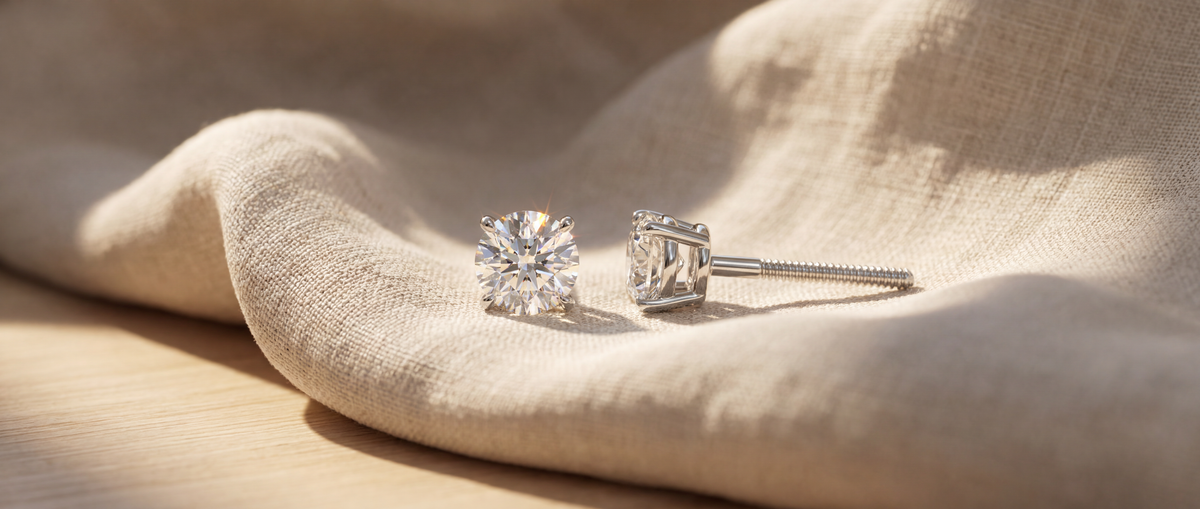
Lab grown diamond earrings are fine jewelry earrings set with diamonds that are created in laboratories using advanced processes that replicate the conditions under which natural diamonds form underground. The diamonds are then mounted in earring settings—studs, hoops, huggies, or drops—that hold the stones securely on the ear. -
Are lab grown diamond earrings real diamonds?
Yes. Lab grown diamonds are chemically, physically, and optically identical to natural diamonds: they share the same carbon crystal structure, hardness, and refractive index. Multiple education sources note that even trained professionals need specialized equipment to distinguish lab grown diamonds from mined stones once they are cut and set. -
How are lab grown diamonds for earrings created?
Most lab grown diamonds are produced using either HPHT (High Pressure High Temperature) or CVD (Chemical Vapor Deposition) methods, both of which turn carbon into diamond under controlled conditions. HPHT mimics the high‑pressure, high‑temperature environment deep in the earth, while CVD grows diamond layer by layer from a carbon‑rich gas in a vacuum chamber.
2. Durability & Everyday Wear
-
Are lab grown diamond earrings durable enough for everyday wear?
Yes. Lab grown diamonds share the same hardness rating—10 on the Mohs scale—as natural diamonds, making them highly scratch‑resistant and suitable for everyday earrings. Care guides and retailer FAQs explicitly state that lab grown diamond earrings can be worn day after day without concern about the stones themselves wearing out. -
Will lab grown diamond earrings lose their sparkle over time?
No. Both lab grown and natural diamonds maintain their brilliance because diamond’s hardness and stable crystal structure don’t break down under normal conditions. When earrings appear dull, it is almost always due to surface buildup of oils, lotions, or dust on the stones and settings; regular cleaning removes that film and restores sparkle. -
Are lab grown diamond earrings suitable for different everyday settings (office, casual, events)?
Yes. Studs, small hoops, and huggies are widely recommended as some of the most versatile earring styles because they sit close to the ear, are less likely to snag on clothing, and move easily between office, casual, and semi‑formal outfits. Lab grown diamonds combine that practical form factor with real‑diamond durability, making them well‑suited to frequent, everyday wear.
3. Size, Carat Weight & Scale on the Ear
All CTW (carat total weight) and millimeter (mm) values below are approximate ranges based on public size charts; always rely on each product’s exact specs and grading report for precise measurements.
-
What are common carat sizes for lab grown diamond earrings?
Size guides show that solitaire lab grown diamond stud earrings commonly range from about 0.25 CTW (carat total weight) up to 2.00 CTW and beyond, with around 1.00 CTW (≈0.50 ct per ear) frequently cited as a popular everyday size. Hoops, huggies, and drops often use CTW for pavé or multi‑stone designs, with a wide spread from modest daily‑wear totals to more substantial statement ranges. -
How big should lab grown diamond earrings be for everyday wear?
Size is personal, but multiple buying guides recommend starting with modest CTW ranges for everyday studs and small huggies—often around 0.50–1.50 CTW for studs—and choosing larger CTW and hoop diameters for more dramatic or occasional looks. For most people, these ranges balance visibility and comfort in daily life. -
Do lab grown diamond earrings look larger than mined earrings at the same carat?
At the same carat weight, lab grown and mined diamonds are the same physical size because carat measures weight, not origin. However, lab grown diamonds typically cost significantly less, so buyers often choose higher carat weights in lab grown earrings than they would in mined diamonds for the same budget—making lab grown earrings appear larger overall in many comparisons.
4. Quality: Cut, Color, Clarity & Matching
-
What cut quality should I look for in lab grown diamond earrings?
Expert guides emphasize that cut is the most important factor for sparkle and overall visual performance in lab grown diamonds, recommending Excellent or Very Good cut grades whenever available. Well‑cut lab grown diamonds in studs or front‑facing hoop designs will look brighter and more lively than larger stones with weaker proportions. -
What color grades work best for lab grown diamond earrings?
Jewelry education sources generally recommend near colorless ranges for earrings in white metals, such as D–H under traditional grading scales, to achieve a bright, neutral appearance. In yellow or rose gold, slightly warmer stones can still look attractive and may offer better value, because minor color differences are harder to detect on the ear at normal viewing distances. -
What clarity is appropriate for earrings?
Clarity preferences vary, but multiple guides note that eye‑clean clarity levels (where inclusions are not visible without magnification) in mid‑range grades—often VS or SI—offer a good balance between a clean look and accessible pricing for earrings. Higher clarity grades can be chosen for larger studs or for buyers who place a premium on maximum visual cleanliness. -
How important is matching in lab grown diamond earrings?
Matching is crucial for paired earrings—especially studs—because both diamonds should look symmetrical on the ear. Guides emphasize that matched pairs should be closely aligned in carat weight, color, clarity, and cut so the earrings appear balanced; some brands highlight “matched pairs” or use certificates to confirm that both stones share similar characteristics.
5. Shapes, Settings & Backings
-
Which diamond shapes are popular for lab grown diamond earrings?
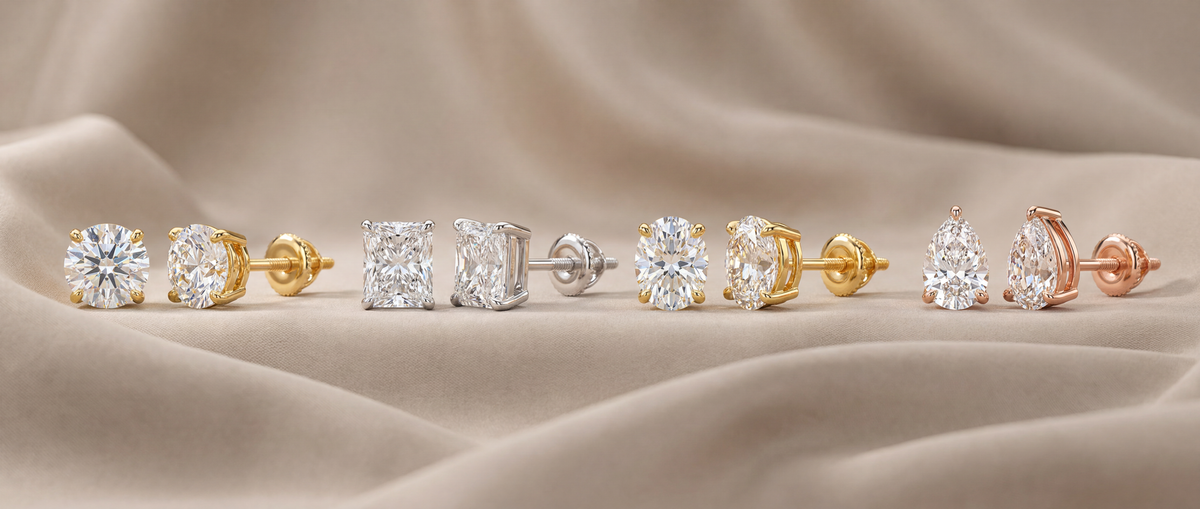
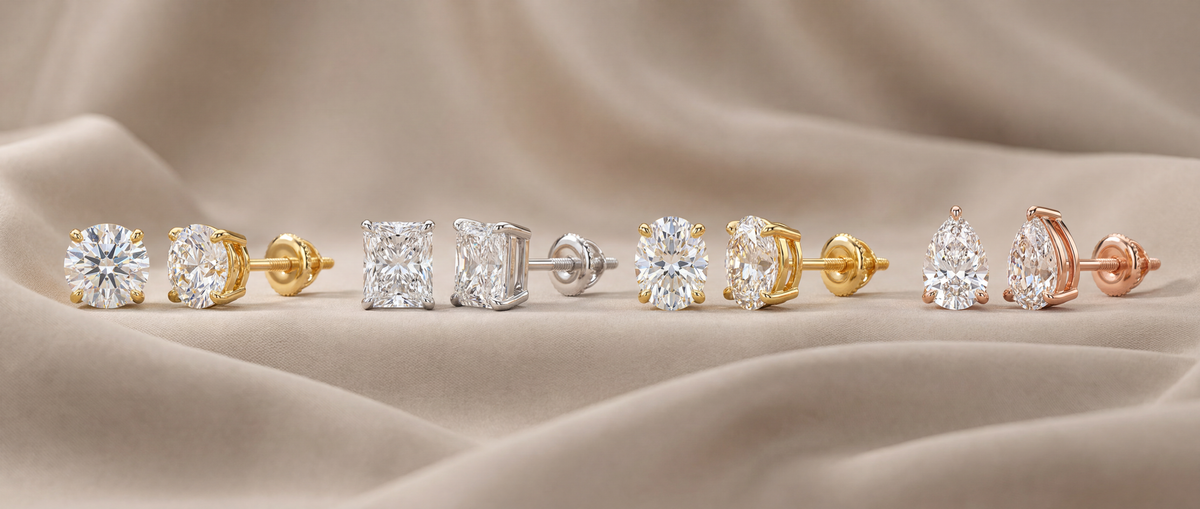
Round brilliant cut is consistently described as the most popular shape for diamond earrings, particularly studs and front‑facing hoops, because it delivers strong sparkle and a classic look. Other commonly offered shapes include princess, oval, cushion, emerald, Asscher, pear, marquise, radiant, and heart, each bringing a distinct style while remaining suitable for earrings. -
What earring settings are most common for lab grown diamond earrings?
FAQs and buying guides highlight three core setting families:- Prong settings: Expose more of the diamond, allowing more light to enter and maximizing sparkle; frequently described as the most classic stud and hoop setting.
- Bezel settings: Fully surround the diamond in metal, offering excellent protection and a sleek, modern look; they may slightly reduce light entry but improve security.
- Halo settings: Add a ring of smaller diamonds around a center stone to increase perceived size and overall brilliance, often used in dressier studs and drops.
-
What types of earring backs are best for lab grown diamond earrings?
Common backing types include friction (push) backs, screw backs, and various huggie/hoop closures. Friction backs are often chosen for ease and comfort, while screw backs are recommended for extra security on higher‑value or larger studs. Hoop and huggie styles typically use hinged or click‑in closures, which should feel secure without being difficult to operate.
6. Metals & Style Choices
-
Which metals are typically used for lab grown diamond earrings?
Guides and retailer FAQs list sterling silver, yellow gold, white gold, rose gold, and platinum as the main metals for lab grown diamond earrings. White metals (white gold and platinum) are often recommended for colorless or near‑colorless diamonds to maintain a bright white look, while yellow and rose gold complement stones with slightly warmer tones and can add a romantic or vintage feel. -
Can lab grown diamond earrings be styled for layering or stacking?
Yes. Major brands highlight wearing lab grown diamond studs and huggies alone or in ear stacks with hoops, additional studs, or ear cuffs. This makes lab grown earrings suitable as a foundational piece in more complex ear looks, especially when multiple piercings are involved. -
Are lab grown diamond earrings suitable for men?
Retailers and style guides note that lab grown diamond earrings are popular among all genders, with men often choosing stud styles in slightly larger carat weights or more geometric shapes for a bold, modern look.
7. Certification, Grading & Documentation
-
Are lab grown diamond earrings certified?
Practices vary by brand. Some retailers provide IGI‑certified lab grown diamonds for center stones above certain carat thresholds or for specific stud pairs; others rely on internal quality controls and detailed descriptions without individual lab reports. IGI and, in some cases, GIA are commonly referenced labs for lab grown diamond grading, with reports covering cut, color, clarity, and carat. -
How is certification useful specifically for earrings?
Certification verifies that the stones are genuine lab grown diamonds and documents their 4Cs in detail. For earrings, this is particularly useful for confirming that both primary stones in a pair are closely matched and for supporting appraisals or insurance when the earrings represent a significant purchase.
8. Price, Value & Budget
-
Are lab grown diamond earrings cheaper than natural diamond earrings?
Yes. Comparative articles and retailer information indicate that lab grown diamond earrings can be roughly 20–70% less expensive than natural diamond earrings of similar size and quality, depending on specs and market conditions. This allows buyers either to save money or to opt for larger stones and higher grades within the same budget. -
Do lab grown diamond earrings hold their value the same way mined earrings do?
Most grading and buying guides caution that lab grown diamonds generally have lower and less stable resale value than mined diamonds, particularly as lab grown production scales. They are positioned more as accessible luxury and everyday fine jewelry rather than as investment assets. -
What price range do lab grown diamond earrings usually fall into?
Pricing varies with carat weight, 4Cs, metal, and brand, but major retailers show lab grown diamond earrings ranging from a few hundred dollars for petite studs or pavé huggies up to several thousand dollars for larger, higher‑grade pairs. Many note savings of up to around 40% or more compared with natural diamond earrings at comparable specs.
9. Ethical & Environmental Considerations
-
Are lab grown diamond earrings more ethical than mined earrings?
Many brands market lab grown diamond earrings as more ethical because they avoid traditional diamond mining and its associated land disruption, habitat impact, and complex supply chains. Lab grown diamonds can be produced in more traceable conditions, and some producers emphasize renewable energy or lower carbon footprints to support sustainability claims. -
Are lab grown diamond earrings considered sustainable?
Lab grown diamond earrings are often described as more sustainable or eco‑conscious than mined diamonds because they eliminate large‑scale extraction. At the same time, multiple sources note that energy use is a key factor in assessing sustainability, and buyers may wish to review a brand’s specific energy and sourcing disclosures.
10. Care, Cleaning & Maintenance
-
How should I clean lab grown diamond earrings at home?
Care guides consistently recommend a simple routine for both lab grown and natural diamond earrings:- Mix lukewarm water with a few drops of mild, detergent‑free dish soap in a small bowl.
- Soak the earrings for about 10–20 minutes, depending on buildup.
- Gently brush around stones and settings with a soft toothbrush.
- Rinse in clean lukewarm water (with the sink drain plugged if applicable).
- Pat dry with a soft, lint‑free cloth and let them air‑dry briefly.
-
How often should I clean my lab grown diamond earrings?
If worn daily, several guides suggest cleaning earrings roughly once a week or every couple of weeks to keep oils and product residue from dulling their sparkle. For occasional wear, cleaning before or after storage is typically sufficient. -
Are ultrasonic cleaners safe for lab grown diamond earrings?
Some sources indicate ultrasonic cleaners can be appropriate for certain diamond earrings, but they advise caution and recommend checking setting type and metal first. Ultrasonic cleaning is generally discouraged for very delicate pavé, older pieces, or settings where stones may be loose, and many guides prefer warm‑water methods as the default. -
How should I store lab grown diamond earrings?
Proper storage helps protect both diamonds and settings. Guides recommend keeping earrings in soft‑lined jewelry boxes, pouches, or individual compartments so they don’t scratch other pieces. Many brands suggest storing earrings individually or in their original packaging when not in use.
11. Comfort, Fit & Wear
-
Can I sleep in lab grown diamond earrings?
General earring care recommendations advise removing earrings before sleep to avoid constant pressure on posts and backs and to reduce the chance of bending settings or snagging on bedding. This is a comfort and hardware consideration rather than a diamond durability issue. -
Are lab grown diamond earrings comfortable for all‑day wear?
Studs, huggies, and smaller hoops are widely described as comfortable for extended wear because they sit close to the lobe and move minimally. Heavier or larger pieces may feel more noticeable, especially on thinner lobes, so choosing a size and style that feels balanced is key to long‑term comfort.
12. Shopping, Shipping & Policies (Competitor Benchmarks)
-
What kinds of policies do lab grown earring brands offer?
Competitor FAQs commonly show:- Return windows of around 30 days for unworn lab grown diamond earrings.
- Limited warranties covering manufacturing defects.
- Free or low‑cost shipping in major markets and secure packaging with tracking.