
Lab Grown Diamond Earrings Complete Guide - Michael Gabriels
Lab grown diamond earrings are fine jewelry pieces set with real diamonds that were created in a laboratory instead of mined from the earth. These diamonds share the same crystal structure, hardness, and light performance as natural diamonds, but their origin, pricing, and ethical profile are different.
Common terms like “lab grown,” “lab created,” “cultured,” or “man‑made” all describe diamonds grown with advanced technology rather than extracted from the ground, and they are not cubic zirconia or other “fake” stones.
How lab grown diamonds are created
Modern lab grown diamonds used in earrings are typically produced using HPHT (High Pressure High Temperature) or CVD (Chemical Vapor Deposition).
- HPHT replicates the intense heat and pressure conditions deep within the earth to turn carbon into diamond over a much shorter time frame.
- CVD uses a vacuum chamber filled with a carbon‑rich gas, depositing carbon atoms layer by layer onto a diamond seed until a gem‑size crystal grows.
Both methods produce diamonds that are chemically and physically equivalent to mined stones; the key difference is how and where the diamond grows, not what it is.
Lab grown diamonds vs simulants
Lab grown diamonds are very different from diamond simulants such as cubic zirconia or moissanite.
- Lab grown diamonds are pure carbon crystals with the same hardness (Mohs 10), refractive index, and dispersion as mined diamonds.
- Simulants use different materials, so they sparkle differently, wear differently, and do not share the same long‑term durability profile.
When you shop, look for wording like “lab grown diamond” plus 4C grading details, not just “simulated” or “diamond‑like stones,” to ensure you are getting a true diamond.
Are lab grown diamonds real diamonds
Industry bodies and leading jewelers describe lab grown diamonds as chemically, physically, and optically identical to natural diamonds. They have the same carbon crystal structure, the same Mohs 10 hardness, and the same potential for brilliance and fire when cut well.
Advanced equipment can determine whether a diamond is lab grown or mined by analyzing subtle growth markers, but to the naked eye—especially once set in earrings—both look the same at comparable quality levels.
Why choose lab grown diamond earrings
Current buying guides highlight a few consistent advantages of lab grown diamond earrings.
- They typically cost significantly less than natural diamond earrings of similar size and quality, with many sources citing price differences in the region of roughly 30–70% depending on specifications and market conditions.
- The reduced cost per carat lets you choose larger stones, higher cut quality, or more substantial settings within the same budget.
- They avoid traditional open‑pit mining and come from traceable lab environments, which appeals to buyers who care about ethics and sustainability.
For everyday earrings, this combination of real‑diamond performance, value, and modern origin is why lab grown has become the default recommendation for many shoppers.
Common lab grown earring styles
Most major jewelers now offer full earring collections in lab grown diamonds.
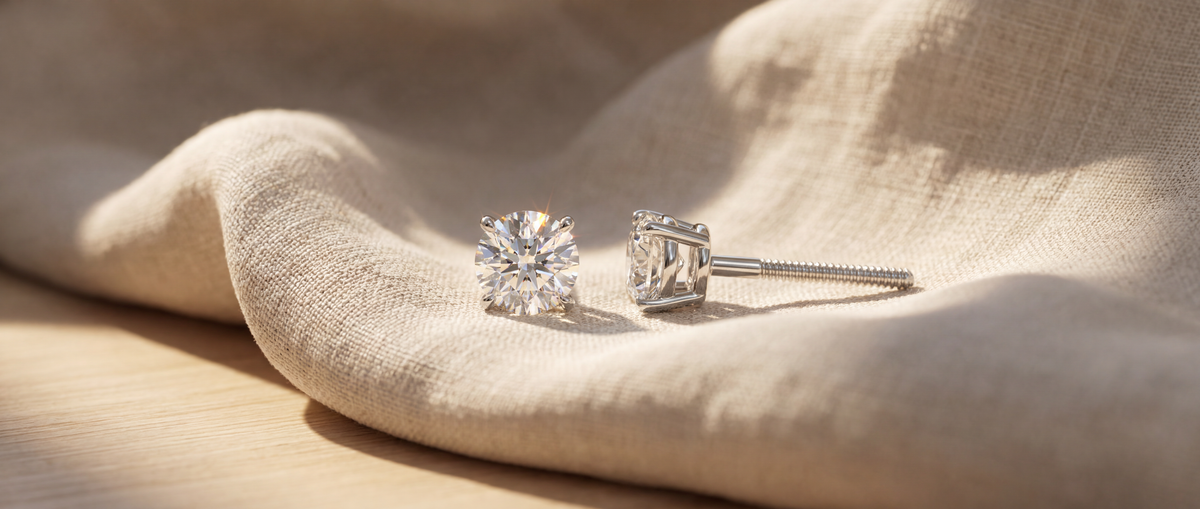
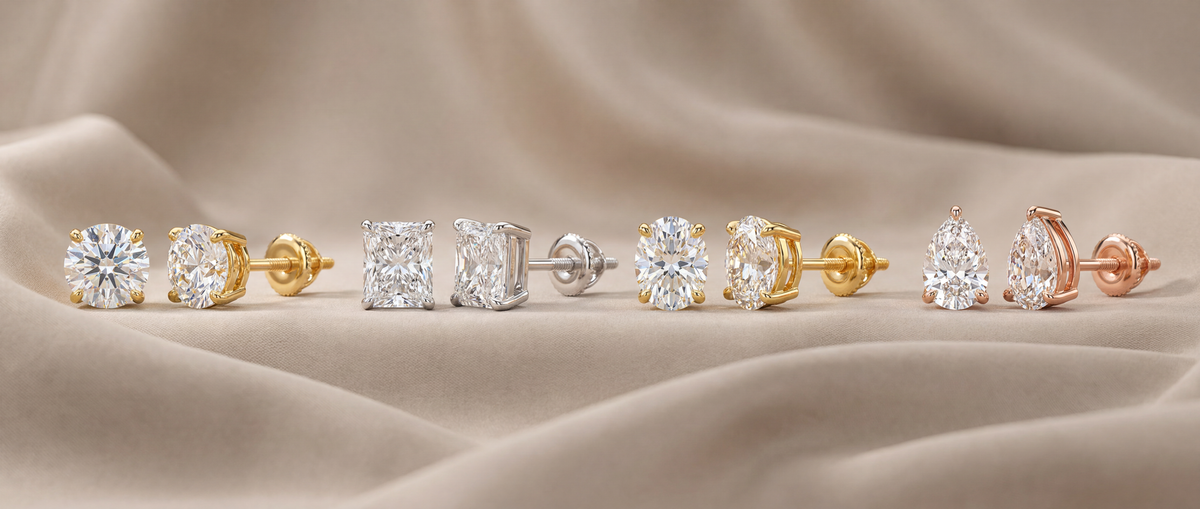
- Studs: Classic solitaires and halos in round, princess, oval, and other shapes remain the most popular option.
- Hoops: Front‑facing or inside‑out lab grown diamond hoops frame the face with a continuous line of sparkle.
- Huggies: Small, close‑fitting hoops often pavé‑set with lab grown diamonds are recommended for all‑day comfort and minimalist style.
- Drops and dangles: Linear or articulated designs with lab grown diamonds add movement and are often reserved for occasions.
At Michael Gabriels, you can explore lab grown diamond earrings across categories, starting with the Lab Grown Diamond Jewelry Collection.
Are lab grown diamond earrings durable
Because lab grown diamonds are real diamonds, they provide the same hardness and everyday durability as natural stones. Both types rate 10 on the Mohs scale, which means they are highly resistant to scratching under normal wear.
For earrings, long‑term performance depends as much on the setting as on the diamond, so secure prongs, bezels, and closures are essential for studs, hoops, and huggies. With sensible care and occasional professional checks, lab grown diamond earrings are well‑suited to daily use.
How to care for lab grown diamond earrings
Care instructions for lab grown diamond earrings match those for natural ones.
- Soak earrings in lukewarm water with a small amount of mild, detergent‑free soap.
- Gently brush around and behind the stones using a soft toothbrush.
- Rinse thoroughly to remove soap residue.
- Dry with a lint‑free cloth and store pieces separately to avoid scratching.
Many jewelers recommend periodic professional inspections to check prongs and backs, especially for frequently worn studs or hoops.
Sizing basics: CTW and millimeters
Earring sizes are usually described using carat total weight (CTW) for the pair and millimeter measurements for each stone or earring diameter.
Total carat weight indicates how much diamond is in both earrings combined, while per‑ear carat weight and mm size give a more accurate sense of how each earring will look on the ear. On‑ear photos and size charts are particularly helpful for understanding coverage before you buy.
All CTW and mm references should be treated as approximate guidelines, because final appearance depends on ear shape, cut style, and specific design; always confirm each product’s listed measurements and grading report before purchasing.
For stud shoppers, you can use the dedicated Stud Size & Carat Guide to visualize approximate on‑ear sizes before choosing.
Lab grown earrings in a modern wardrobe
Editorial content increasingly presents lab grown diamond earrings as everyday essentials, not niche alternatives. They are widely recommended as:
- A first fine jewelry piece for graduates or new professionals.
- An upgrade from fashion earrings to long‑lasting diamond studs or huggies.
- A way to enjoy larger diamonds or bolder earring styles without traditional mined‑diamond pricing.
Because lab grown diamonds can be matched across studs, hoops, necklaces, and bracelets, they also make it easy to build a coordinated, ethically aligned jewelry wardrobe over time.
Lab grown diamond earrings at Michael Gabriels
Michael Gabriels focuses on lab grown diamonds, pairing them with refined New York–based design and craftsmanship. Shoppers looking to explore lab grown earrings can:
- Browse the Lab Grown Diamond Jewelry Collection for an overview of styles.
- Shop the Lab Grown Diamond Stud Earrings Collection for classic everyday studs.
- Use the Stud Size & Carat Guide to fine‑tune size and coverage decisions before adding to cart.